How to Select the Best Cool Art for Your Home
Your home is more than just a place to live; it’s a reflection of who you are. Choosing cool art that aligns with your personal style can completely transform your space. Imagine walking into a room where cool art brings warmth and character. Whether you prefer vintage pieces or modern designs, the right selection can make your space truly stand out. Cool art doesn’t just fill empty walls—it sets the tone and turns your home into a place you love.
Understanding Your Space
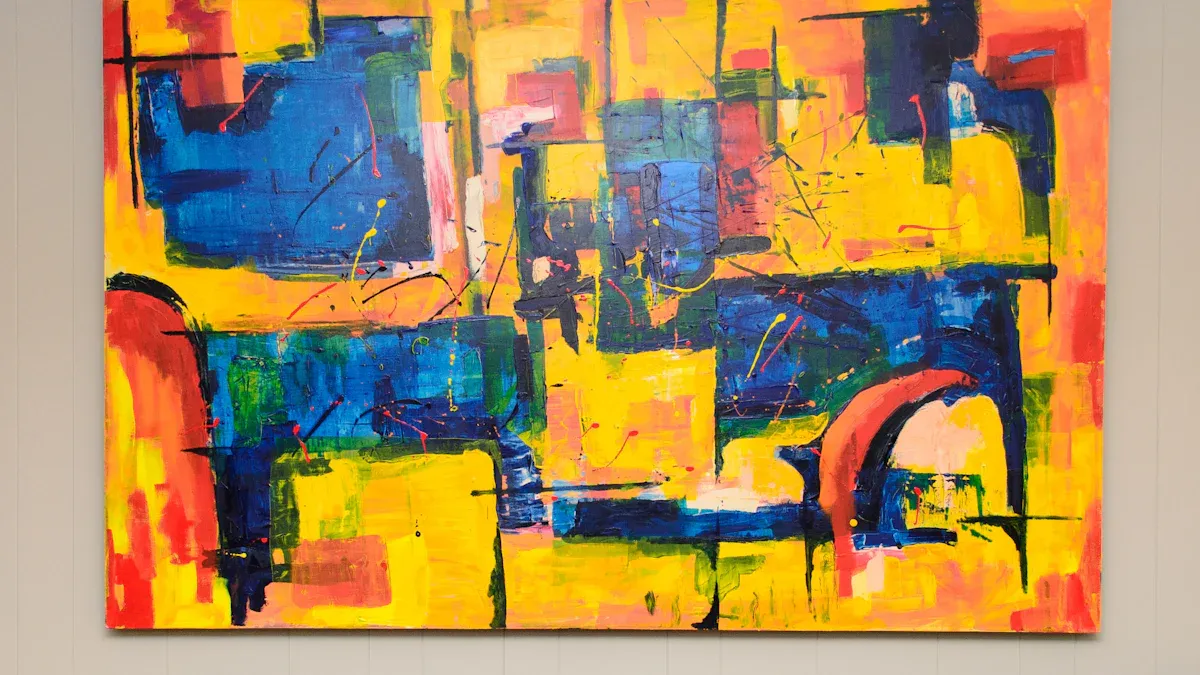
Measuring Wall Dimensions and Layout
Before choosing art, measure your walls carefully. This helps you avoid picking art that's too big or small. Use a tape measure, pencil, and paper (or a device) to note sizes. Clear clutter from the room so you can measure easily. Drawing a simple room sketch can help you plan where the art will go.
Basic tools like rulers and levels work well for accuracy. If you prefer, laser tools can make measuring faster. Always double-check your numbers to prevent mistakes later.
Considering Room Size and Proportions
Room size affects how art looks. A small room might feel crowded by a huge painting. A big room might make a tiny piece seem out of place. Studies show larger art grabs more attention and creates stronger feelings.
Ceiling height is important too. Research says high ceilings encourage creative thinking. If your room has tall ceilings, pick bold and imaginative art.
Identifying Key Focal Points
Each room has a main focus, like a fireplace or window. Use these spots to display your coolest art. Putting art near a focal point catches attention and balances the room. Think about how the art fits with furniture and lighting to make the space feel complete.
Defining Your Style and Atmosphere
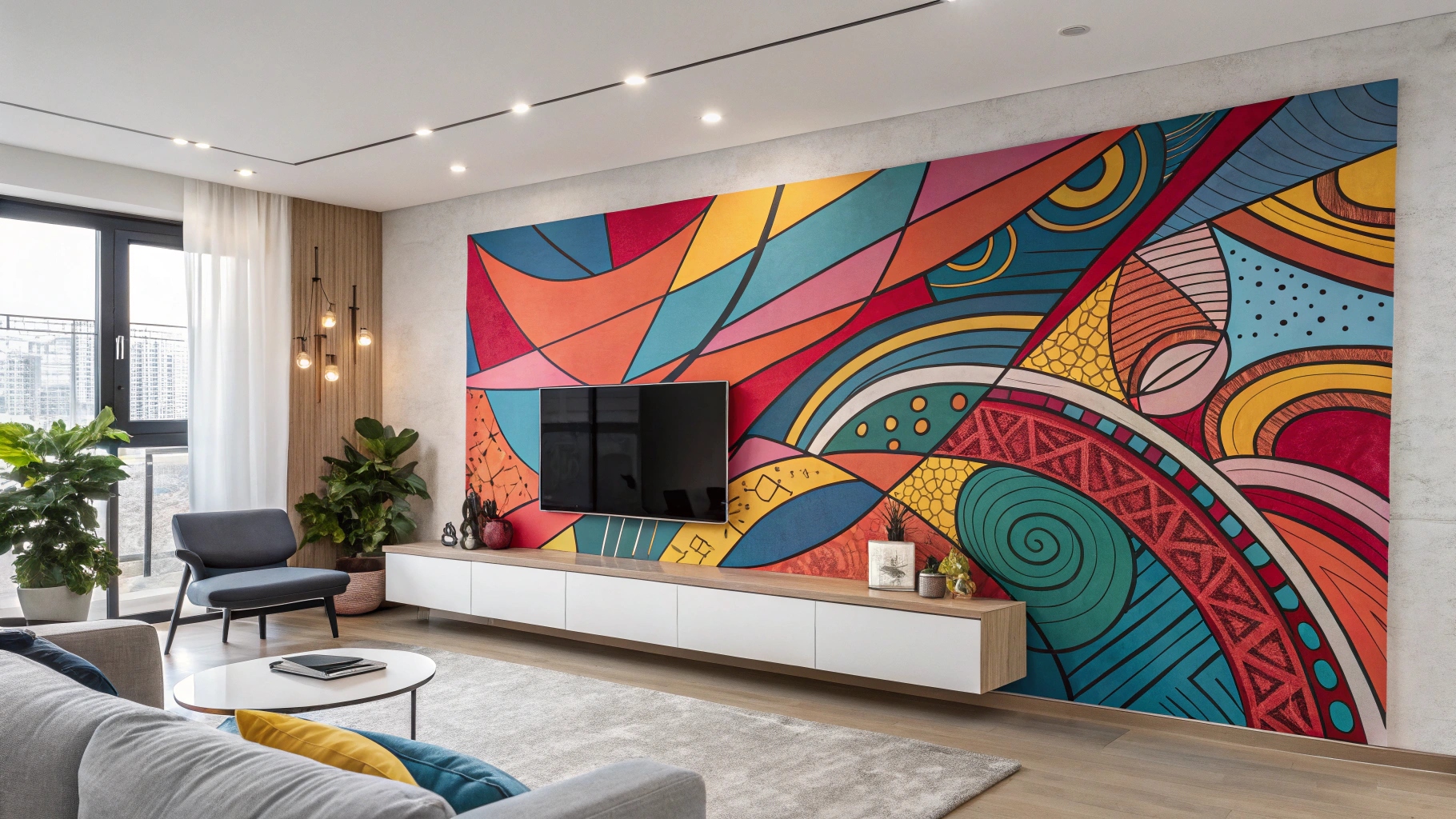
Finding Your Unique Style
Your style shows who you are in your home. It makes your space feel special and personal. Start by thinking about what you like. Do you enjoy bold, modern looks, or do you prefer classic designs? Maybe you love nature themes or abstract patterns. Think about your favorite colors, textures, and shapes. These choices can help you pick the right art.
If you’re not sure, look at what you already own. A soft rug, an old lamp, or a favorite pillow might show your style. You can also check online galleries or visit art fairs to see what you like. Your style doesn’t need to fit one label. Mixing things you love makes your home feel real and unique.
Tip: Take your time. Picking art that feels right is worth the wait. It will make your home truly yours.
Picking Art to Match the Mood
Art changes how a room feels. The right piece can make you feel happy, calm, or inspired. Think about the feeling you want in each room. For example:
Warm colors like red and orange make a room feel lively.
Cool colors like blue and green bring peace and calm.
A peaceful landscape painting can make a bedroom relaxing.
Bold abstract art can add energy to a living room.
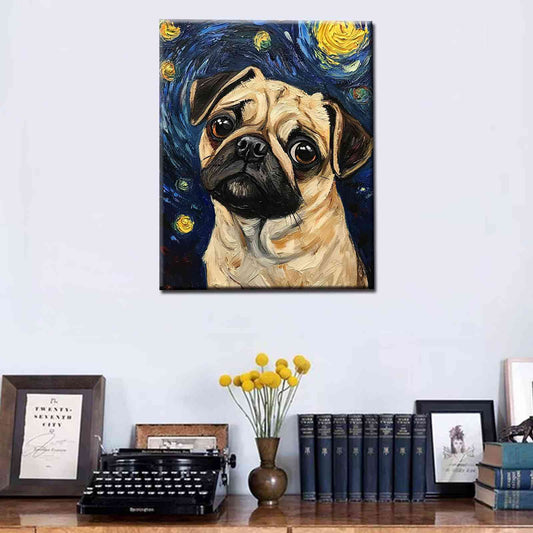
In a modern living room, Van Gogh’s Starry Night can feel dreamy and bright. Monet’s Water Lilies might bring calm to a bedroom. For a home office, pick art with soft blues or greens to help you focus. Each piece sets the mood and connects the room to your feelings.
Note: Research shows art can make you feel emotions like joy or calm. Use this when choosing pieces for your home.
Matching Art with Your Room’s Colors
To make your room look balanced, match your art to its colors. First, notice the main colors in your room. Are the walls neutral, or are they bright? Use these colors to guide your art choices. For example, if your room has earthy tones, pick art with similar shades. Or, use a bright color to make the art stand out.
Color theory helps here. Warm colors like red and yellow can make a dining room feel lively. Cool colors like blue and green can make a bedroom feel peaceful. Knowing how colors affect mood helps you create the right vibe. For example, bright art in a dining room can make it social, while calm art in a living room can make it cozy.
Tip: Not sure how to match colors? Use a color wheel. It’s an easy tool to pair colors that look good together.
Choosing the Right Cool Art
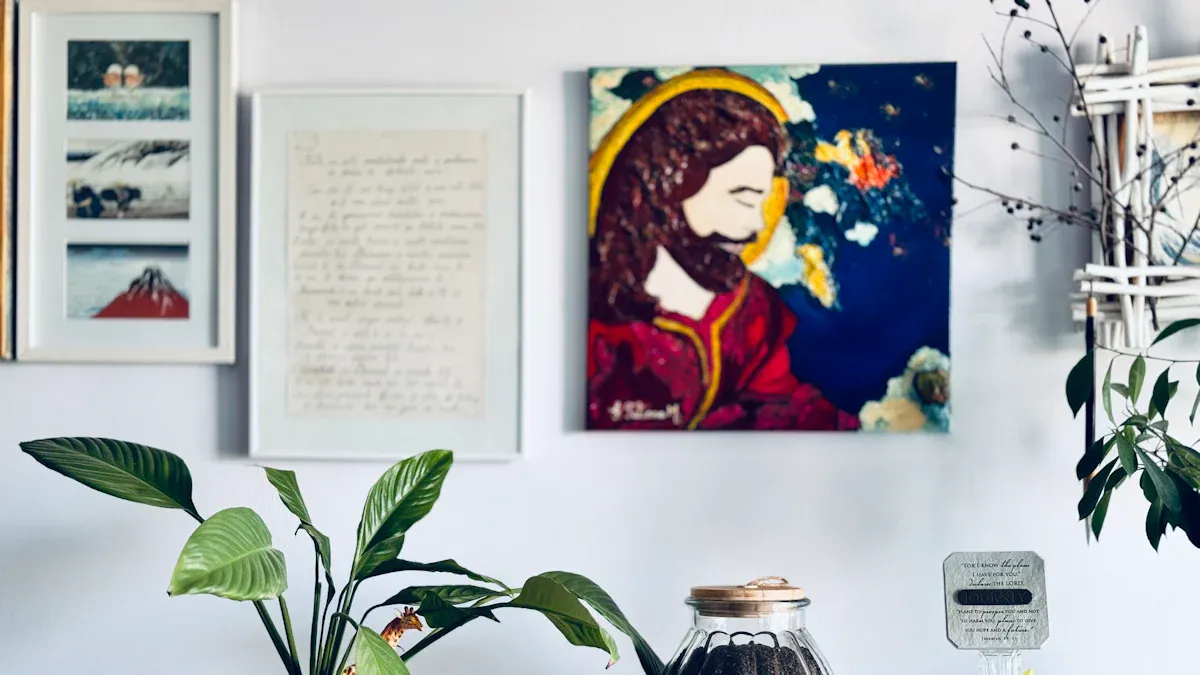
Picking the Best Size for Your Wall
Choosing the right size for wall art is important. It’s not just about covering a blank space. The size of the art can change how a room feels. If the size is wrong, it can throw off the room’s look.
Here’s a simple guide to understand how size matters:
Evidence |
Description |
|---|---|
Properly sized art |
Makes a room feel balanced and improves its overall look. |
Too big art |
Can feel overwhelming and make the room uncomfortable. |
Too small art |
Can look lost on big walls and feel unfinished. |
For example, a huge painting in a small room might feel too much. A tiny piece on a big wall can make the space seem empty. To avoid this, measure your wall and check the furniture nearby. A good rule is to pick art that’s about two-thirds the width of the furniture below it. This keeps the art looking balanced.
Tip: Unsure about the size? Use painter’s tape to outline the art’s size on the wall. This helps you see how it will look before buying.
Trying Different Types of Cool Art
Cool art isn’t just paintings. You can explore many options like photos, sculptures, or mixed media. Each type adds its own style to your home.
Paintings: These are classic and work in any room. Abstract or traditional, they set the mood.
Photography: Black-and-white photos feel timeless, while colorful ones stand out.
Sculptures: Great for big spaces, they add texture and depth.
Mixed Media: These combine materials like wood or metal for a unique look.
Pick art that feels right to you. Do you want something bold or calming? The type of art should match the feeling you want in the room.
Note: Don’t be afraid to mix different art types. A gallery wall with paintings, photos, and small sculptures can look exciting and creative.
Placing Art for the Best Effect
Where you put your art changes how it looks. Good placement makes it stand out and improves the room’s design.
Here are some tips for placing art:
Strategy Type |
Description |
|---|---|
Arrange art to fit well with the room’s layout. |
|
Sightlines |
Place art where it naturally catches the eye, like at the end of a hallway. |
Lighting |
Use lights to make art stand out and protect it from sunlight. |
Hanging Height |
Hang art at eye level so it’s easy to enjoy. |
Transition Areas |
Add art in hallways or stairs to make these spaces more interesting. |
For example, hanging art at eye level makes it easy to see. In a hallway, placing art at the end draws attention and adds depth. Lighting is also key. A well-lit piece looks better and adds warmth to the room.
Tip: Use spotlights or wall lights to highlight your art. This makes it look great and protects it from fading in sunlight.
By thinking about size, type, and placement, you can find the perfect art to make your home stylish and welcoming.
Practical Tips for Displaying Artwork
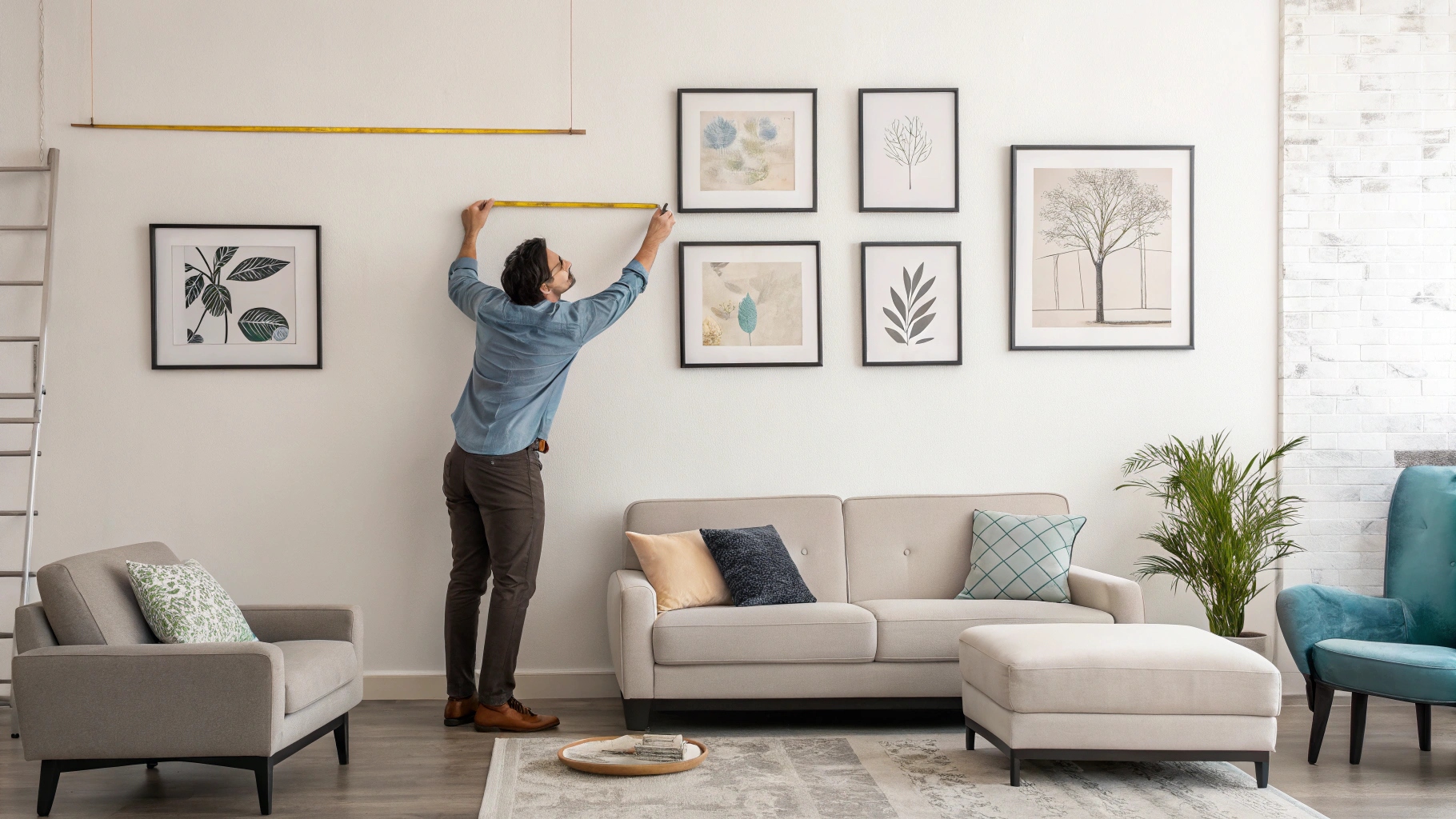
Hanging Art at the Ideal Height
Placing art at the right height is important. A good rule is to hang the center of the piece at eye level, about 57 inches from the floor. This makes the art look natural and easy to enjoy.
Here’s how to do it:
Measure the wall and the art to find the best spot.
Line up the art with furniture like sofas or tables for balance.
Keep the height the same for all pieces in one room.
Tip: Use a tape measure and pencil to mark the spot first. This avoids mistakes and keeps your walls neat.
Creating Gallery Walls or Groupings
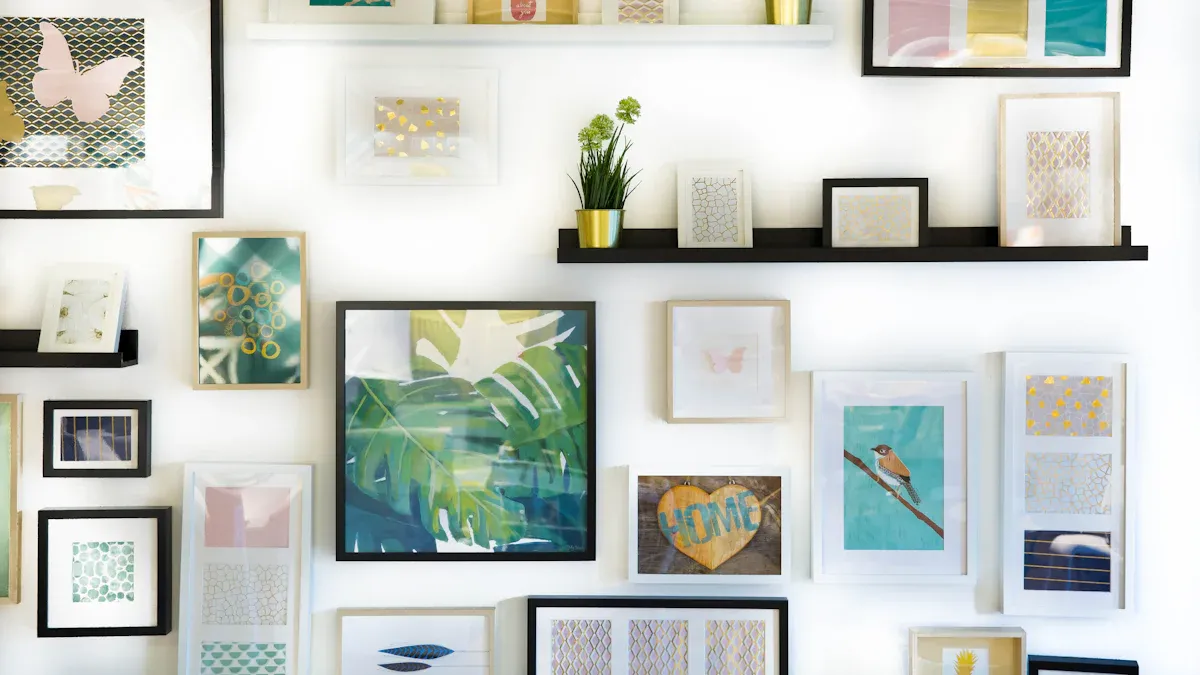
Gallery walls are a fun way to show off many art pieces. They can tell a story, show your style, or make a room more interesting. Start by picking a theme that matches your space. For example:
A farmhouse could have rustic paintings and old tools.
A modern loft might include bold art and metal sculptures.
A family room could display photos, kids’ art, and prints for a personal touch.
Lay out your design on the floor first. This helps you test spacing and placement before putting it on the wall. Use different sizes and shapes for a lively look.
Note: Mix textures, like framed photos with woven art or sculptures, for variety.
Selecting Frames to Enhance the Art
Frames do more than protect art—they make it look better and match your room’s style. Pick frames that go with both the art and the decor. For example:
Black or metallic frames suit modern or simple art.
Fancy gold frames add style to classic or traditional pieces.
Wooden frames bring warmth to rustic or nature-themed art.
For gallery walls, use frames in similar colors for a neat look. Or mix frame styles for a creative feel.
Tip: Use non-glare glass or acrylic to avoid reflections and make the art easy to see.
Common Mistakes to Avoid
Picking the Wrong Sizes for Your Space
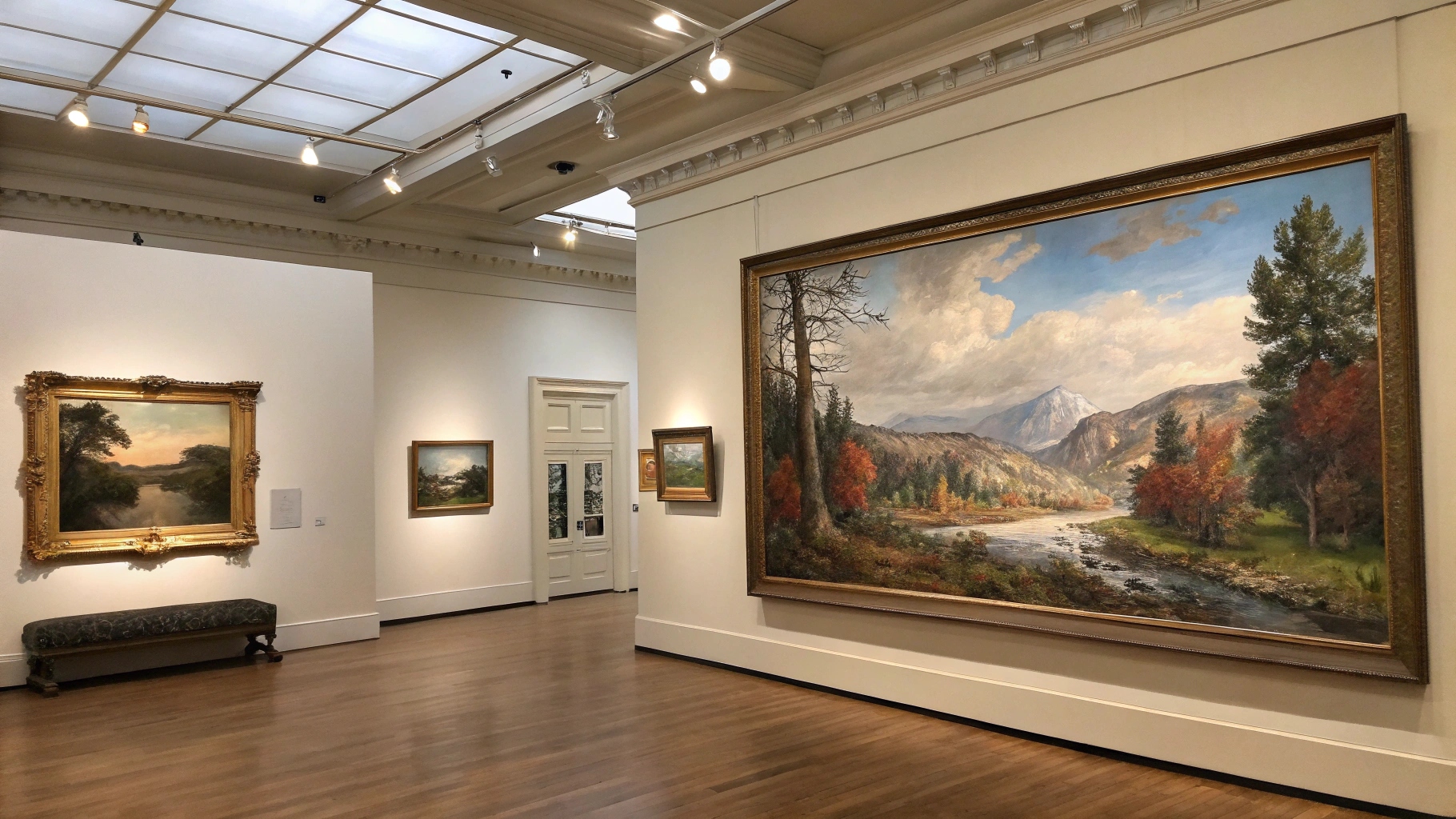
Choosing art that doesn’t fit can ruin a room’s look. If the size is wrong, the art feels out of place. A small piece on a big wall looks lost. A huge painting in a tiny room feels too much.
Here’s why size and proportion matter:
Problem |
Why It’s a Problem |
|---|---|
Wrong sizes make the room feel unbalanced. |
Poor sizing distracts from the art and the room’s design. |
Misaligned art loses its emotional impact. |
The meaning of the art fades if it doesn’t fit the space. |
Matching proportions create harmony. |
Following size rules makes the room look neat and appealing. |
To fix this, measure your walls and furniture first. A good rule is to pick art about two-thirds the width of the furniture below it. This keeps the room balanced.
Avoiding Too Much Art in One Area
Adding too much art can make a room feel messy. Instead of improving the space, overcrowding hides the beauty of each piece. Pick a few great pieces that work well together.
You can group smaller items into a gallery wall. Use different frame sizes and shapes for variety. Leave some blank wall space to keep the room open and calm.
Tip: Choose souvenirs or small pieces with matching colors for a tidy display.
Forgetting About Room Size and Lighting
Room size and lighting are key for showing off art. A big sculpture in a small room feels cramped. Dim lighting can hide the details of your art. Always check if the art’s size fits the room.
Lighting matters too. Different art types need special lighting:
Art Type |
Best Lighting |
|---|---|
Paper Art |
Light directly to avoid showing flaws. |
Paintings |
Use angled lights to show texture and depth. |
Small Art |
Use narrow spotlights to avoid shadows. |
Sculptures |
Light from above to highlight details. |
By thinking about size and lighting, your art will look amazing and make your space shine.
Picking cool art for your home isn’t just about decoration. It’s about making your space feel stylish and personal. Smart choices can turn any room into a reflection of you. Mixing art styles or combining bold and simple designs adds energy. Each piece should match in color or theme, creating a story that improves the room’s look.
Textures and materials are important too. They should match or contrast with furniture and lighting. Art can guide how a room feels, becoming the main focus that ties it all together. When you pick pieces you love, your home becomes more than a house—it becomes your special place.
Trust your feelings. Start small or go big, but let your art show who you are. Begin building your collection now and see your rooms fill with life and charm.
Tip: The best art isn’t just pretty—it shares a story that connects with you and your home.
Tucocoo Custom Paint by Numbers