
Inspiring Butterfly Drawing Ideas to Spark Your Sketchbook
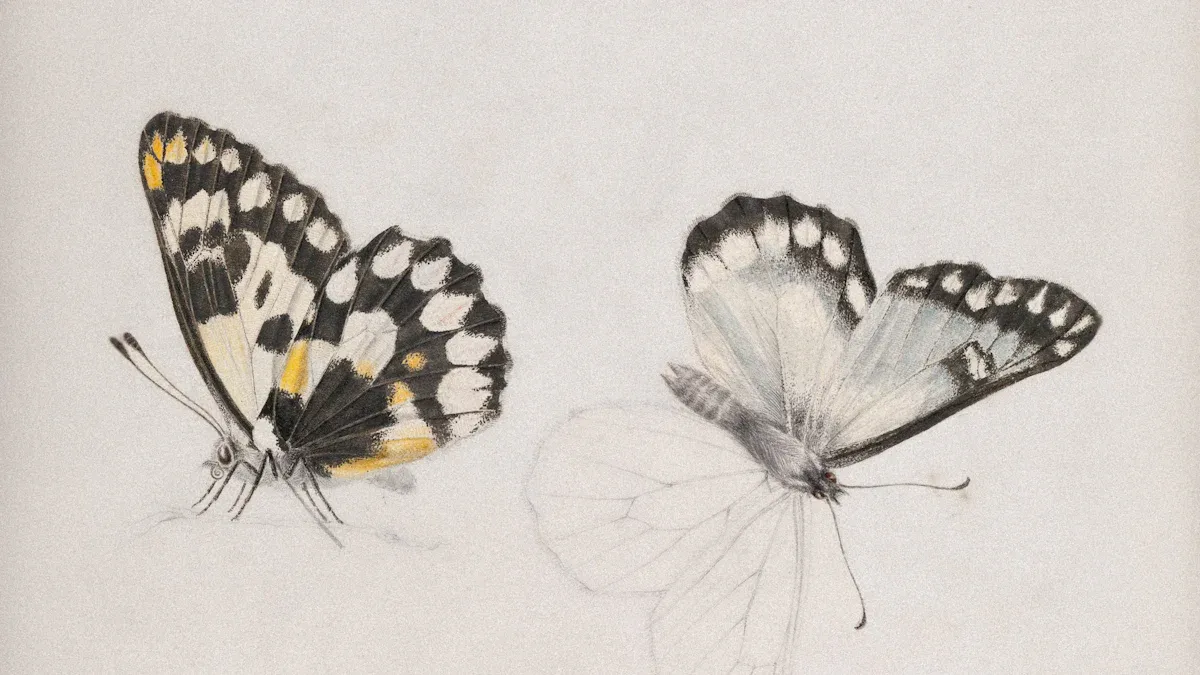
Ready to fill your sketchbook with fun butterfly drawing ideas? You can begin with a simple butterfly sketch. Or you can try a playful butterfly drawing with heart-shaped wings or a trail of stars. Many artists like to add a playful touch. They mix ideas from nature with their own creativity. Here are some popular styles:
Popular Styles |
|
|---|---|
Beginner |
Cute doodles, heart wings, easy butterfly drawing |
Advanced |
Detailed monarchs, whimsical patterns, abstract art |
You can make your butterflies as cute or as detailed as you want. Try a new idea each day. Your creativity will grow!
Key Takeaways
Begin with easy butterfly shapes. Try fun styles like heart wings or melting looks. This will make your art special.
Draw butterflies every day. This helps you get better and fills your sketchbook with cool ideas.
Add patterns, colors, and shading to your butterflies. This makes them look real and gives them character.
Mix butterflies with flowers or nature scenes. This creates bright and pretty drawings.
Use different tools and ways to draw, like pencil sketches, doodle art, or paint by numbers. Find what you like best.
Butterfly Drawing Ideas
Looking for fresh butterfly drawing ideas to fill your sketchbook? You can try many creative styles that make your art stand out. Let’s explore some fun and cute ways to draw butterflies, from heart-shaped wings to magical melting effects and lifelike landing poses.
Heart Wing Butterflies
Heart wing butterflies bring a cute and playful twist to your butterfly drawing. You start by sketching a simple butterfly outline, but instead of regular wings, you shape them like hearts. This style works great for cards, journals, or just for fun. You can make the hearts big and bold or small and delicate. Try adding dots, stars, or even tiny flowers inside the wings for extra charm.
Tip: Mix in flowers or stars around your heart wing butterfly. This creates a dreamy scene and lets you play with colorful patterns.
If you want more inspiration, you can look at other creative butterfly drawing ideas that artists love:
The 3D Butterfly Illusion – Use shading to make your butterfly look like it’s flying off the page.
The Botanical Butterfly – Surround your butterfly with detailed flowers for a nature-inspired look.
The Minimalist Butterfly – Keep it simple with clean lines and just a hint of color.
The Fantasy Butterfly – Add magical elements like sparkles, swirls, or even galaxy patterns.
You can try a new idea each day. This helps you get better at drawing and keeps your sketchbook full of cute surprises.
Melting Butterfly Effects

Melting butterfly effects give your butterfly drawing a unique and colorful look. You can make the wings look like they are dripping or melting, almost like ice cream on a hot day. To create this effect, start with a basic butterfly sketch. Then, draw the lower parts of the wings with wavy, dripping lines. You can fill these areas with bright colors or even use markers and gel pens for a glossy finish.
Professional artists sometimes use clay and resin to make real melting butterflies, but you can get a similar look with pencils or paint. Try adding metallic outlines or a shiny glaze with gel pens. If you want your butterfly to look extra magical, add a few stars or dots around the wings. This makes your drawing pop and adds a dreamy vibe.
Note: Using dots and small patterns on the wings makes your butterfly more eye-catching and unique. It also encourages you to be playful and creative.
Landing Butterflies

Landing butterflies capture a peaceful moment in nature. You can draw a butterfly resting on a flower, a leaf, or even a rock. Start with a simple outline of the butterfly’s body and wings. Then, sketch the surface where it lands. Flowers work especially well because they let you use bold colors and fun shapes.
When you add flowers, stars, or dots to your butterfly drawing, you create a lively scene. Flowers connect your art to nature and let you try new color combinations. Stars add a touch of magic, while dots and tiny patterns make the wings look detailed and cute.
Here are some more ideas to try in your sketchbook:
Draw a butterfly in flight, with wings spread wide.
Create a butterfly silhouette against a colorful background.
Make a butterfly mandala with repeating patterns.
Design a butterfly with swirling or mosaic patterns for a mesmerizing effect.
Try drawing a butterfly every day. You will see your skills improve, and your sketchbook will fill up with cute and colorful butterfly drawing ideas.
Easy Butterfly Drawing Ideas
Looking for easy butterfly drawing ideas that anyone can try? You can start with a simple butterfly doodle or explore quick sketch techniques. These easy ideas help you build confidence and fill your sketchbook with cute butterflies.
Simple Doodles
You don’t need fancy tools for a simple butterfly drawing. Grab a pencil and try these easy butterfly drawing ideas:
Draw a lowercase 'l' for the body.
Use the letter 'B' or the number '3' to shape the wings.
Add antennas if you want, or leave them out for a more easy look.
Try a butterfly with sparkles or hearts as wings for a cute touch.
Sketch a butterfly landing on a finger or flying in a heart loop.
Draw a paw reaching for a butterfly for a playful scene.
Start with pencil, then ink over your lines and erase the pencil marks for a clean finish.
Tip: Focus on enjoyment and practice, not perfection. The more you draw, the easier it gets!
Quick Sketch Techniques
Quick sketching helps you capture butterflies fast. Start with a light center line to keep your butterfly symmetrical. Use circles and ovals for the body and wings. Try angling the wings or changing their size for a natural look. Add details like wing patterns or antennae with gentle strokes. If you want to add depth, use shading or hatching. You can also use reference images for inspiration, but feel free to stylize your butterfly drawing.
Try drawing butterflies in different poses. This keeps your easy butterfly drawing ideas fresh and fun.
Beginner-Friendly Outlines
Begin with an easy butterfly line drawing by sketching lightly. Light perspective lines help you keep both sides even. Divide your paper into four sections or use a ruler for symmetry. Draw the head, thorax, and abdomen with simple shapes. Mark where the wings start, then outline them with smooth curves. Trace over your lines with a pen, erase the pencil, and add cute patterns or colors.
Common Challenge |
Solution |
|---|---|
Use shading and overlap for depth. |
|
Incorrect proportions |
Make the head about 1/3 the width of the body; forewings larger than hindwings. |
Antennae drawn inaccurately |
Draw thin lines ending in rounded tips. |
Butterfly looks too geometric |
Soften edges for a flowing, natural look. |
Colors look muddy |
Use clean, bright colors with good contrast. |
Practice these easy butterfly line drawing steps every day. You’ll see your skills grow and your sketchbook fill up with cute, easy butterfly drawing ideas.
Colorful Butterfly Drawing
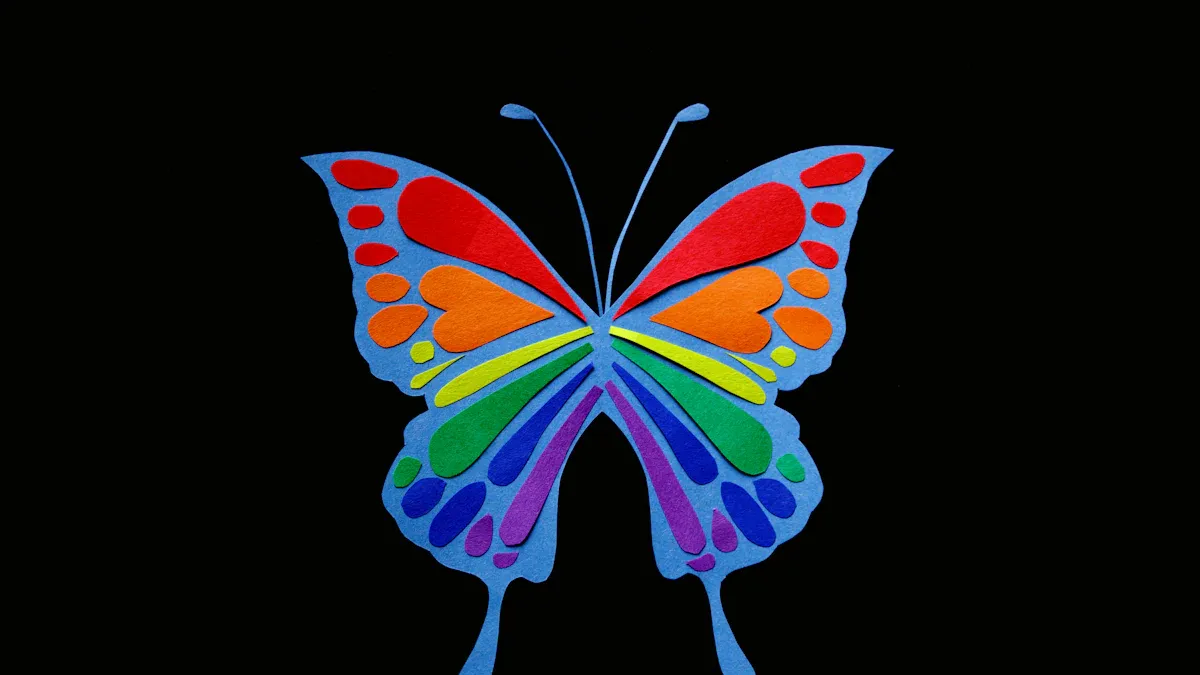
Do you want your butterflies to be bright and fun? A colorful butterfly drawing lets you use bold colors and cool patterns. You can even mix different art supplies for extra style. With a few easy steps, your sketch can become a bright work of art.
Playing with Patterns
Patterns make butterfly wings stand out. Try stripes, dots, zigzags, stars, or flowers. Nature gives you lots of ideas. Many artists look at real butterflies for inspiration. They use colors from the night sky, forests, deserts, or tropical places. The 'Magical Butterfly' palette mixes pinks, blues, purples, and berry colors. These colors look great together and help your butterfly drawing get noticed.
Want your art to feel more magical? Add swirls, hearts, or galaxy patterns to the wings. You can also use watercolors for a dreamy look. Watercolors blend softly and make cool effects. Try layering colors or letting them mix for a magical style.
Tip: Mix patterns and colors from nature with your own ideas. This makes every colorful butterfly drawing special.
Blending Colors
Blending colors makes butterflies look alive. Start with two or three colors that go well together. Use colored pencils, markers, or watercolors. For a watercolor butterfly, wet your brush and let colors mix. This gives you soft, pretty changes between colors.
You can also use mixed media for more color. Artists use layered paper, ink, and gold leaf for sparkle and depth. For example, a blue butterfly with a paper background stands out against soft colors. A rainbow collage butterfly uses torn paper and paint for a bright, colorful look. These tricks make your butterflies look full of energy.
Mixed Media Idea |
What to Try |
Result |
|---|---|---|
Collaged backgrounds |
Layered paper, ink, or paint |
Deep contrast and texture |
Gold leaf accents |
Add gold details to the wings |
Sparkle and luxury |
Watercolor and colored pencil |
Layer both for rich color |
Soft blends and sharp lines |
Try new things and don’t worry about mistakes. Every colorful butterfly drawing helps you learn new styles. Soon, your sketchbook will be full of bright butterflies that show your creativity.
Butterfly Drawing Techniques
Pencil Sketches
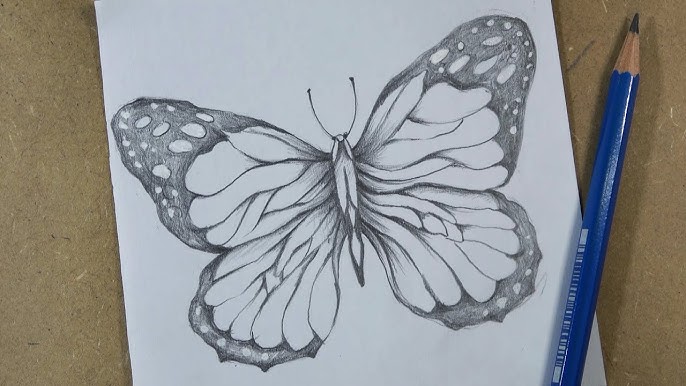
You can make a butterfly drawing with just a pencil. Good paper helps your lines look smooth. First, look closely at the butterfly’s shapes and lines. Let your hand copy what you see. This helps you draw tiny details that make the butterfly look real. Use an HB pencil for sketching. Arches Hot Press Paper works well for smooth lines. Keep a kneaded eraser and a mono eraser close by. These help you fix mistakes and add bright spots.
When you draw a butterfly, pay attention to the wings and body textures. Drawing freehand helps you practice these details. You can watch a video tutorial to learn how artists use these tricks. Try making a 3d butterfly illusion by adding shadows under the wings. This makes your butterfly look like it might fly off the page. If you want a challenge, sketch an abstract butterfly or a geometric butterfly using only pencil lines and shapes.
Tip: Practice drawing butterflies from different sides. This helps you get better at 3d butterfly illusions and makes your sketchbook more fun.
Doodle Art Styles

Doodle art styles make butterfly drawing fun and playful. You can fill the wings with patterns, shapes, and lines. Zen tangling is a popular way to do this. It uses repeated patterns to fill spaces. This makes your butterfly look special and creative. Drawing this way helps you relax and focus. Try filling an abstract butterfly with swirls, dots, or checkerboards. You can also make a geometric butterfly by using triangles, circles, and squares for the wings.
Doodle art lets you try new ideas. You do not have to follow any rules. Just let your imagination lead you. Each time you try a new pattern, your butterfly drawing gets more creative. If you want your art to stand out, mix doodle patterns with realistic shading or even a 3d butterfly illusion.
Doodle Style |
What to Try |
Result |
|---|---|---|
Zen tangling |
Repeated lines and shapes |
Intricate, calming designs |
Geometric butterfly |
Triangles, circles, squares |
Modern, abstract butterfly |
Abstract butterfly |
Swirls, waves, random patterns |
Unique, creative look |
Try mixing doodle art with realistic butterfly drawing. You will find new ways to make your butterflies stand out!
Nature-Inspired Butterfly Drawing
Butterflies with Flowers
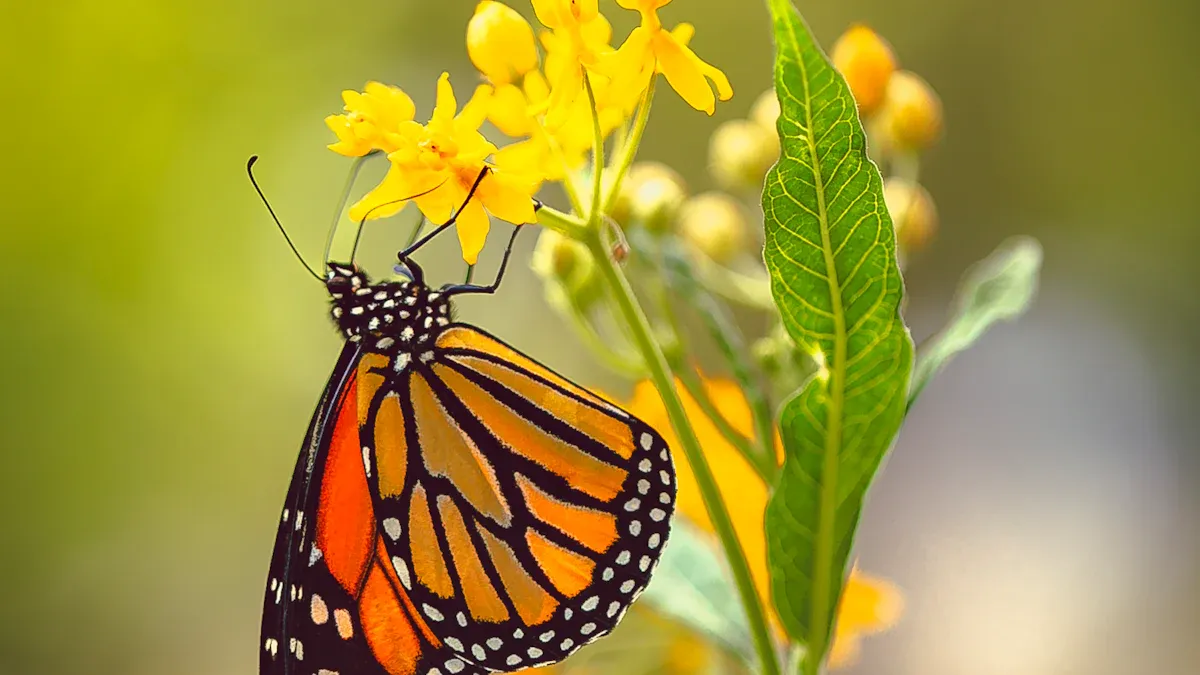
Drawing a butterfly on a flower makes a pretty scene. This idea brings nature into your sketchbook. Many artists like to draw butterflies with flowers such as dahlias, roses, daisies, and sunflowers. These flowers are popular in watercolor art and nature drawings. The petals and wings look soft and colorful together.
Try drawing a botanical butterfly sitting on a daisy. Use soft lines for the wings and bright colors for the flower. If you want your butterfly drawing to look real, focus on the small details. Watch how the butterfly’s legs touch the flower petals. Notice the patterns on the wings. Colored pencils or watercolors can help your butterfly and flower look real.
Tip: Try adding different flowers to your drawing. You can draw a botanical butterfly near a rose or above a sunflower. This makes your art look lively and different.
Here are some ideas to try:
Draw a butterfly on a flower with dew drops.
Sketch a botanical butterfly with daisies all around.
Paint a realistic butterfly drawing with roses and leaves.
Mini Ecosystems
You can make your butterfly art more interesting by drawing mini ecosystems. Imagine a tiny world where butterflies, flowers, leaves, and bugs live together. This style helps you see how everything in nature connects. You could draw a botanical butterfly flying over wildflowers. Add grass, stones, or mushrooms to make it look real.
A table can help you plan your mini ecosystem:
Element |
What to Add |
How It Looks |
|---|---|---|
Butterfly |
Botanical butterfly |
Colorful focal point |
Flowers |
Dahlias, daisies, roses |
Soft backgrounds |
Extras |
Leaves, bugs, mushrooms |
Realistic details |
Use soft shading and gentle colors to make your mini ecosystem look calm. Try drawing a butterfly landing on a leaf while a ladybug crawls nearby. This way, you can practice drawing things that look real and tell a story with your art.
Nature-inspired butterfly drawing gives you lots of ideas. You can mix flowers, butterflies, and other details to make scenes that feel real and magical.
Paint by Numbers Butterfly
Getting Started
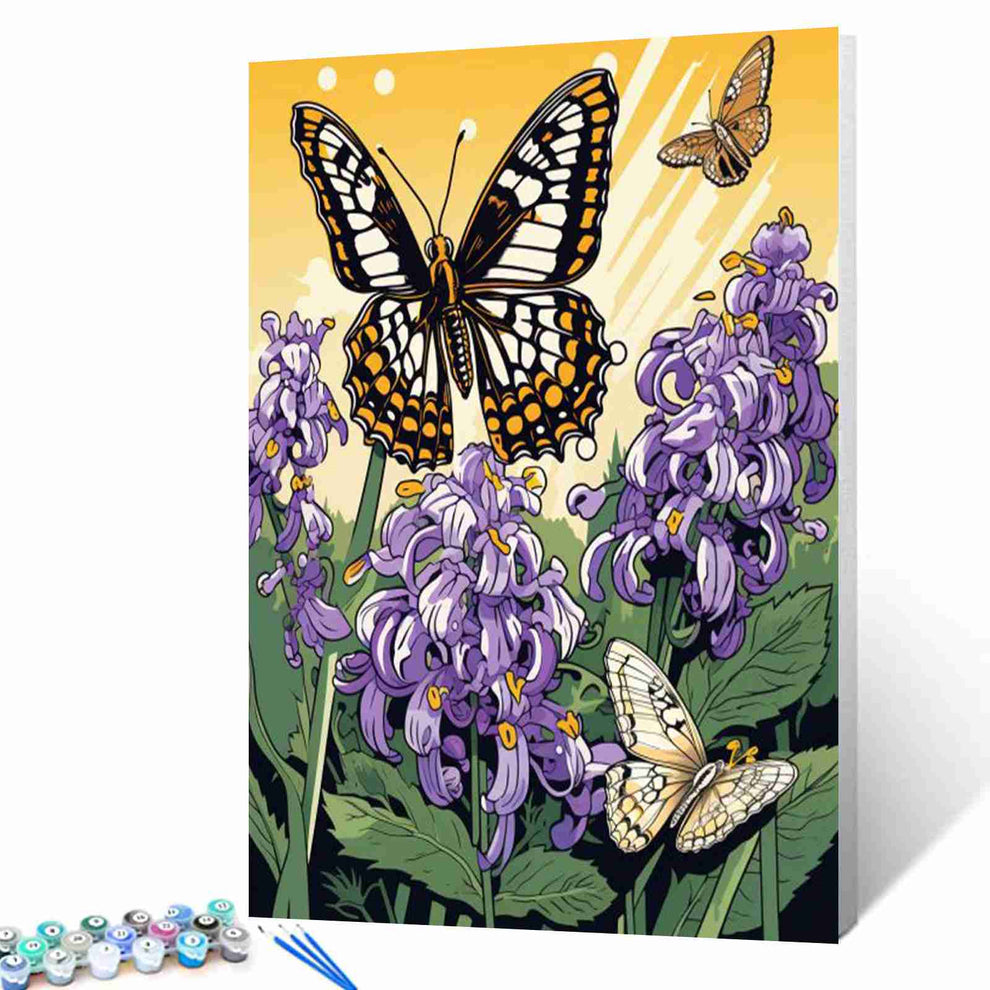
Paint by Numbers butterfly kits make painting easy and fun, even if you have never tried it before. You get everything you need in one box. Most kits include a printed canvas, bright paints, fine brushes, a reference picture, and an instruction sheet. You can pick a kit labeled “easy” or “for beginners.” These kits have bigger shapes and fewer colors, so you won’t feel overwhelmed.
Here’s how you can start your butterfly painting:
Choose a beginner-friendly kit with simple shapes and clear numbers.
Open your kit and check what’s inside. You should see a canvas, paints, brushes, a reference image, and instructions.
Begin with a kit that has medium or easy difficulty. This helps you build confidence before you try more detailed butterfly designs.
Look at the instruction sheet and reference image. Paint each numbered section with the matching color. Take your time and enjoy the process.
Spread your painting over several sessions. Most beginner kits take about 10 to 20 hours. You don’t need to rush. Enjoy watching your butterfly come to life!
Tip: If you make a mistake, let the paint dry and try again. The kit is designed to help you learn and have fun.
Customizing Your Art
You can make your Paint by Numbers butterfly painting unique. Try these ideas to add your own style:
Use different color patterns for the wings. You can swap colors or mix shades to create a butterfly that matches your favorite palette.
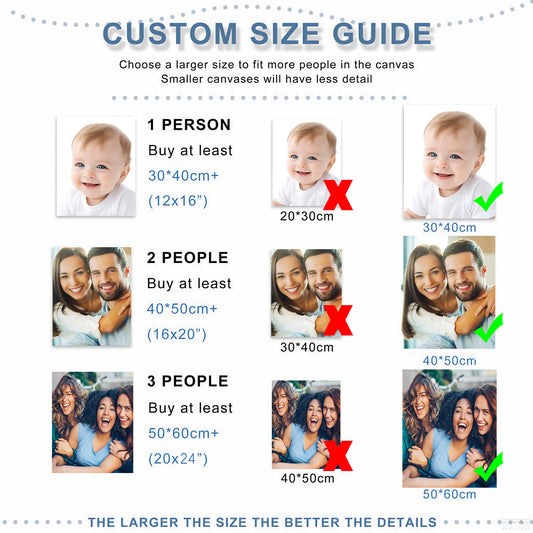
Turn any photo into a custom Paint by Numbers kit. This lets you paint a butterfly from a picture you love.
Frame your finished butterfly painting. A nice frame makes your art look special and ready to hang on your wall.
Use water-soluble acrylic paints. These paints are easy to clean and let you experiment with blending and layering colors.
Customization Idea |
What It Does |
|---|---|
Change wing colors |
Makes your butterfly stand out |
Custom kit from a photo |
Personalizes your painting |
Add a frame |
Gives your art a professional look |
Try new paint techniques |
Boosts your creativity |
Note: Customizing your butterfly painting helps you learn new skills and express your personality. Every butterfly you paint can be one-of-a-kind!
Quick-Start Guide
Easy Outlines
You want to start your butterfly drawing tutorial with an easy outline. This step helps you build a strong base for your sketch. Here’s a simple way to get going:
Draw a vertical line down the center of your paper. This line keeps your butterfly symmetrical.
Use basic shapes like ovals and circles for the body and head. Place the body right on the center line.
Sketch the wings as large, curved shapes. Start with the top wings, then add the bottom wings below.
Keep your pencil lines light. This makes it easy to erase and fix mistakes.
Check both sides of your butterfly often. Try to match the left and right wings as closely as you can.
Look at a photo if you need help with wing shapes. Reference pictures make your butterfly drawing tutorial even easier.
Tip: Using an H or HB pencil gives you soft lines that are easy to adjust.
If you follow these steps, you’ll have an easy outline ready for any butterfly drawing tutorial. You can use this method for quick sketches or more detailed art.
Adding Details
Now you can make your butterfly look real by adding details. Start with the patterns on the wings. Draw lines and spots that match on both sides. Monarch butterflies have black lines and white dots near the edges. Add these for a classic look.
Next, sketch the antennae. Make them thin and gently curved. Add a small knob at each tip. Draw six legs, three on each side of the body. Keep them slender and a bit wavy.
To make your butterfly pop, add shading. Use a darker color near the body and at the edges of the wings. Leave the middle of the wings lighter. This trick shows where the light hits and makes your butterfly look three-dimensional.
You can also add highlights with a white pencil or gel pen. Place them on the body and wing edges. This step gives your butterfly a shiny, lifelike finish.
Try using hatching or cross-hatching for shadows. These easy techniques add texture and depth.
With these steps, your butterfly drawing will stand out. You can use this quick-start guide for any butterfly drawing tutorial or easy sketch session.
Personalizing Your Butterfly Drawing
Unique Patterns
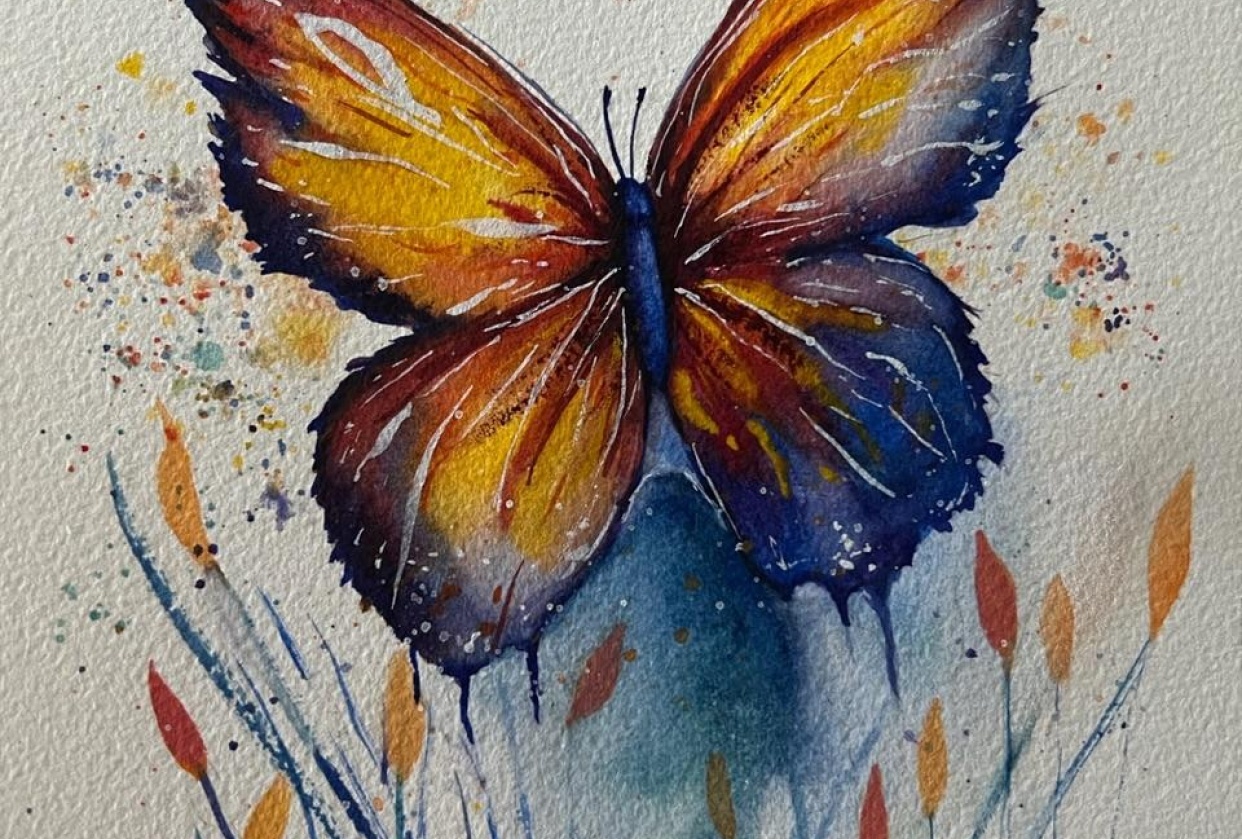
You can make your butterfly art special by trying new patterns. Butterfly wings in nature have cool designs. Some artists use soft colors and bright shades in their watercolor butterfly paintings. They look at the tiny, layered patterns on real wings and turn them into their own art. You might see eyespots, chevrons, or striations on a butterfly. These shapes come from old symmetry systems, like the nymphalid groundplan. The Atala butterfly has a black background with blue and red spots. These strong colors and mosaic-like scales give you lots of ideas for your whimsical butterfly drawing.
Try mixing these natural patterns with your own style. You could fill a butterfly mandala with eyespots or stripes. Maybe you want a minimalist butterfly with just a few lines and dots. If you like fantasy butterfly designs, add glowing colors or magical swirls. You can even make an abstract butterfly using only shapes and color blocks. Don’t forget to add cute details, like tiny hearts or stars, to make your drawing feel special.
Tip: Look at real butterflies for ideas, then add your own twist. Your whimsical butterfly drawing can be realistic or imaginative!
Themed Collections
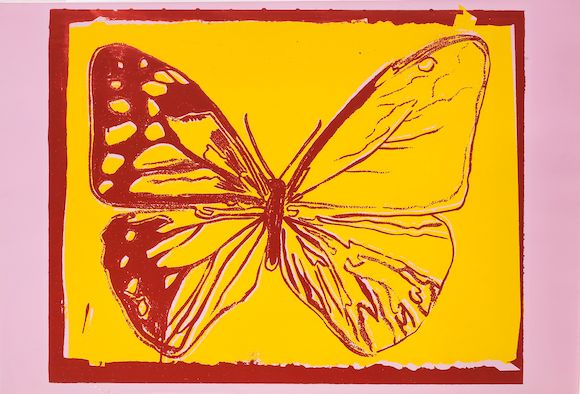
Making a themed collection in your sketchbook is a fun way to try butterfly art. Start by looking at famous artists’ butterfly works, like Warhol or Escher. Make quick sketches based on your favorite ideas. You might visit a butterfly garden or look at old collections for more inspiration.
Here’s how you can make your own collection:
Look up butterfly art and sketch your favorite styles, like a fantasy butterfly or a minimalist butterfly.
Draw butterflies from your local area or from a butterfly conservation center.
Try arranging origami butterfly shapes on colored paper for a playful look.
Use tissue paper or maps to make woven or collage effects.
Sketch butterfly motifs you see in stained glass or on patterned clothing.
Mix in negative and positive pencil sketches for variety.
Add a butterfly mandala or a whimsical butterfly drawing to tie your collection together.
Keep trying new ideas, like a realistic butterfly or a cute origami butterfly, to make your sketchbook unique.
Collection Idea |
What to Try |
Result |
|---|---|---|
Fantasy butterfly |
Magical colors and patterns |
Dreamy, imaginative art |
Minimalist butterfly |
Simple lines and shapes |
Clean, modern look |
Butterfly mandala |
Repeating patterns |
Relaxing, detailed designs |
Origami butterfly |
Folded paper or drawn folds |
Playful, cute style |
You can mix and match styles. Maybe you want a whimsical butterfly drawing next to a realistic butterfly. Or you could fill a page with cute origami butterfly sketches. Themed collections help you see your progress and give you new ideas every day.
You can make your sketchbook special by trying new butterfly drawing ideas. Make each butterfly your own by adding your style. Practice every day to get better at drawing. This also helps your creativity grow. If you need more ideas, look at these resources:
Drawing Style/Resource |
Description/Use Case |
Additional Resources/Links |
|---|---|---|
Whimsical Drawing |
Fun and creative patterns you can try |
YouTube tutorial |
Realistic Drawing |
Draw butterflies that look real by using photos |
Tutorial |
Butterfly Drawing Tutorial |
Step-by-step help from start to finish |
Tutorial |
Free Drawing Templates |
Use these ready-made butterfly outlines to start |
Templates |
Set a goal for your art and join drawing challenges. Keep sketching butterflies and share your art with friends or online. Fill your sketchbook with new ideas and let your creativity soar! 🦋
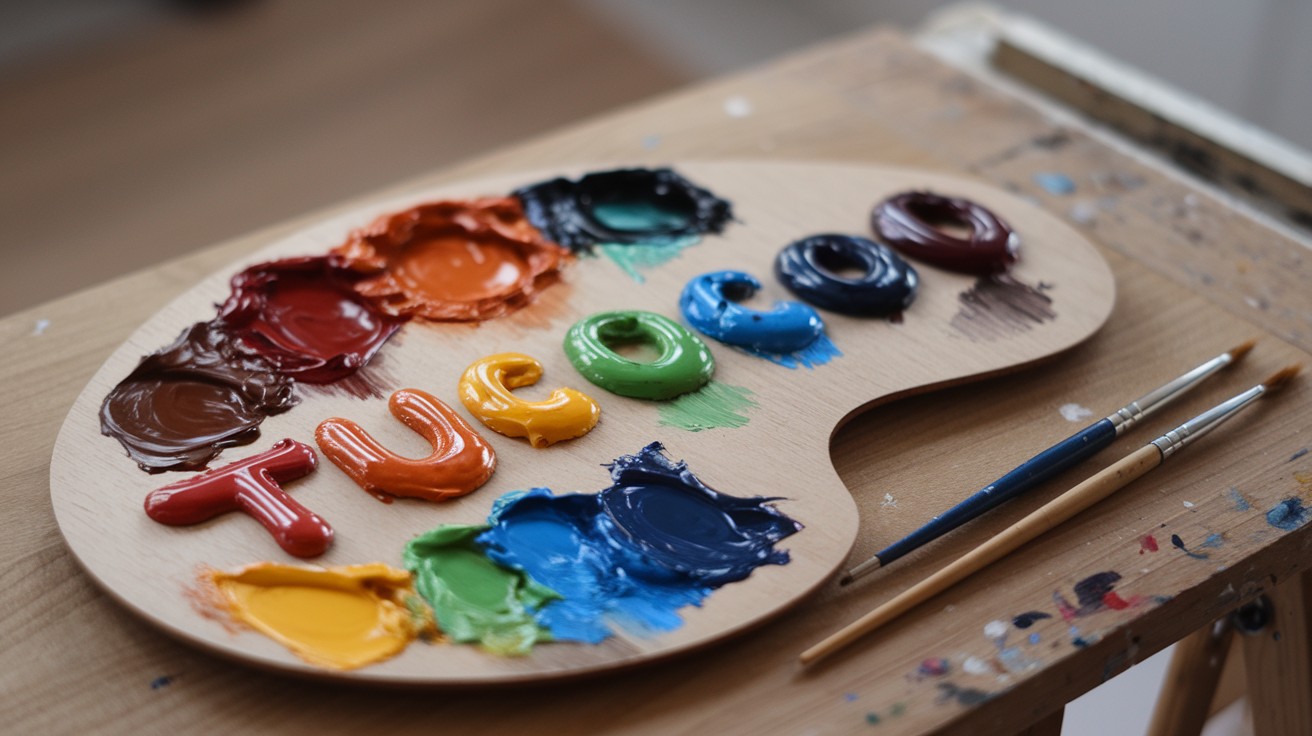
Tucocoo Paint by Numbers
FAQ
How do you draw a butterfly that looks symmetrical?
Start with a center line. Sketch one wing, then copy it on the other side. You can fold your paper to check both sides. Use light pencil lines first. This helps you erase and fix mistakes easily.
What tools work best for beginner butterfly drawings?
You only need a pencil, eraser, and paper. Colored pencils or markers add color. Try using a ruler for straight lines. If you want to add details, use a fine-tip pen for outlines.
Can you draw butterflies without any art experience?
Yes! Anyone can draw butterflies. Begin with simple shapes like circles and ovals. Practice every day. Your drawings will get better. Remember, you do not need to be perfect. Have fun and enjoy the process.
How do you choose colors for butterfly wings?
Look at real butterflies for ideas. Pick two or three colors you like. Try bright colors for a bold look. Soft colors give a gentle feel. You can also use patterns from nature or make up your own.
What are some fun ways to decorate butterfly drawings?
Try adding stars, hearts, or flowers to the wings. You can use glitter pens or stickers for sparkle. Draw a background with clouds or grass. Mix patterns and colors to make your butterfly unique.