
14 Most Famous Horse Paintings in Art History Everyone Should Know
Artists have loved horses for thousands of years, so horses are a big part of art history. Ancient Egypt shows us how much people liked horses:
Horses came to Egypt between 1650 and 1550 BCE. This changed Egyptian life in many ways.
Chariots and six-spoked wheels made travel and fighting better.
Paintings in tombs and royal writings showed horses as signs of power and high rank.
A famous painting with a horse captures more than just the animal’s beauty. It also reveals what people cared about and the artist’s skill. These great works, including a famous painting with a horse, show how important horse art is in many cultures, and each famous painting with a horse proves how creative and historic horse art can be.
Key Takeaways
Horses have inspired artists for a very long time. They stand for power, beauty, and spirit in many cultures. Famous horse paintings show many different styles. Some show horses that look real. Others use bright colors and strong feelings. Many artworks show the close bond between people and horses. They tell stories about history, bravery, and daily life. Horse art links the past and the present. It inspires artists and people who look at it. These paintings share stories of strength, freedom, and hope. Studying these paintings helps us see how important horses are in art. It also helps new artists and fans feel creative.
1.Lascaux Cave Horses
Prehistoric Origins
The Lascaux Cave Horses are a famous painting with a horse from about 17,000 years ago. Scientists checked the age by testing charcoal found in the cave. These paintings are from the Upper Paleolithic period. People from the Magdalenian culture made them deep in caves in France. They used oil lamps made of red sandstone. The lamps burned deer fat to give them light while they painted.
There are hundreds of animal pictures on the cave walls. Horses are the most common animal shown. Scientists studied old horse bones from Europe and Siberia. They found that the coat colors in the paintings, like bay, black, and rare 'leopard' spots, were real. This means the artists painted horses they saw around them. The Lascaux Cave Horses show advanced art skills. The artists used layering, retouching, and even perspective. These skills would not be seen again for thousands of years.
Lasting Influence
The Lascaux Cave Horses are an important part of horse art. They show that early people cared about horses for more than just survival. They also saw horses as beautiful and strong. Some paintings show "falling horses," which might be about hunting. Other pictures have horses upside down or in wild groups. This could show how hard life was back then.
A famous painting with a horse from Lascaux is more than just a picture of an animal. It shows what people believed and how they lived. There is a human figure with hunting tools next to the horses. This shows a close bond between people and animals. The Lascaux Cave Horses still inspire artists and historians today. They show that horses have always been important in art and culture.
The Lascaux Cave Horses help us remember that people and horses have a long history together. Their story is still told in every horse painting today.
2.Horses of Saint Mark

Ancient Equestrian Art
The Horses of Saint Mark are very old and famous horse statues. They are some of the best examples of equestrian art in the world. These four bronze horses were once at the Hippodrome in Constantinople. Today, that city is called Istanbul. Artists made them from bronze with a lot of copper. This gave the horses a strong build and a deep color. Each horse looks real with strong muscles and bright eyes. The horses look like they are moving. They are very big, so everyone notices them.
In 1204, Venetian soldiers took the horses during the Fourth Crusade. They brought them to Venice and put them on St. Mark’s Basilica. People from many places came to see these famous horse statues. The horses became a sign of Venice’s power and riches. Many artists later tried to show horses as lively and beautiful as these.
Symbolism
The Horses of Saint Mark mean more than just art. They stand for winning, success, and the spirit of a city. When Venice got the horses, it showed their strength to everyone. The statues stood high above Venice, reminding people of their victories.
Writers like Charles Freeman and Michael Jacoff wrote about the horses as war trophies and signs of power. Marilyn Perry and others studied how the horses became part of Venice’s stories and legends. Napoleon once took the horses to France, but they came back to Venice later. This made their story even more exciting.
Today, the Horses of Saint Mark are still a famous painting with a horse, even though they are statues. They inspire people who love horse art. Their story shows how a horse can stand for a city’s pride and spirit.
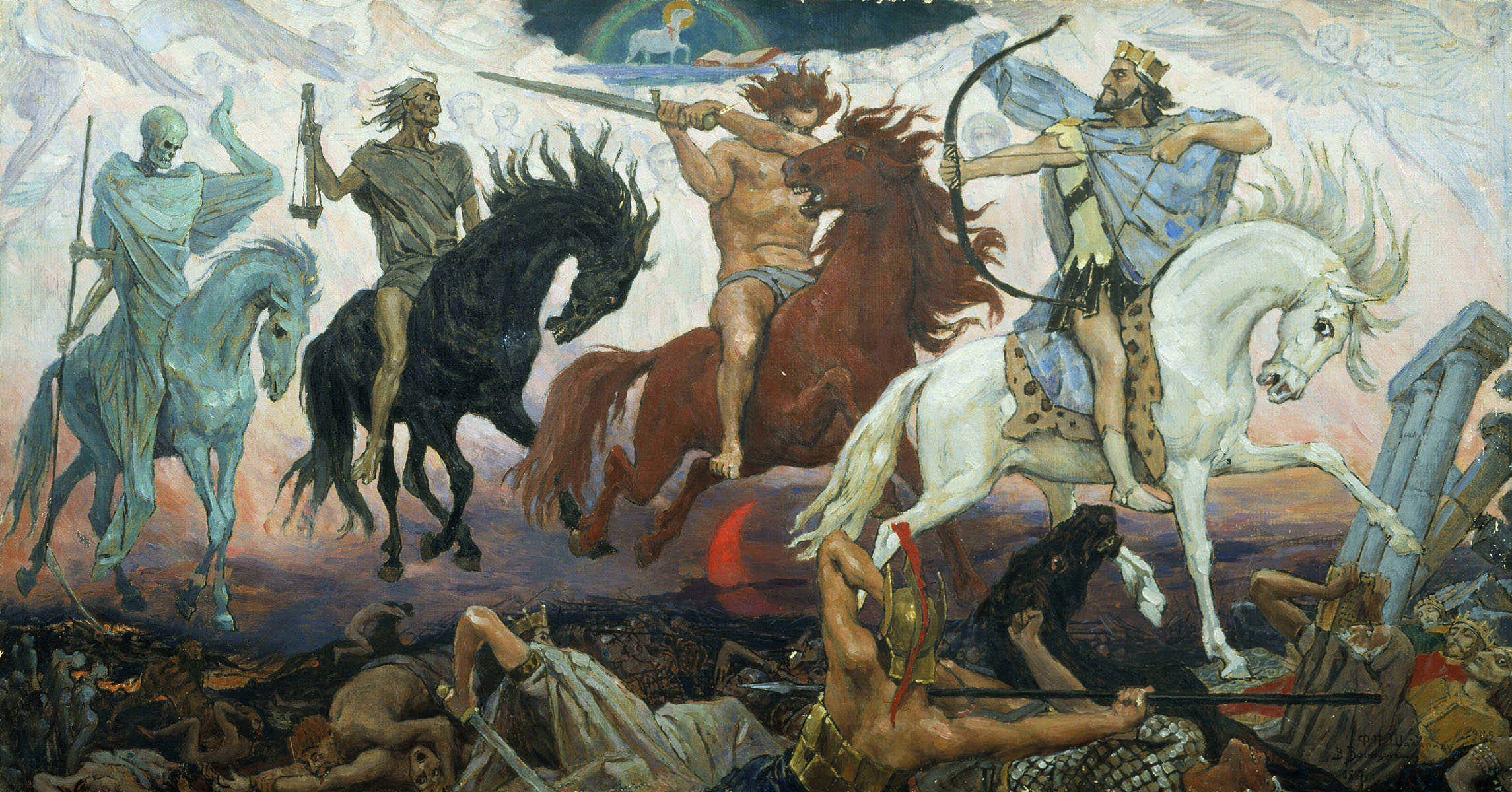
3.The Four Horsemen of the Apocalypse
Albrecht Dürer
Albrecht Dürer created one of the most powerful images of horses in art history. He made "The Four Horsemen of the Apocalypse" in 1498 as part of a series of woodcut prints. Dürer lived in Germany during the Renaissance. He studied nature and used careful observation in his work. In this piece, he showed four riders on horses. Each rider stands for a force that brings change: Conquest, War, Famine, and Death. Dürer used sharp lines and strong contrasts to make the scene dramatic. The horses look wild and full of energy. People can see the muscles and movement in each animal.
Dürer’s skill in drawing horses set a new standard for artists. He paid attention to details like the shape of the head and the flow of the mane. Many later artists learned from his work. His woodcut became a famous painting with a horse because it captured both fear and beauty.
Iconic Imagery
The Four Horsemen became an iconic symbol in Western art. Dürer’s print shows the power of horses to carry both hope and danger. The horses charge forward, filling the space with action. Each horse has a different color and style, which helps people tell the riders apart. The image tells a story from the Book of Revelation. It warns about big changes in the world.
Many people remember this artwork because of its bold style. The horses seem to leap off the page. Dürer’s use of light and shadow makes the scene feel real. This piece stands out among other horse paintings for its energy and meaning. Today, artists and historians still study this iconic work. It shows how a single image can shape the way people think about horses in art.
Dürer’s Four Horsemen remind viewers that horses can be both noble and fierce. Their story lives on in many other paintings and books.
4.Whistlejacket

George Stubbs
George Stubbs is a very important artist for horse paintings. He lived in England in the 1700s. He became well-known because he understood horse bodies so well. Stubbs did not just look at horses. He studied them very closely. He spent years cutting open dead horses to see how their muscles and bones worked. In 1766, he wrote The Anatomy of the Horse. This book showed all his careful research. Because of this, he could paint a famous painting with a horse that looked very real.
Stubbs painted Whistlejacket in 1762. The horse in the painting belonged to a rich man. This horse was famous for being fast and full of energy. Stubbs painted Whistlejacket by itself, with no background or rider. This made people look only at the horse. Viewers could see every detail. Many people think Whistlejacket is a great vintage horse painting. It shows both the horse’s power and beauty.
Anatomy and Realism
Whistlejacket shows the horse standing up on its back legs. Stubbs used what he learned from studying horse bodies. He painted the muscles, veins, and even small marks very carefully. The horse’s coat looks shiny. Its eyes look bright and awake. This detail made Stubbs different from other artists.
Stubbs’s careful study made the painting look real. He wanted people to see how beautiful the horse really was. He left out the background so nothing would take attention away from the horse. This style became popular in vintage horse painting. Many artists copied it later.
Rich horse owners noticed Stubbs’s work. They wanted him to paint their horses too. Today, Whistlejacket is still a famous vintage horse painting. It shows both great art skill and the lasting beauty of horses.
5.A Lion Attacking a Horse

Dramatic Scene
A Lion Attacking a Horse is a very dramatic vintage horse painting. George Stubbs made this artwork in the late 1700s. He picked a strong moment to show. A lion jumps onto a scared horse. The painting shows the struggle and fear. The horse’s eyes look wide with panic. Its muscles are tight as it tries to get away. The lion’s claws grip the horse’s back. This makes the scene feel real and urgent.
Art critics say this painting is haunting and powerful. The picture tells a story about survival and strength. It also shows how animals can be vulnerable. The horse stands for grace and innocence. The lion stands for wild power and fierceness. One review says the painting is about the fight between strength and humanity. Stubbs chose to show this deadly fight. That makes the painting hard to forget. Many people think it is one of the first Romantic paintings by an English artist.
The painting feels dramatic because the animals are moving and fighting.
The scene’s strong feelings pull viewers in. People can feel the horse’s fear and the lion’s anger.
The way the painting is set up shows both chaos and beauty. It mixes violence with the elegance of nature.
Stubbs’s Mastery
Stubbs’s great skill shows in every part of this vintage painting. He studied horse bodies for many years. You can see his knowledge in how he paints the horse. The muscles, veins, and pose look real. History shows that other artists copied this painting. This proves how important it is and how skilled Stubbs was.
A research article says this painting is more than just a dramatic scene. It is a secret story with ideas from heraldry, noble breeding, and science from the Enlightenment. The painting links to big ideas of the time, like the sublime. Stubbs used “heraldic naturalism” to make the horse look noble. The lion brings danger and excitement to the painting.
Stubbs’s vintage horse paintings inspired many artists after him. He mixed science and art in his work. The lasting effect of A Lion Attacking a Horse shows how a great artist can turn a simple idea into a strong story.
6.Napoleon Crossing the Alps

Jacques-Louis David
Jacques-Louis David made a very famous painting called "Napoleon Crossing the Alps." He finished it in the early 1800s. The painting uses the neoclassical style, which was popular then. David wanted people to see Napoleon as strong and brave. In real life, Napoleon crossed the Alps on a mule. But David painted him on a big, powerful horse. Napoleon looks calm and sure of himself, even in the cold mountains. This makes the painting a symbol of courage and big dreams.
David knew Napoleon, so he became the court painter. He used equestrian portraiture to link Napoleon to ancient Rome’s greatness. The painting has bright colors and strong light. This makes Napoleon look very important. David’s painting did more than show a moment in time. It changed how people thought about Napoleon as a leader. Many artists later copied this style to show power and leadership in horse paintings.
Power and Leadership
"Napoleon Crossing the Alps" stands for power and leadership. David used special art tricks to make it look grand. The horse’s wild mane and Napoleon’s cloak add excitement. David wrote the names of Hannibal and Charlemagne on the rocks. These were famous generals who also crossed the Alps. This connects Napoleon to other great leaders. David used a statue of Peter the Great as a model for the horse. He knew a lot about classical equestrian portraiture.
The painting is not just a simple picture. It uses portraiture to make Napoleon look like a hero. Napoleon looks calm, even when the horse stands up. This perfect image helped people see him as brave and strong. Experts say Napoleon could inspire his soldiers and handle hard times. David’s painting worked as political propaganda. It made Napoleon look like a hero. Even today, leaders use pictures like this to shape how people see them.
"Napoleon Crossing the Alps" is still one of the most famous equestrian paintings. It shows how a horse and rider can tell a story about power, dreams, and history.
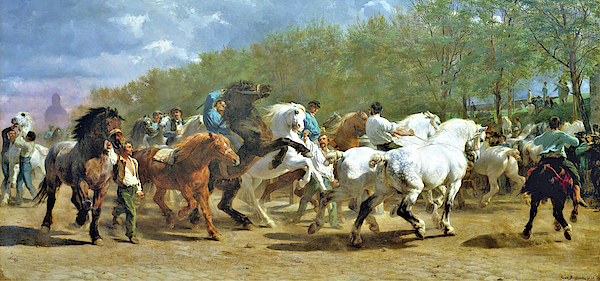
7.The Horse Fair
Rosa Bonheur
Rosa Bonheur was a famous animal painter in the 1800s. She spent a lot of time at the Paris horse market. There, she watched and drew draft horses as they worked. Bonheur wanted to learn how every muscle moved. She wore men’s clothes so she could fit in and study the horses up close. Her hard work helped her show the real power and beauty of horses. The horse fair was her biggest and most important painting. She called it her "Parthenon frieze" because she loved classical art. Bonheur looked up to artists like George Stubbs, Théodore Géricault, and Eugène Delacroix. Their art made her want to paint horses with strength and grace.
Dynamic Composition
The horse fair is special because it feels full of life and energy. Bonheur used strong lines that go across the painting. These lines help guide your eyes around the scene. The horses look like they are moving in circles around the people. This makes the painting feel busy and exciting. She made the front of the painting calm and the background soft and misty. This makes the horses stand out even more. Light and shadow make the scene dramatic. Bonheur watched horses very carefully. She showed both their power and their beauty. Critics say the horse fair shows how well she understood animals and people. The painting shows not just the horse’s strength but also the lively feeling of the market. Many people think the horse fair celebrates the horse’s place in society and the beauty in daily life.
The horse fair is still seen as a great work of art. It mixes skill, careful study, and a love for horses. It keeps inspiring artists and people who love strong paintings.
8.Lady Godiva
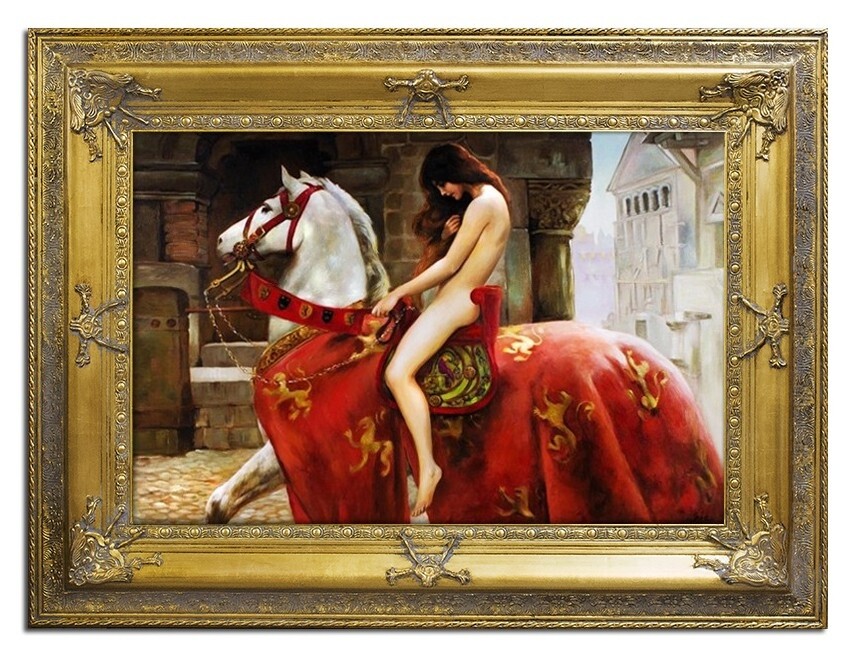
John Collier
John Collier painted Lady Godiva in 1898. He showed Lady Godiva riding a horse in Coventry. Collier’s painting is different from other horse paintings. He mixed real history with his own ideas. He did not use the Victorian style that made things look perfect. Instead, he wanted Lady Godiva to look like a real person with strong feelings. The horse looks calm and gentle. This helps people notice Lady Godiva’s courage. Collier used soft colors and careful details. This makes the scene feel real but also dreamy.
Historians and art experts have studied the Lady Godiva story for a long time:
Early Latin books and medieval writers told the story first. Writers like the St. Albans chroniclers and Ralph Higden wrote about Lady Godiva’s ride. They said she rode a horse with her hair covering her body for a noble reason.
The legend is not all true, but it became very famous. It inspired many works, like Tennyson’s poem and Collier’s painting.
Collier’s painting was different from Victorian art. He showed Lady Godiva as thoughtful and real. He looked at ideas like showing yourself in public and being brave inside.
The legend led to public events, statues, plays, and the Great Show Fair in Coventry, which started in 1678.
The story changed over time, but courage and sacrifice stayed important. The legend lasted for centuries. It even appeared in Freud’s writings and many stage shows.
Legend and Symbolism
Art history books and cultural studies say the Lady Godiva legend is a myth. Collier’s painting shows this. Early writers like Roger of Wendover called the story a miracle for Coventry. They talked about Lady Godiva’s kindness and her wish to help people. Later artists and writers, like Alfred Lord Tennyson, added new ideas to the story. Collier used the horse as a sign of strength and dignity. The famous ride stands for bravery, sacrifice, and how one person can help a whole town. The painting is more than just a picture from history. It tells a story about values and tradition. Lady Godiva’s act still inspires artists and viewers. It reminds people of the strong bond between humans and horses.
9.Horse Frightened by a Thunderstorm

Eugène Delacroix
Eugène Delacroix created "Horse Frightened by a Thunderstorm" in 1824. He became one of the most important artists in the Romantic movement. Delacroix loved to show strong feelings in his art. He often chose animals, especially the horse, to express these emotions. In this painting, he painted a single horse standing alone. The animal looks scared and tense. Dark clouds fill the sky. Lightning flashes in the background. Delacroix used bold brushstrokes and bright colors. He wanted viewers to feel the same fear as the horse.
Delacroix studied horses carefully. He watched how they moved and reacted to loud sounds. He believed that a horse could show human feelings. Many people saw this painting and felt the horse’s fear. Delacroix’s work inspired other artists to paint animals with emotion. He showed that a horse could be more than just a subject. It could become a symbol of nature’s power.
Emotion and Movement
Delacroix’s painting stands out because of its energy. The horse does not stand still. Its muscles look tight. Its eyes are wide. The tail and mane seem to move in the wind. Delacroix captured the moment when the horse hears thunder. The animal’s body twists as if it wants to run away. This sense of movement makes the painting exciting.
Delacroix wanted people to understand how animals feel during storms. He used the horse to show fear, surprise, and the wildness of nature.
Many art experts say that Delacroix’s horse paintings changed how people saw animals in art. He did not just copy what he saw. He added feeling and drama. Today, "Horse Frightened by a Thunderstorm" remains a powerful example of how a horse can tell a story without words.
10.The 1821 Derby at Epsom

Théodore Géricault
Théodore Géricault was a great equestrian artist. He made the 1821 Derby at Epsom after visiting England. There, he watched horse races and saw how exciting they were. Géricault loved the energy and movement of the horses. He filled his sketchbooks with drawings of horses, riders, and crowds. He worked hard to learn about horse anatomy. You can see this in every part of his painting. Géricault got ideas from old sculptures like the Marly Horses. He also learned from watching real races in England. He made many sketches and oil studies before painting. He focused on the strong muscles and lively poses of the horses. These studies helped him show the action and realism in the 1821 Derby at Epsom.
Old records show Géricault really loved horses. He liked to paint the most exciting moments, like when a race starts. This let him show how strong the horses were. His English paintings show not just the horses, but also the people and the busy scene around them. Géricault paid close attention to every detail. He wanted his paintings to look as real as possible. This made his art different from other artists of his time.
Racing Energy
The 1821 Derby at Epsom shows the excitement of Derby Day. This was a big event in England in the 1800s. The painting shows horses running fast, their bodies stretched out as they race. Géricault’s art shows how much people loved speed and competition back then. The crowd in the background makes the scene feel even more exciting. It helps viewers feel like they are really there.
People at the time loved the energy and realism in this painting. The 1821 Derby at Epsom became very popular. Many people liked how Géricault made the race look so real. Copies of the painting, like etchings, let more people see the racing action. Old records from Italy also talked about fast and spirited horses. Géricault continued this tradition in his work. His painting shows the horses’ power and spirit. The horses are the real stars of the race.
Géricault’s 1821 Derby at Epsom is a great example of how art can show the excitement of horse racing. The painting honors the beauty and strength of horses.
11.The Parade (Racehorses in Front of the Tribunes)

Edgar Degas
Edgar Degas was well known for painting horses and races. He liked to visit racetracks near Paris to watch the horses and riders. Degas made many quick sketches of horses in different poses. He wanted to learn how horses moved and looked from every side. He studied art by animalier artists and Old Masters to get better. Over time, Degas found his own way to show the bond between rider and horse. He painted not just the animals, but also the excitement at the racetrack.
In "The Parade (Racehorses in Front of the Tribunes)," Degas painted horses and jockeys waiting before a race. The horses stand in a row, looking tense and ready. The riders sit up straight and guide their horses carefully. Degas used soft colors and loose brushstrokes to show light and movement. He wanted people to feel like they were really there, watching the horses.
Impressionist Equestrian
Degas’s style is part of the Impressionist movement. He liked to try new ways to use light and arrange things in his paintings. In "The Parade," he put the horses in front and the crowd behind them. This makes the horses the main part of the painting. The show "Degas: A New Vision" at the National Gallery of Victoria International talked about these ideas. The displays explained how Degas studied the way horses and riders worked together.
Degas often used photos to see how horses moved.
He played with light and shadow to show the shine on a horse’s coat.
His paintings show horses standing still or running fast.
Degas’s art helps people see how strong and beautiful horses are. His impressionist paintings make moments feel real and full of life.
Degas loved horses and used impressionist ideas to make "The Parade" an important painting in horse art history.
12.Blue Horse I
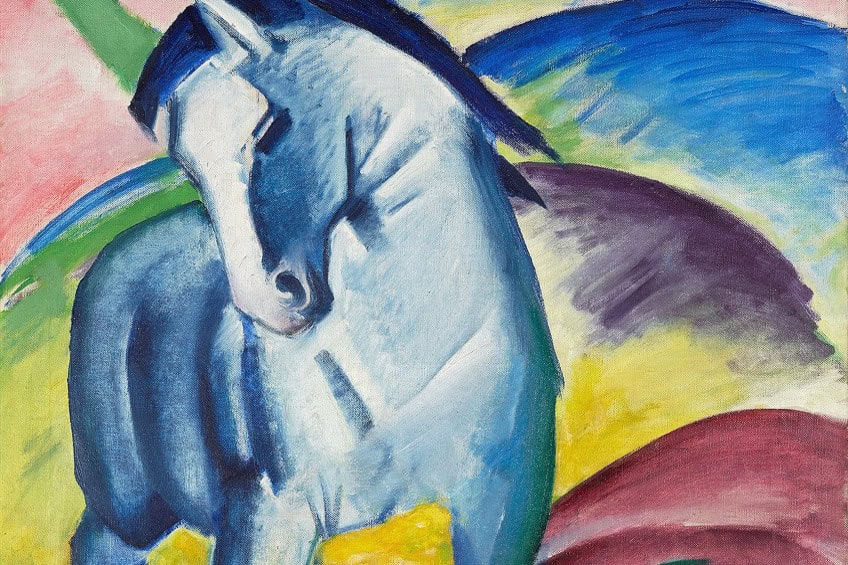
Franz Marc
Franz Marc painted Blue Horse I in 1911. He became a leading figure in German Expressionism. Marc loved animals and believed they showed spiritual truth. He chose the horse as a symbol of innocence and hope. In this painting, a single blue horse stands against a colorful background. The horse looks calm and strong. Marc used bold colors and simple shapes. He wanted viewers to feel the spirit and energy of the animal.
Marc did not paint horses to look real. He used color to show feelings and ideas. Blue, for Marc, meant hope and the future. He often painted horses in blue to share these ideas. The horse in Blue Horse I does not stand in a real field. Instead, it stands in a dreamlike world. Marc’s style broke away from old traditions. He wanted to show the inner life of the horse, not just its outside.
Modern Expression
Blue Horse I stands out among horse paintings for its modern style. Marc’s use of color and shape changed how people saw art. He did not use shadows or depth like older artists. Instead, he stacked shapes and colors to create emotion. The horse’s blue color gives the painting a sense of peace and mystery. Marc believed animals, especially horses, could show the beauty and spirit of nature.
In 2017, the Pinakothek der Moderne in Munich and Haus am Waldsee in Berlin held an exhibition about Marc’s work. Contemporary artists explored the lasting power of Blue Horse I and its influence on modern art. The exhibition also discussed the painting’s history, including its loss during the Nazi era. Marc’s expressionist innovations, such as using animals as spiritual symbols and moving toward abstraction, inspired later artists like Jackson Pollock.
Marc’s Blue Horse I remains a symbol of beauty and hope. The painting invites viewers to see the world through the eyes of a horse. It continues to inspire those who love art and the deep connection between humans and animals.
13.The White Horse

John Constable
John Constable made "The White Horse" in 1819. He was famous for painting English landscapes. He liked to paint the countryside where he grew up. Constable did not paint made-up places. He chose real scenes from daily life. In "The White Horse," a big draft horse stands by a river. The horse waits while workers move a barge. Constable showed every detail of the horse’s body. He made sure the horse fit into the land around it. He used light and shadow to make the scene look real and lively.
Constable’s style was different from other artists back then. Many painters liked dramatic or romantic scenes. Constable wanted people to see beauty in normal fields and rivers. He often painted horses working in the country. He studied how horses moved and looked. This made his paintings look real and full of life. "The White Horse" became one of his best works. It helped people see him as a great artist.
Constable’s love for the English countryside shows in his art. He proved that even a simple horse can be the main part of a great painting.
English Landscape
Constable changed how people saw landscape art. Before him, landscapes were not as important as portraits or history paintings. His work, like "The White Horse," made landscapes more respected in English art.
John Constable helped the Romanticist movement by painting real places and daily life.
"The White Horse" is one of his most famous paintings.
He inspired other artists to paint the countryside and add horses to their art.
Constable’s paintings made "Constable Country" in Suffolk well known for its beauty.
Today, many people visit the places Constable painted. They want to see the same fields, rivers, and horses he loved. "The White Horse" is now a symbol of the English countryside and the close bond between people and horses.
14.American West Horses

Frederic Remington
Frederic Remington was a well-known artist of the American West. He liked to paint cowboys, Native Americans, and wide open land. Horses were very important in his art. Remington showed horses running fast, fighting, or working with people. He wanted people to feel the wild and risky life on the frontier.
Remington’s art was more than just pictures of daily life. He often added ideas from the American Civil War. The show "Frederic Remington and the American Civil War: A Ghost Story," by Alexander Nemerov, talks about this. It explains how Remington’s horses and riders connect to war memories. In paintings like "What an Unbranded Cow Has Cost," horses show bravery and conflict. Remington also drew pictures for Owen Wister’s stories. These stories linked cowboys to old American tales.
Remington’s horses look strong and full of life. He watched horses closely to see how they moved. This helped him make his art look real. His work changed how people think about the American West.
Remington’s horses stand for freedom, hard times, and the wild spirit of the West.
Charles M. Russell
Charles M. Russell was also famous for painting the American West. He grew up in Montana and loved watching horses and wild animals. Russell painted horses in many ways. Sometimes they run across fields, work with cowboys, or stand still in the grass. He wanted to show what life in the West was really like.
Russell’s art is a lot like Remington’s. Both artists used horses to tell stories about being brave, surviving, and facing change. Art experts like Alexander Nemerov say Russell’s paintings also show the history and memories of the Civil War. Russell’s horses are in scenes of fighting or peace. This shows how important horses were to both Native Americans and settlers.
Remington and Russell helped shape how we see the American West.
Their horses became signs of adventure and history.
Museums use their art to teach about the past.
Russell’s horses help us remember the close bond between people and animals as times changed.
Most Famous Horse Paintings Overview

Equestrian Art in History
Artists have painted horses for a long time. Horses are strong and beautiful, so they are great subjects. Famous horse paintings show how people think about power and spirit. These paintings come from many places and times. Some show horses as signs of power, like Jacques-Louis David’s painting of Napoleon Crossing the Alps. Others, like Franz Marc’s Blue Horse I, use bright colors and shapes to share spiritual ideas.
Art experts notice some common themes in horse art:
Power and grace, especially in old battle scenes.
Horses in daily life, like in John Constable’s English countryside paintings.
Spiritual meaning, mostly in modern and abstract art.
The thrill of horse sports, seen in racing paintings by Géricault and Pollard.
Artists such as George Stubbs, Rosa Bonheur, and Edgar Degas tried new ways to paint horses. Their work changed how people see horses in art, both real and imagined.
Why These Works Endure
Famous horse paintings are still loved today. They show more than just animals. These paintings tell us about what people cared about in their time. Old horse paintings often show the close bond between people and horses, whether working, fighting, or playing sports. Horse art also talks about freedom, bravery, and change.
Many of these paintings are special because of new art ideas. Some use bright colors or new painting styles. Others show every detail very carefully. Museums and art fans love these paintings for their beauty and meaning. Famous horse art stays popular because it brings people together from different places and times.
Equestrian art connects the past and our dreams. Horses still inspire artists to make strong and meaningful art.
Famous horse paintings are loved by people everywhere and from all times. These artworks let us see how artists think about strength, beauty, and the spirit of horses. Readers can talk about their favorite horse art or learn more about the artists in this blog. If you feel inspired, you can try Paint by Numbers to make your own art. The bond between people and horses still helps many people create new things.
Tucocoo Paint by Numbers
FAQ
What makes a horse painting famous?
A horse painting is famous for its skill, history, or meaning. People remember these paintings because they show horses’ beauty and power. Some paintings also show the spirit of horses.
Who are some well-known artists who painted horses?
Artists like George Stubbs, Rosa Bonheur, Edgar Degas, and Frederic Remington painted many horse pictures. Their art is in museums and books all over the world.
Why do artists choose horses as subjects?
Artists pick horses because they show strength and grace. Horses move in special ways. People and horses have a long history together. Horses are in sports and daily life too.
Where can someone see these famous horse paintings?
You can see famous horse paintings in big museums. The Louvre, National Gallery, and Metropolitan Museum of Art have them. Some museums let you look at art online.
How can beginners start painting horses?
Beginners can draw easy horse shapes first. Paint by Numbers kits help new artists learn about color and shapes. Practice and watching horses will help you get better.