
10 Most Famous Paintings with Clouds in Art History

If you’re searching for a famous painting with clouds, art history offers many iconic examples. Here’s a list of renowned masterpieces celebrated worldwide as a famous painting with clouds:
1. The Starry Night – Vincent van Gogh
2. The Hay Wain – John Constable
3. Wanderer above the Sea of Fog – Caspar David Friedrich
4. Impression, Sunrise – Claude Monet
5. Wheat Field with Cypresses – Vincent van Gogh
6. Woman with a Parasol – Claude Monet
7. Sky Above Clouds IV – Georgia O’Keeffe
8. Clouds – Thomas Cole
9. The Sky – John Singer Sargent
10. Sunset by the Sea – William Trost Richards
Artists often choose to create a famous painting with clouds not just for their beauty, but for deeper reasons:
They express emotion and can symbolize deeper meanings.
Many artists, such as John Constable, believe the sky is the most expressive part of a landscape, making a famous painting with clouds especially powerful.
Key Takeaways
Clouds in well-known paintings show feelings, action, and ideas, not just looks.
Artists such as Van Gogh, Monet, and Constable used clouds to show emotions and real nature.
Learning about clouds helped artists paint skies better and led to new art styles.
Art movements show clouds in different ways, from real to more creative looks.
Seeing cloud paintings helps you enjoy nature’s beauty and makes you think in new ways.
1.The Starry Night
Vincent van Gogh
Post-Impressionism
When you look at The Starry Night, you see more than just a night sky. Vincent van Gogh painted this masterpiece in 1889, and it has become one of the most famous works in art history. The painting belongs to the Post-Impressionism movement, which means you notice bold colors and expressive brushstrokes. Van Gogh wanted you to feel the energy and emotion in the scene, not just see it.
The swirling sky in The Starry Night stands out right away. Van Gogh used thick, curving lines to create movement and excitement. He did not paint the sky as it looks in real life. Instead, he made the clouds and stars twist and turn, almost like they are alive. This style shows how Van Gogh felt inside. Many people believe he painted the sky this way to express his own emotions and thoughts.
The clouds in The Starry Night have dynamic, swirling brushwork. This gives the sky a sense of energy and turbulence.
Van Gogh’s brushstrokes contrast with the calm village below. This makes you think about the connection between earth and the heavens.
He used strong outlines and exaggerated shapes, inspired by old woodcuts, to make the sky more dramatic.
The colors in the night sky are not just blue and white. Van Gogh mixed many shades to show how he saw the world and to share his feelings with you.
The movement and light in the sky can make you think about both nature and something spiritual.
Scientists have even studied The Starry Night. They found that the swirling patterns in the sky match real patterns of turbulence in nature. Van Gogh did not know the science, but he captured the feeling of a moving, living sky. The painting’s clouds and stars help you imagine a world full of wonder and hope. When you view The Starry Night, you experience both Van Gogh’s artistic skill and his deep emotions.
2.The Hay Wain
John Constable
Realism
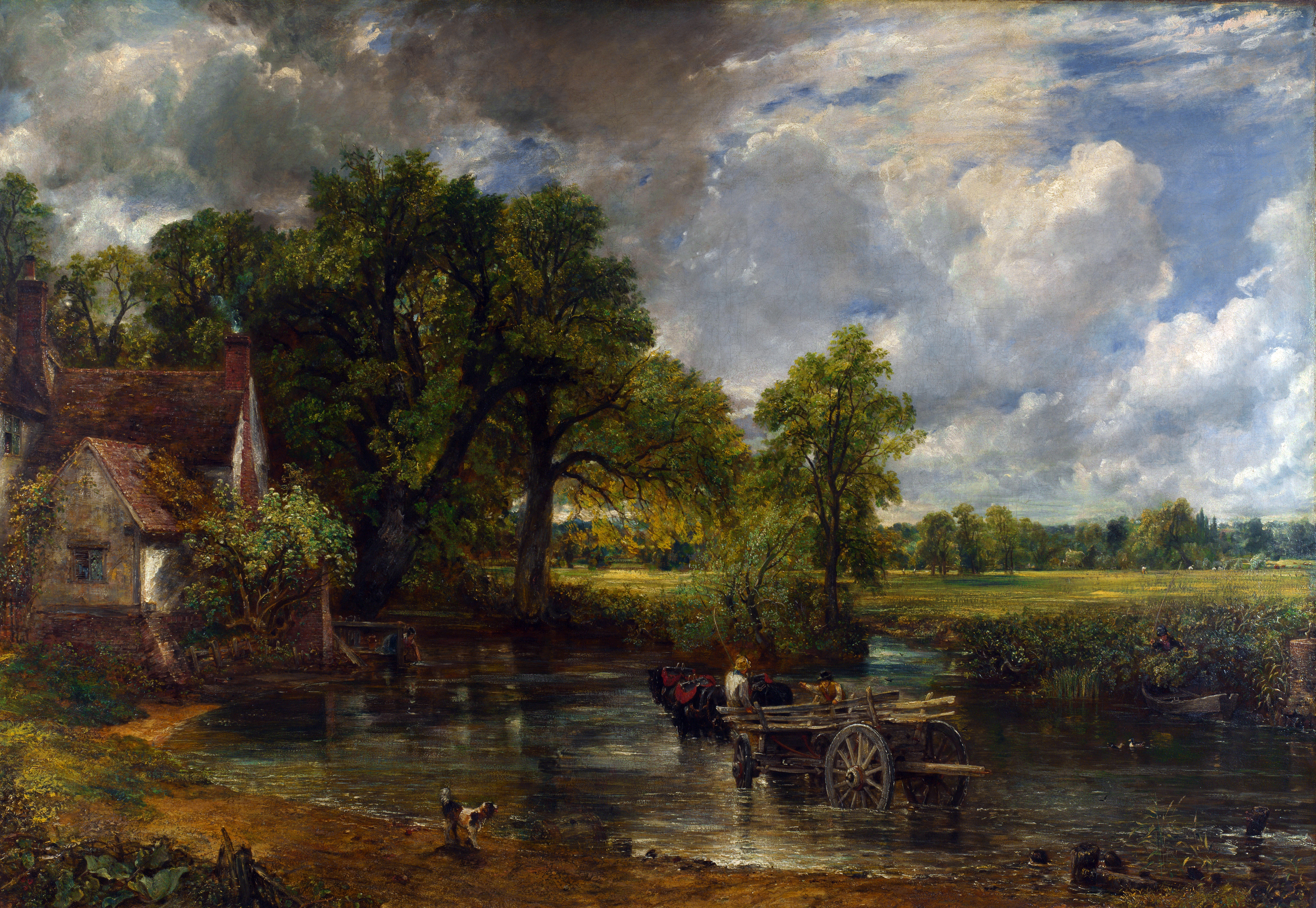
When you look at The Hay Wain, you see a peaceful English countryside. John Constable painted this masterpiece in 1821. He became famous for his realistic landscapes and his love for nature. The Hay Wain belongs to the Realism movement. You notice a wagon crossing a shallow river, with a cottage and trees nearby. The sky above stretches wide, filled with soft, rolling clouds.
Constable believed the sky was the most important part of any landscape. He called it the "chief organ of sentiment." You can see how much attention he gave to the cloudscape in The Hay Wain. The clouds do not just fill space. They set the mood and bring the whole scene to life. Constable wanted you to feel the weather and the atmosphere. He used careful observation and even studied meteorology to make his skies accurate and emotional.
During the summers of 1821 and 1822, Constable created over one hundred studies of clouds. He painted outdoors, watching the sky change from hour to hour. This dedication helped him capture the fleeting effects of light and weather. His approach was new at the time. Most artists painted in studios, but Constable worked outside to see nature directly.
Constable's focus on the study of clouds changed landscape painting forever. He inspired other artists to look closely at nature and to paint what they saw. His work influenced the Barbizon School and later Impressionists. Today, you can still feel the freshness and honesty in his paintings. The Hay Wain stands as a perfect example of how clouds can shape the feeling of a landscape and connect you to the natural world.
3.Wanderer above the Sea of Fog

Caspar David Friedrich
Romanticism
When you look at wanderer above the sea of fog, you see a lone figure standing on a rocky peak. He faces away from you, gazing out over a landscape filled with mist and rolling hills. Caspar David Friedrich painted this work in 1818. You can feel the power of nature and the mystery of the unknown. The painting belongs to the art movement called romanticism. This movement values emotion, imagination, and the beauty of nature.
The clouds and fog in this painting do more than just fill the sky. They create a sense of awe and wonder. You might feel small when you see the vastness of the scene. The clouds seem to stretch forever, hiding parts of the mountains and making you think about what lies beyond. Friedrich wanted you to experience the sublime, a feeling that mixes fear and beauty when you face something much bigger than yourself.
The figure stands face-to-face with the vastness of nature and the divine, symbolized by the expansive clouds and fog. This moment invites you to reflect on your own place in the world.
Friedrich used soft colors and contrasts between light and dark to make the scene feel dream-like. The sharp rocks in the front stand out, while the foggy background looks soft and distant. This technique helps you sense the depth and mystery of the landscape. The solitary figure shows the Romantic idea of the individual exploring nature’s grandeur. You see both strength and vulnerability in the way he stands.
The painting highlights the beauty of nature and the power of personal emotion.
The act of climbing the mountain shows a desire for adventure and discovery.
The scene inspires you to think deeply and feel connected to something greater.
When you view wanderer above the sea of fog, you join the figure in facing the unknown. The clouds help create an emotional atmosphere that encourages you to wonder and dream.
4.Impression, Sunrise
Claude Monet
Impressionism
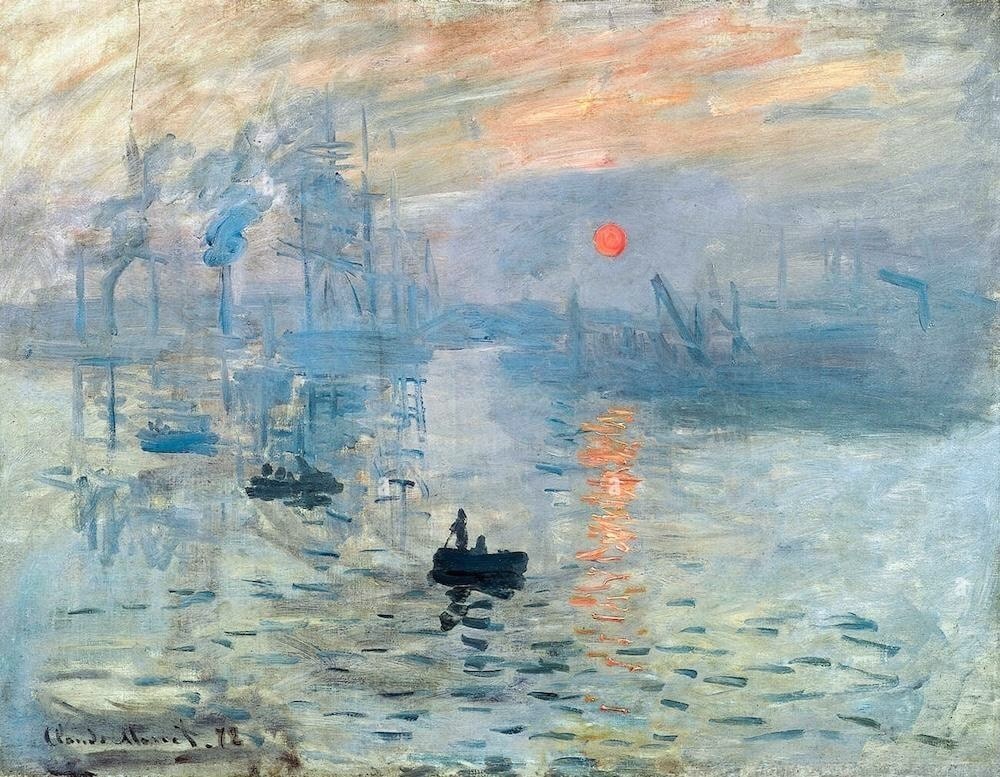
When you look at "Impression, Sunrise," you see the beginning of the impressionist art movement. Claude Monet painted this scene in 1872, showing the port of Le Havre at dawn. You notice the soft light, the gentle water, and the sky filled with mist and clouds. Monet wanted you to feel the moment, not just see the details.
Monet used quick, loose brushstrokes to create a misty effect. He painted outdoors, or en plein air, to capture the changing light. You see how the colors blend together—orange, red, blue, and gray mix across the sky and water. The clouds do not have sharp edges. Instead, they float and fade, making the whole scene feel alive and fresh.
Many people did not understand Monet’s style at first. Critics like Louis Leroy made fun of the painting, saying it looked unfinished, like "wallpaper in an embryonic state." They thought Monet’s brushwork was too rough and sketchy. Other critics, such as Jules-Antoine Castagnary, praised Monet for showing the feeling of a sunrise instead of copying every detail. You can see how Monet’s work challenged old ideas about art.
Monet’s painting gives you the sensation of standing by the harbor at dawn. You feel the cool air and see the sun rising through the mist.
Monet’s use of color and brushwork became a model for other impressionist artists. You can spot the difference between this style and traditional painting. Impressionist artists wanted to show how light and color change in a single moment. "Impression, Sunrise" invites you to experience the world in a new way, through the eyes of an artist who loved to paint what he saw and felt.
5.Wheat Field with Cypresses
Vincent van Gogh
Famous Painting with Clouds
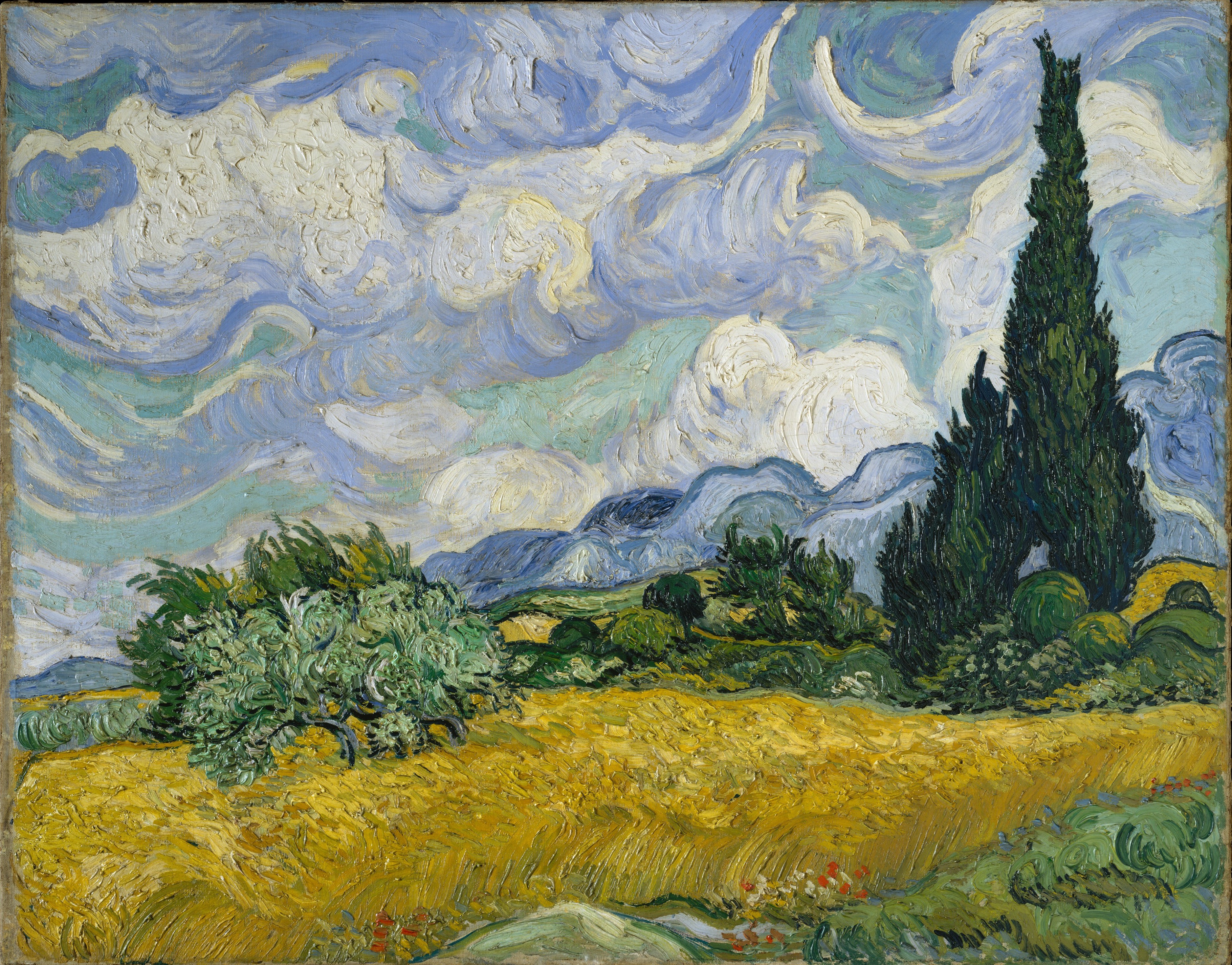
When you look at Wheat Field with Cypresses, you see why it stands out as a famous painting with clouds. Vincent van Gogh painted this masterpiece in 1889, just after he finished The Starry Night. You notice the swirling white forms of the clouds set against a bright blue sky. Van Gogh used thick impasto for the clouds and the wheat in the foreground. He chose zinc white instead of the usual lead white, which gives the clouds a special shine and texture. For the sky, he used cobalt blue and painted thinly, letting some of the canvas show through. This technique makes the sky look patterned and lively, almost like a piece of Scotch plaid, as Van Gogh once described it.
You can feel the energy in the sky. The clouds twist and move, making the whole scene feel alive.
Van Gogh’s use of color grabs your attention. He mixed vibrant greens and yellows for the landscape. The cypress trees stand tall and dark, reaching up into the sky. The clouds above them seem to dance, adding movement and rhythm to the scene. This famous painting with clouds shows how Van Gogh could turn a simple field into something dramatic and full of emotion.
Critics praise Wheat Field with Cypresses for its atmosphere. They say Van Gogh’s brushwork and colors create a sense of harmony and movement. The painting balances light and dark, with the moving clouds and three-dimensional trees making the scene dramatic and beautiful. Some people compare the atmosphere to Japanese prints because of its lightness and airiness. When you look at this famous painting with clouds, you might feel calm and peaceful, as if the scene relieves your stress.
Van Gogh’s style in this famous painting with clouds sets it apart from other works of the same period.
The textured sky and swirling clouds make you feel the power of nature.
-
You see why this is a famous painting with clouds that continues to inspire artists and viewers today.

Tucocoo Paint by Numbers
6.Woman with a Parasol
Claude Monet
Cloud Paintings
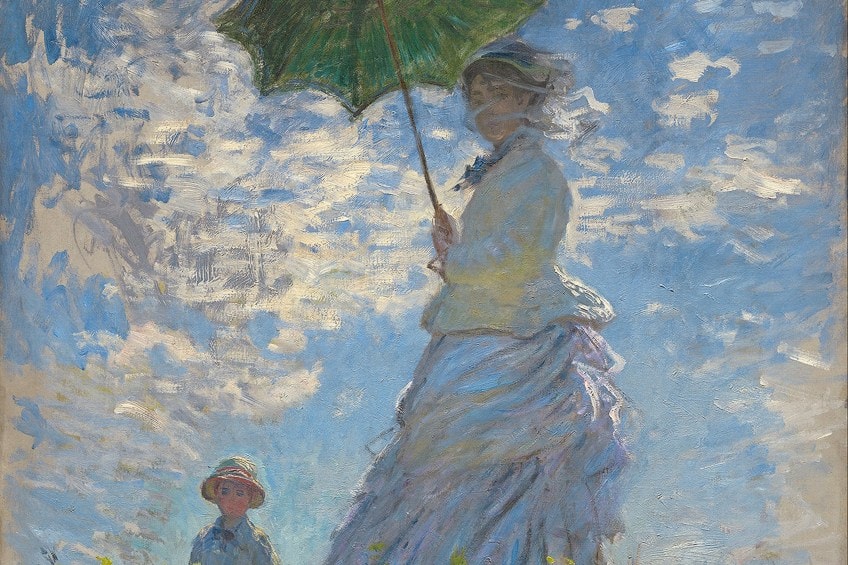
When you look at Woman with a Parasol, you see Claude Monet’s skill in capturing a moment in nature. Monet painted this scene in 1875. You notice a woman and a child standing in a field, but your eyes quickly move to the sky. The sky glows with soft blue and white hues. Delicate clouds drift across, painted with loose, expressive brushstrokes. Monet did not use sharp outlines. Instead, he focused on the sensation of light and movement. You feel as if the clouds might change shape at any moment.
Monet painted outdoors, or en plein air, to observe the sky directly. He finished the painting in one sitting. This approach allowed him to capture the fleeting effects of light and weather. The clouds in Woman with a Parasol show the Impressionist style. Monet used wider and thicker brushstrokes for the clouds. He chose mostly white and blue, with touches of gray, to show how light and shadow play across the sky. You see how the clouds seem to move and shift, just like they do in real life.
Monet’s quick, loose brushstrokes and blurry contours make the sky lively and vibrant. You sense the movement of the wind and the changing light.
Monet used several artistic techniques to bring the scene to life:
Sunlight filters through the parasol, creating a warm glow on the woman’s face and dress.
Shadows appear in shades of blue and violet, not just black or gray.
Quick, decisive brushstrokes suggest the shifting clouds and dynamic atmosphere.
Thick paint adds texture, making the sky feel three-dimensional.
Loose brushwork emphasizes the sensation of changing light and cloud movement.
When you study Woman with a Parasol, you see why it stands out among cloud paintings. Monet’s style helps you feel the freshness of the day and the beauty of a passing moment.
7.Sky Above Clouds IV

Georgia O'Keeffe
Modern Art
When you look at "Sky Above Clouds IV," you see a painting that changes how you think about clouds. Georgia O'Keeffe finished this work in 1965. She wanted you to see clouds from a new point of view. Instead of standing on the ground, you look down from above, as if you are flying in an airplane. This view was new in art at the time. O'Keeffe got her idea while traveling by plane and watching the clouds below her.
O'Keeffe did not paint clouds the way artists did before. She used a modern style. You notice simple shapes and soft colors. The clouds look like long, white ovals lined up across the canvas. The sky stretches far into the distance. The painting feels huge and open. O'Keeffe used a very large canvas to make you feel the vastness of the sky.
O'Keeffe once said the clouds looked like a "most beautiful solid white" when seen from above. She wanted you to feel that beauty and calm.
You can see how O'Keeffe's style stands out:
She used abstraction and minimalism. The clouds do not have much detail. They look almost like patterns.
The painting shows a balance between real clouds and abstract art. You can tell they are clouds, but they also look like shapes.
O'Keeffe used color harmony and soft changes in color to show depth and space.
The high horizon line and horizontal rows of clouds make the scene feel endless.
Her work connects to modern art movements like color field and minimalism.
O'Keeffe's "Sky Above Clouds IV" helps you see the sky in a new way. She moved away from old symbols and focused on your direct experience. This painting stands as a key piece in American modern art. It invites you to imagine floating above the world, surrounded by light and space.
8.Clouds
Thomas Cole
Famous Cloud Paintings
When you look at "Clouds" by Thomas Cole, you see why he stands out as a master of American landscape painting. Cole painted this work in the 19th century. He wanted you to notice the sky as much as the land. You see a dramatic sky filled with billowing clouds. The light and shadow in the painting create a sense of movement and depth. Cole used oil paints to capture the changing weather and the feeling of the open air.
You might know Thomas Cole as the founder of the Hudson River School. This group of artists focused on the beauty of American nature. Cole believed that the sky could tell a story just as much as the land or water. In "Clouds," he made the cloudscape the main subject. You see how the clouds stretch across the sky, sometimes soft and gentle, sometimes dark and powerful. The painting invites you to think about how nature changes every day.
Cole once said that nature is a teacher. When you study his famous cloud paintings, you learn to see the world in new ways.
You can spot several features in "Clouds":
The clouds show many shapes and colors, from bright white to deep gray.
The sky takes up most of the canvas, making you feel small compared to nature.
The land below looks peaceful, but the sky above feels alive and full of energy.
Many art experts say that Cole’s work helped people appreciate the American landscape. His focus on clouds inspired other artists to look up and paint the sky. When you view "Clouds," you join a long tradition of artists and viewers who find beauty and meaning in the sky.
9.The Sky
John Singer Sargent
Cloud Paintings
When you look at "The Sky" by John Singer Sargent, you see a skyscape that feels alive and full of movement. Sargent painted this work during the Impressionist movement, a time when artists wanted to show the effects of light and color in new ways. He focused only on the sky, leaving out the land and trees. This choice draws your eyes straight to the clouds and their changing shapes.
Sargent used loose brushstrokes to paint the clouds. He did not worry about tiny details. Instead, he wanted you to feel the energy and motion in the sky. You notice how he blends blues and whites, with soft touches of pink and orange. These colors help you sense the time of day and the mood of the scene. The clouds look both real and dreamy at the same time.
Sargent’s painting shows how light and shadow can create depth. The clouds seem to float and shift, making you feel like you are looking up at the real sky.
You can see how Sargent balanced impressionism and realism. He captured the fleeting effects of sunlight, but he also paid attention to the true colors and shapes of clouds. The painting feels open and endless. You might even forget you are looking at a canvas, not the sky itself.
Sargent painted "The Sky" during a period of social and political change. He wanted to remind you of the timeless beauty found in nature. Many people consider this work one of the great cloud paintings in art history. When you study it, you learn how artists can use color, light, and brushwork to make the sky come alive.
10.Sunset by the Sea
William Trost Richards
Famous Cloud Paintings
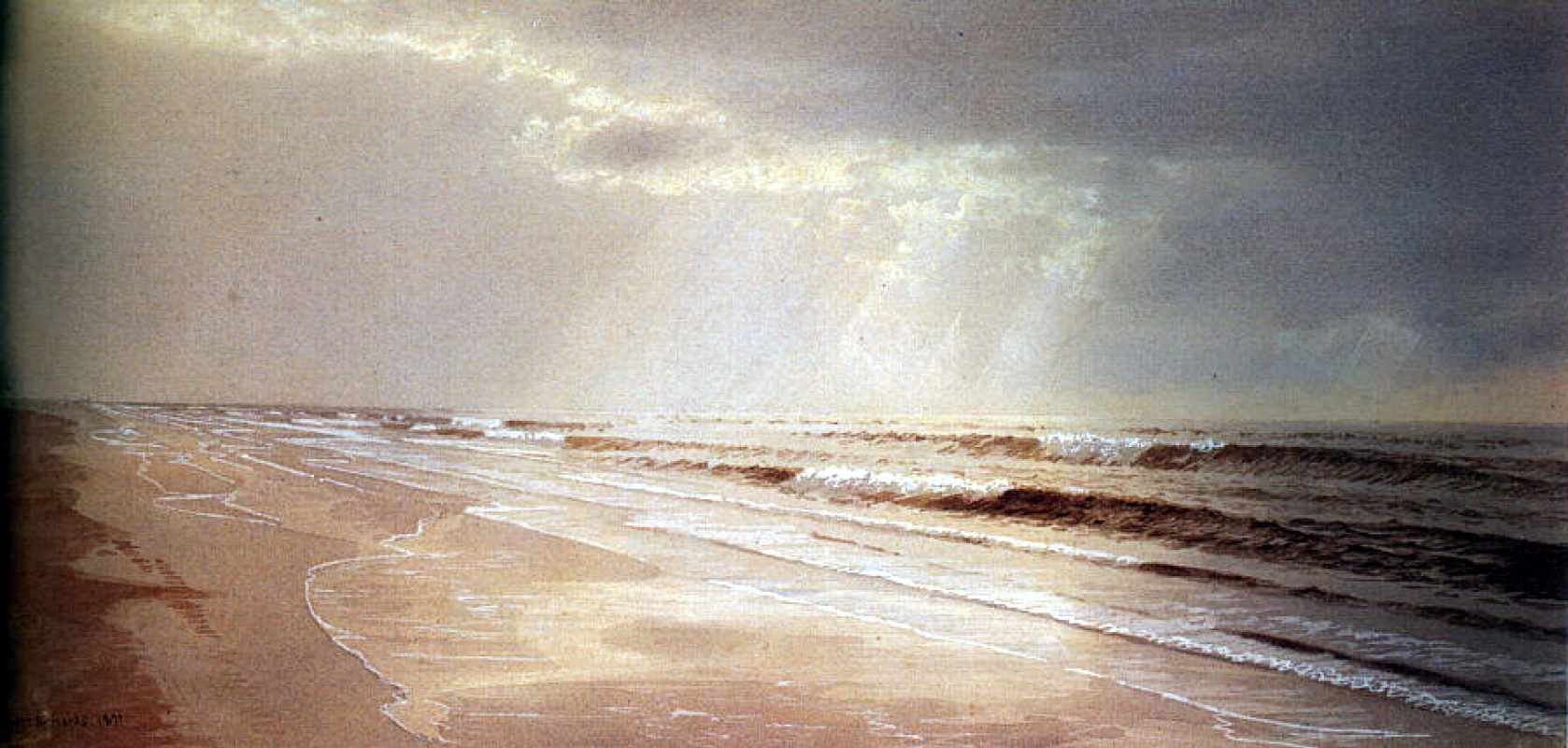
When you look at "Sunset by the Sea," you see a painting that captures the beauty of the sky and ocean at dusk. William Trost Richards painted this work in the late 19th century. He became known for his detailed seascapes and landscapes. You notice how the clouds glow with soft pinks, oranges, and purples. The sun sets low on the horizon, casting golden light across the waves. Richards used oil and watercolor to create a scene that feels both real and magical.
Richards paid close attention to the way light and air change at sunset. He wanted you to feel the cool breeze and see the shifting colors in the sky. His style shows the influence of 19th-century atmospheric studies. Artists and scientists at that time wanted to understand how weather and light affect what you see. Richards learned from the Pre-Raphaelites and the Hudson River School. These groups focused on painting nature with great care and detail.
Richards once traveled to England and Germany, where he studied the work of J.M.W. Turner. He admired Turner’s ability to show light and atmosphere in his watercolors.
You can see how Richards combined science and art in his paintings:
He observed the sky and sea outdoors, painting what he saw in real time.
He used watercolor to capture the fleeting effects of light and air.
He focused on the way water meets rocks and sand, showing the power of nature.
He followed John Ruskin’s idea of "truth to nature," painting with honesty and respect for the world.
Richards’s "Sunset by the Sea" stands out as a famous cloud painting. You see the results of his study of clouds and his love for the ocean. His work invites you to look closely at the sky and notice the beauty in every sunset.
Cloud paintings have changed art history by mixing science, feelings, and imagination. Artists like Constable studied real clouds and learned about weather.
Aspect |
Contribution to Art History |
|---|---|
Artists painted real skies, making art look more natural. |
|
Cloud Taxonomy |
Scientific cloud names helped artists paint more exactly. |
Influence on Realism |
Cloud paintings helped lead to photography and modern art. |
Clouds do more than just fill up the sky. They create a mood, show hidden ideas, and make you wonder about the world.
Think about which cloud painting you like best.
Find more amazing skies using Google Arts and Culture or the Library of Congress Art History Database.
Tell others what you find and what you think!
Clouds in art let you see nature’s beauty and the secrets beyond.
Tucocoo Custom Paint by Numbers