
How to Organize and Store Jigsaw Puzzles Easily
Have you ever seen puzzle pieces all over your living room? It feels really annoying when you lose a piece and cannot finish. Puzzle storage is very important.
Good storage keeps puzzles in great shape and lets you have more fun.
A clean puzzle space helps you think better and finish quicker.
Puzzle Storage
Why It Matters
You might not think about puzzle storage until you lose a piece or find a box crushed under something heavy. Good puzzle storage keeps your puzzles safe and makes it easy to find the one you want to work on next. When you store puzzles the right way, you protect them from fading, bending, or getting stained.
A little care with puzzle storage means your favorite puzzles last longer and look better every time you open the box.
Here are some common problems that happen when you skip proper puzzle storage:
Pieces spill out of boxes or bags.
Boxes get crushed or are too small.
Pieces from different puzzles get mixed up.
You have trouble finding the puzzle you want.
Dust and dirt collect on the pieces.
If you want your puzzles to stay in great shape, you need a simple puzzle storage system that works for your space.
Preventing Lost Pieces
Losing a puzzle piece can ruin the fun. You can avoid this with a few easy habits. Start by turning all pieces picture-side up. This helps you see colors and patterns and makes sorting easier. Separate edge pieces from the rest. Sort the inside pieces by color or pattern. Use sorting trays or small containers to keep everything organized.
Carefully empty the puzzle box so you don’t miss pieces stuck in the packaging.
Use an extra box lid or tray to sort pieces.
Make sure your sorting area is stable so nothing gets knocked over.
With the right puzzle storage ideas, you can keep every piece safe and ready for your next puzzle session.
Organizing Puzzle Pieces

Try Tucocoo Jigsaw Puzzles
Sorting Trays
Sorting trays make puzzle building much easier. You can use them to group pieces by color, shape, or pattern. This simple step saves you time and helps you focus on one section at a time. When you keep pieces in trays, you do not have to worry about losing them or having them scattered everywhere. You also get a better view of all your options, which makes the puzzle more fun.
Sorting trays help you work faster and with less frustration.
You can see how pieces fit together more easily.
Trays keep your workspace neat and prevent missing pieces.
Many trays are reusable, so you help the environment by using less plastic.
Tip: If you do not have special trays, you can use small bowls, plates, or even muffin tins from your kitchen.
Some people skip sorting and end up with random pieces all over the table. This makes it hard to know where to start. Using trays or sorters is a smart move for better organization.
Labeling and Cataloging
When you have more than a few puzzles, labeling and cataloging help you keep track of everything. You can write the puzzle name, piece count, and a short description on the box or a sticker. Some people even keep a notebook or use a simple spreadsheet to list their puzzles.
Labeling gives you a clear way to identify each puzzle.
Cataloging helps you find the puzzle you want without searching through every box.
This system brings consistency and makes your collection easy to manage.
For families with kids, try zippered pouches. Cut out the puzzle picture and slip it inside the pouch. Store the pouches in a basket or bin for quick access. This keeps your organization simple and kid-friendly.
With these steps, you can keep your puzzle pieces sorted and your whole collection in order. Good organization means less stress and more fun every time you open a puzzle box.
Puzzle Storage Ideas
Zip Lock Bags & Pouches
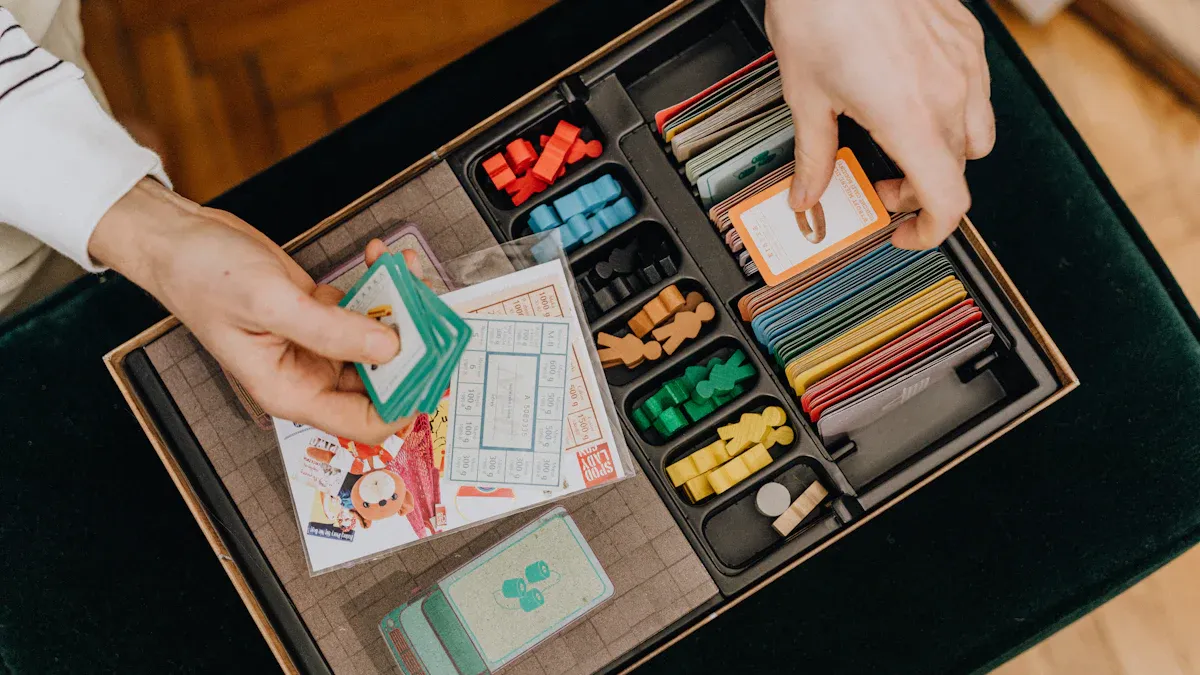
Many puzzle fans like zip lock bags and pouches. You can use bags to sort pieces by color or edge. These bags close tightly, so pieces do not fall out. Heavy-duty bags keep puzzles safe from water and dust. Semi-clear pouches let you see inside without opening them.
Here are some good and bad things about using bags:
Pros |
Cons |
Best For |
|---|---|---|
Saves space |
Small puzzles |
|
Keeps pieces safe |
Not good for very big puzzles |
Puzzles you are doing |
Easy to label and sort |
Bags can break after a while |
Families with kids |
Tip: Use big pouches for board games. Small bags work for mini puzzles.
Document Cases & Folders
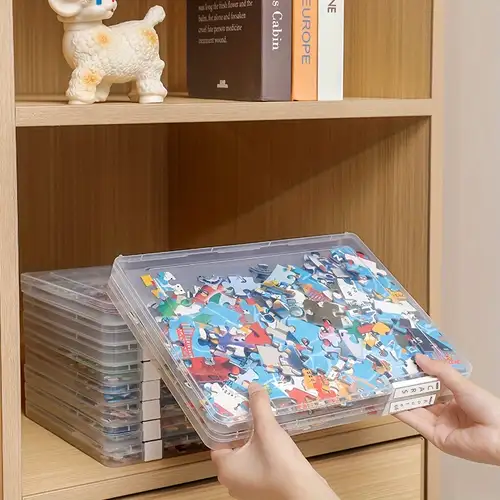
Document cases and folders help you keep puzzles flat and neat. They come in different sizes, so you can pick what fits best. Many cases use acid-free stuff to protect puzzles for a long time.
Feature |
Document Cases & Folders |
Traditional Puzzle Boxes |
|---|---|---|
Storage Type |
Acid-free, keeps puzzles safe |
Not always acid-free |
Organization |
Stand up for easy access |
Not made for documents |
Size Options |
Letter and legal sizes |
Not many size choices |
Accessibility |
Easy to open front panel |
May need to take apart |
Labeling |
Space for neat labels |
Not much room for labels |
Protection |
Not always protective |
Label each folder and stack them on a shelf. You can find the puzzle you want fast.
Storage Bins & Drawers
Storage bins and drawers help you keep lots of puzzles neat. Clear bins let you see inside. Dividers stop pieces from mixing. Drawers make it easy to get the puzzle you want. You save space and keep puzzles safe.
Keep puzzles in good shape.
Save space and keep rooms tidy.
Find puzzles quickly.
Bins and drawers are great for big collections or families who love puzzles.
Pencil Cases & Small Containers
Pencil cases and small containers are good for mini puzzles. Use hard plastic cases or zip-up pouches. Close the case so pieces do not get lost. Put them on a shelf or in a closet for easy reach. If your pencil case has metal holes, use a binder to keep them together.
Pencil cases fit in small places.
Hard or zip-up pouches hold pieces tight.
Good for travel or quick puzzles.
Tip: Write the puzzle name and piece count on each case. This helps you pick the right puzzle fast.
Under-Bed Storage
If you do not have much space, use bins under your bed. These bins slide under and keep puzzles hidden but easy to get. Many bins have clear lids, so you can see inside.
Storage Solution |
Description |
|---|---|
Under-Bed Storage Bins |
Small bins fit under beds, clear lids show puzzles |
You can store puzzles up to 1500 pieces in these bins. This works well for small rooms or apartments.
Puzzle Boxes & Racks
Puzzle boxes and racks are classic and new ways to organize. Stack puzzle boxes up and label them. Use bins with clear sides and dividers for sorting. Puzzle portfolios are small and easy to carry, with spots for many puzzles. Zippered bags save space and are good for finished puzzles. Shelves with adjustable heights fit boxes of all sizes.
Stack puzzle boxes and label them.
Use bins with dividers to sort.
Try puzzle portfolios for travel.
Store finished puzzles in zippered bags.
Use shelves or racks for easy reach.
Note: Puzzle cabinets with shelves and compartments are popular. These cabinets keep puzzles safe and neat. You can change them to fit any collection.
There are many ways to store puzzles. Pick what works for your space and collection. Simple tips help with big or small collections. Good storage makes puzzling easier and more fun.
In-Progress Puzzle Storage

Temporary Solutions
You probably know the feeling—you're halfway through a puzzle, but you need your table back. No worries! You have plenty of quick ways to save your progress without losing a single piece.
Puzzle racks give you a safe spot to keep your puzzle and even come with sorting trays. You can slide your puzzle away and bring it back out when you have time.
Puzzle roll-ups and jigsaw puzzle mats work like magic. Just roll up your puzzle, and the pieces stay in place. These mats use soft felt or fabric, so you can store your puzzle under a bed or in a closet.
Puzzle boards offer a sturdy, flat surface. You can move your puzzle from room to room or tuck it away on a shelf.
Self-sealing bags help you sort and store loose pieces. You can group pieces by color or section and keep everything organized.
Tip: Always check that your storage solution fits the size of your puzzle. You don't want to bend or lose any pieces!
Portable Cases
Sometimes you want to take your puzzle on the go or just keep it safe from pets and little hands. Portable cases make this easy. Many cases have handles, zippers, and built-in trays. You can carry your puzzle to a friend's house or even on vacation.
Portable Case Type |
Best For |
Extra Features |
|---|---|---|
Hard-shell cases |
Travel and protection |
Built-in trays, handles |
Soft zippered bags |
Light puzzles, storage |
Folds flat, easy carry |
Puzzle portfolios |
Multiple puzzles |
Sections for sorting |
With the right case, you can pause your puzzle anytime and pick up right where you left off. No more lost pieces or messy tables!
Finished Puzzle Storage

Gluing and Framing
You just finished a beautiful puzzle and want to show it off. Gluing and framing your puzzle lets you turn it into art for your wall. Start by sliding wax paper or a protective surface under your puzzle. Pour puzzle glue or Mod Podge on top and spread it evenly with a brush or card. Make sure you cover every piece. Let the glue dry for at least 24 hours before you move the puzzle.
Tip: Use adhesive sheets on the back if you want a mess-free option. Painter’s tape or masking tape also works for a quick fix.
Once your puzzle feels sturdy, you can mount it to a backer board. Some people use 3M picture hanging strips or even create a wire hanger for easy display. Framing your puzzle keeps it safe from dust and damage. It also makes your hard work last for years.
Storing Completed Puzzles
If you want to save your finished puzzles but not hang them, you have a few smart options. First, disassemble the puzzle to prevent the pieces from bending or breaking. Wipe each piece with a soft cloth to remove dust. Store the pieces in a zip lock bag or a sturdy container. You can add a moisture control packet to keep everything dry.
Here’s a quick checklist for safe storage:
Disassemble the puzzle gently.
Clean the pieces before storing.
Use zip lock bags or containers.
Store puzzles in a dry, cool place.
Keep them away from sunlight and heat.
Keeping your puzzles safe means you can enjoy them again or share them with friends. A little care goes a long way!
Tips for Puzzle Organization

Regular Clean-Up
Keeping your puzzle area tidy makes every puzzle session more enjoyable. When you clean up often, you find pieces faster and avoid losing them. Try setting up a puzzle table during family time. Everyone can join in, and you build memories together. If you sort pieces by color or section, you help everyone work on different parts. This teamwork makes finishing puzzles easier and more fun.
Tip: The feeling you get when you find the right piece can boost your motivation and keep you coming back for more!
Check out these long-term benefits of staying organized:
Benefit |
Description |
|---|---|
Enhanced enjoyment |
You grab your favorite puzzle quickly and start right away. |
Improved mental well-being |
A neat puzzle space helps you relax and think clearly. |
Preservation of completed puzzles |
You can show off your finished puzzles as art. |
Prevention of lost pieces |
You keep every piece safe and ready for next time. |
Space creation |
You make room for new puzzles and more fun. |
Re-enjoyment of completed puzzles |
You can redo or share puzzles with friends and family. |
Protecting from Damage
You want your puzzles to last for years. Protecting them from moisture, sunlight, and dust is key. Keep puzzles in their original boxes to block out dust and dampness. Store them in a cool, dry spot away from direct sunlight. This stops warping and fading. If you finish a puzzle and want to display it, use puzzle glue or a clear sealant. Framing your puzzle adds even more protection and turns it into wall art.
Keep original boxes for storage.
Avoid hot or damp places.
Use puzzle adhesive or clear lacquer for finished puzzles.
Frame your favorites for extra safety and style.
Remember: A little care now means your puzzles stay beautiful and complete for years to come! 🧩
You make puzzling easier when you pick the right storage method. Sorting pieces by color or pattern helps you finish faster. Try a puzzle mat or flip all pieces right side up. Start with one small change today. A little organization keeps your puzzle time fun and stress-free! 🧩