
What are the pros and cons of large jigsaw puzzles for adults
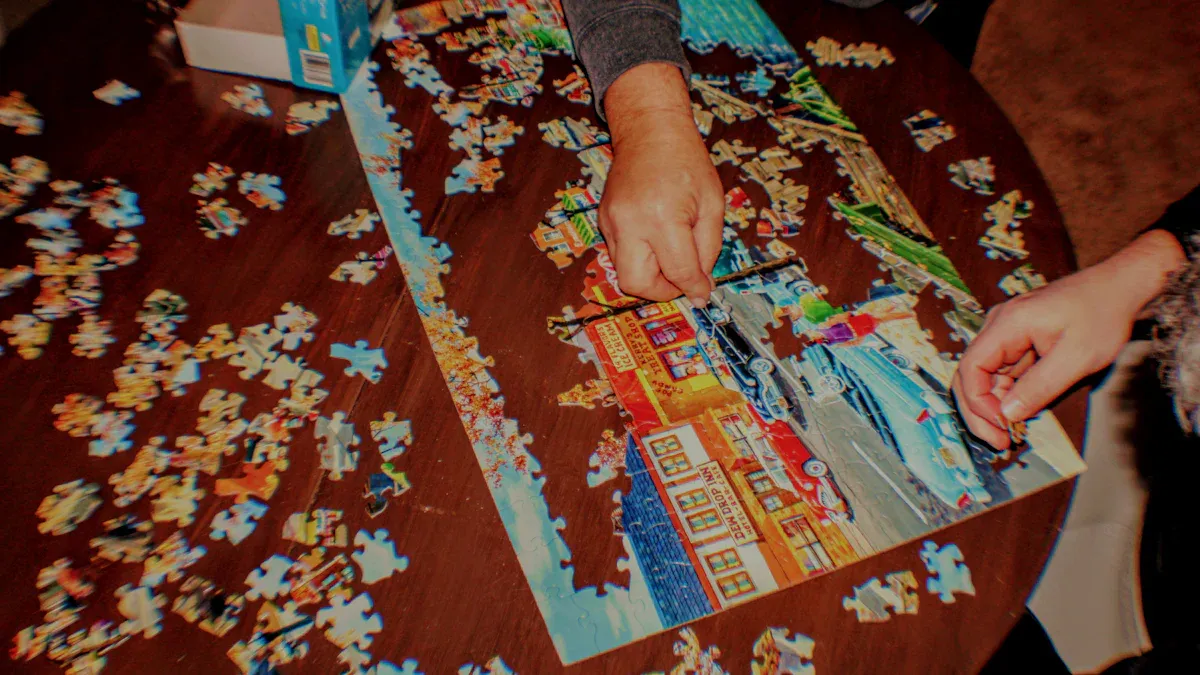
Large jigsaw puzzles offer you a mix of challenges and rewards. You can boost your memory, sharpen your problem-solving skills, and even lower your stress by focusing on the pieces. Many adults enjoy the meditative calm and sense of accomplishment that comes with finishing a big puzzle. However, you might find the time commitment tough, and sitting for long periods isn’t always great for your health. As you weigh the pros and cons, think about what fits your lifestyle and what brings you joy.
Key Takeaways
Large jigsaw puzzles help your memory and problem-solving skills. They also lower stress because you focus your mind.
Doing puzzles with friends or family is fun. It helps you spend time together and makes your bond stronger.
When you finish a big puzzle, you feel proud. It also helps you learn patience and makes you more confident.
Large puzzles need space and time. Pick a puzzle size that fits your home and your free time.
Take breaks while working on puzzles. Make a comfy puzzle spot so you do not get upset or hurt.
Pros of Large Jigsaw Puzzles
Mental Benefits
Doing large jigsaw puzzles is good for your brain. You use skills like memory and problem-solving. You also use visual perception when you look for pieces. A 1000-piece puzzle keeps your mind busy for a long time. Scientists in Germany found that adults who do puzzles every day get better at memory and reasoning. This means you can make your brain stronger by doing puzzles.
Jigsaw puzzles help you focus and ignore distractions.
Doing puzzles often helps you remember things better.
Practice makes your brain stronger and may help you stay sharp as you get older.
You also get better at making choices and noticing small details. Every time you pick up a piece, you decide where it goes. This keeps your mind working and alert. That is a big reason why puzzles are good for you.
Stress Relief
Life can be stressful, but puzzles give you a break. When you work on a big puzzle, you can forget your worries for a while. Studies show that puzzles help lower stress and help you relax. You might notice your breathing slows down and your mind feels calm.
Puzzles help your brain relax and feel less stressed.
Sorting and fitting pieces can feel calming, like meditation.
Many people say puzzling helps them stay calm and focused.
Psychiatrist Dr. Sasha Hamdani says puzzles are good for mindfulness. If you find meditation hard, puzzles can help you focus on the moment. Your mind gets a rest from busy thoughts.
If you want to relax without screens or loud sounds, try a puzzle.
Social Interaction
You do not have to do a big puzzle alone. Jigsaw puzzles are fun with friends or family. When you work together, you can talk, laugh, and help each other.
Family puzzle time helps everyone feel close, no matter their age.
Group puzzling teaches patience and how to share and celebrate wins.
"Today, we are often distracted by many things. It is important to find activities that help us connect with others. Puzzles are a simple way to do this. They give us joy and a sense of achievement that is rare in our busy lives."
Even quiet family members may talk more during puzzle time. This fun activity can make any night special.
Accomplishment
Finishing a big puzzle feels great. You start with many pieces and end with a nice picture. That feeling of success is one of the best things about puzzles.
Completing a 1000-piece puzzle makes you feel proud.
Psychologists say puzzles help you feel calm when life is stressful.
You set a goal, work hard, and see the results. This helps you feel good about yourself.
You also learn to be patient and not give up. Some parts are hard, but you keep trying. The reward is not just the finished puzzle, but the confidence you gain.
Creativity
Large jigsaw puzzles help you be creative. You use both sides of your brain to find patterns and colors. Picking up pieces helps your hands and eyes work together. This is good for adults and seniors.
Occupational therapists use puzzles to help people move better.
Handling pieces helps the small muscles in your fingers and eyes.
Your creative side works as you imagine how pieces fit and see the final picture.
Jigsaw puzzles let you show your style, especially if you pick a puzzle you like. You can even hang your finished puzzle as art and keep it forever.
Tip: To get the most out of puzzles, try different sizes and pictures. You might find a new favorite way to relax and be creative.
Cons of Large Jigsaw Puzzles

Time Commitment
Large jigsaw puzzles can take up a lot of your free time. If you pick a 1000-piece puzzle, you might spend between 10 and 20 hours to finish it. Some people work on these puzzles for days, especially if they only have short periods to play. Even a 500-piece puzzle can take over an hour, while a 300-piece puzzle is much quicker. The bigger the puzzle size, the more time you need to set aside.
Puzzle Size |
Average Completion Time |
|---|---|
300 pieces |
Under 1 hour |
500 pieces |
About 68 to 91 minutes |
1000 pieces |
Between 10 and 20 hours |
If you enjoy a challenging puzzle experience, this time might feel rewarding. But if you have a busy schedule, you may find it hard to finish. Some people even feel guilty when puzzles take time away from other hobbies or chores.
Tip: Try to set a timer or schedule puzzle sessions. This helps you balance puzzling with other activities.
Space Needs
You need a good amount of space to work on large puzzles. A big table or a clear floor area works best. If you live in a small apartment, finding room for a 1000-piece puzzle can be tough. You also need space to sort and organize all the pieces.
Storing puzzles can be easier if you use zippered pouches instead of bulky boxes. These pouches stand upright and fit in baskets or bins. Puzzle boards and roll-up mats help too. They let you move your puzzle or put it away without losing your progress.
Accessory |
How It Helps With Space |
|---|---|
Puzzle Boards |
Give you a stable, portable surface. |
Roll-Up Mats |
Let you store and move large puzzles easily. |
Still, the need for space is one of the main disadvantages of jigsaw puzzles, especially if you share your home with others or have pets.
Frustration
A challenging puzzle experience can sometimes lead to frustration. If you are new to jigsaw puzzles, you might feel overwhelmed by the number of pieces or the complexity of the image. Small or oddly shaped pieces can be hard to handle. Puzzles with similar colors or patterns make it tough to find the right fit.
Factor |
Why It Can Be Frustrating |
|---|---|
Number of Pieces |
More pieces mean more time and effort. |
Piece Size and Shape |
Small or odd shapes are tricky to handle. |
Image Complexity |
Similar colors make sorting harder. |
Workspace Needs |
Not enough space adds to the challenge. |
If you start with a puzzle size that is too big, you might lose motivation. Beginners often do better with smaller puzzles. Picking a theme you like can also help you stay interested. Remember, frustration is one of the cons, but it can also make the final success feel even better.
Cost
Large jigsaw puzzles can get expensive. High-quality puzzles with 500 to 1000 pieces often cost between $150 and $500. Smaller puzzles are cheaper, but they may not give you the same challenging puzzle experience. Some people collect puzzles, which adds up over time.
Puzzle Size |
Average Price Range (USD) |
|---|---|
Small (up to 100 pcs) |
$20 - $50 |
Medium (100-500 pcs) |
$50 - $150 |
Large (500-1,000+ pcs) |
$150 - $500+ |
If you compare this to other hobbies, the price can be a big factor. You also need to think about storage and durability. Some puzzles wear out after many uses, which is another disadvantage of jigsaw puzzles.
Physical Strain
Working on large puzzles for long periods can cause physical strain. You might get a sore back or neck from leaning over the table. Your eyes can feel tired from looking at small details. Sorting and fitting pieces can make your hands and fingers ache, especially if you do not take breaks.
Note: Try to use a comfortable chair and good lighting. Take breaks to stretch your hands and rest your eyes.
Physical strain is one of the cons you should not ignore. If you have joint pain or vision problems, you may want to choose a smaller puzzle size or take more breaks.
When you look at the pros and cons, you see that large puzzles offer a challenging puzzle experience but also come with real drawbacks. Think about your space, time, and comfort before starting your next big puzzle.
Pros and Cons Tips
Choosing Puzzle Size
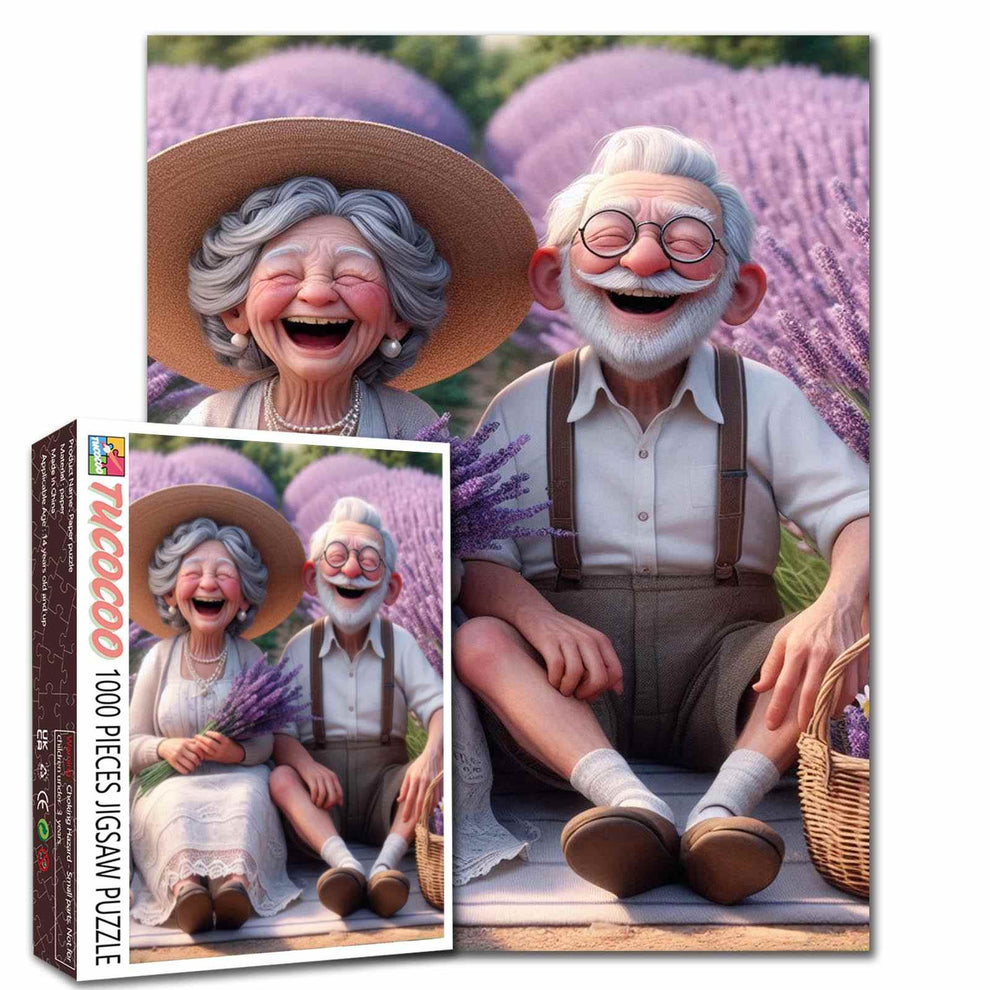
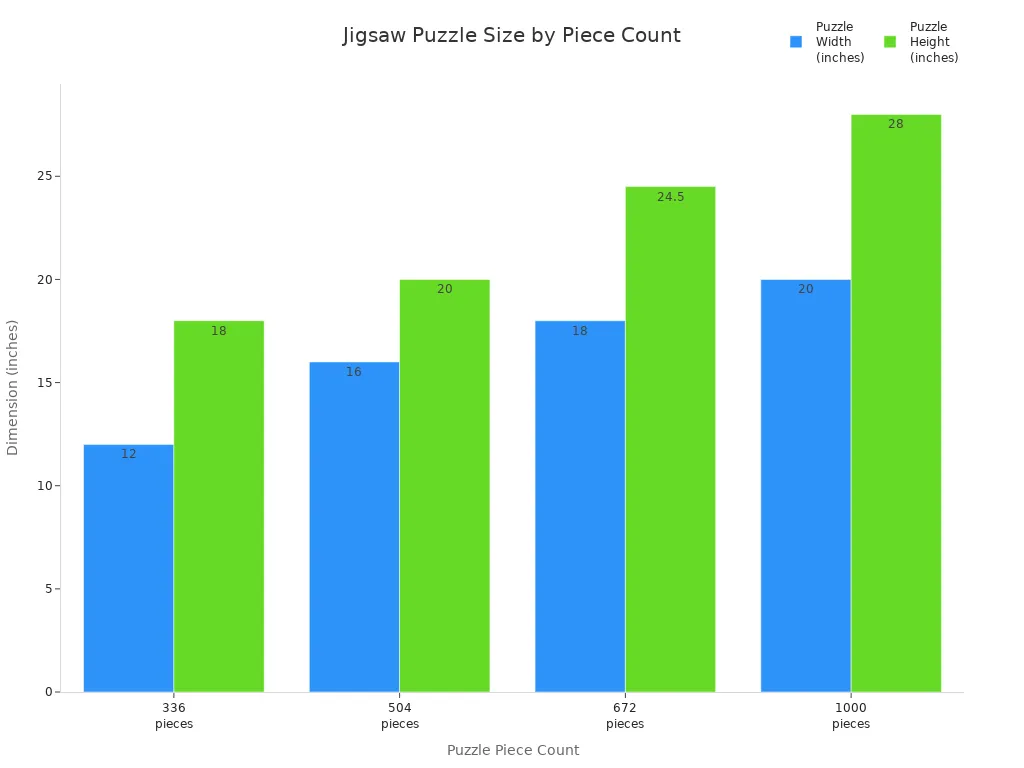
When choosing a jigsaw puzzle, you want to match the puzzle size to your skill and space. If you are new, start with 100-300 pieces. This helps you avoid frustration and lets you build confidence. Look for puzzles with clear color sections and simple images. As you get better, try a 500-piece puzzle or even a 1000-piece puzzle for a bigger challenge. Always check the puzzle size on the box. Some 1000-piece puzzles can be over 20 x 28 inches, so make sure you have enough room.
Here’s a quick guide to help you:
Puzzle Piece Count |
Approximate Dimensions (inches) |
Notes |
|---|---|---|
336 pieces |
12 x 18 |
Good for beginners |
504 pieces |
16 x 20 |
Nice balance of challenge and space |
672 pieces |
18 x 24.5 |
Needs more skill and a bigger table |
1000 pieces |
20 x 28 |
Advanced, needs lots of space |
Tip: When choosing a jigsaw puzzle, pick a theme you love. This keeps you motivated, especially with a large puzzle size.
Setting Up Space
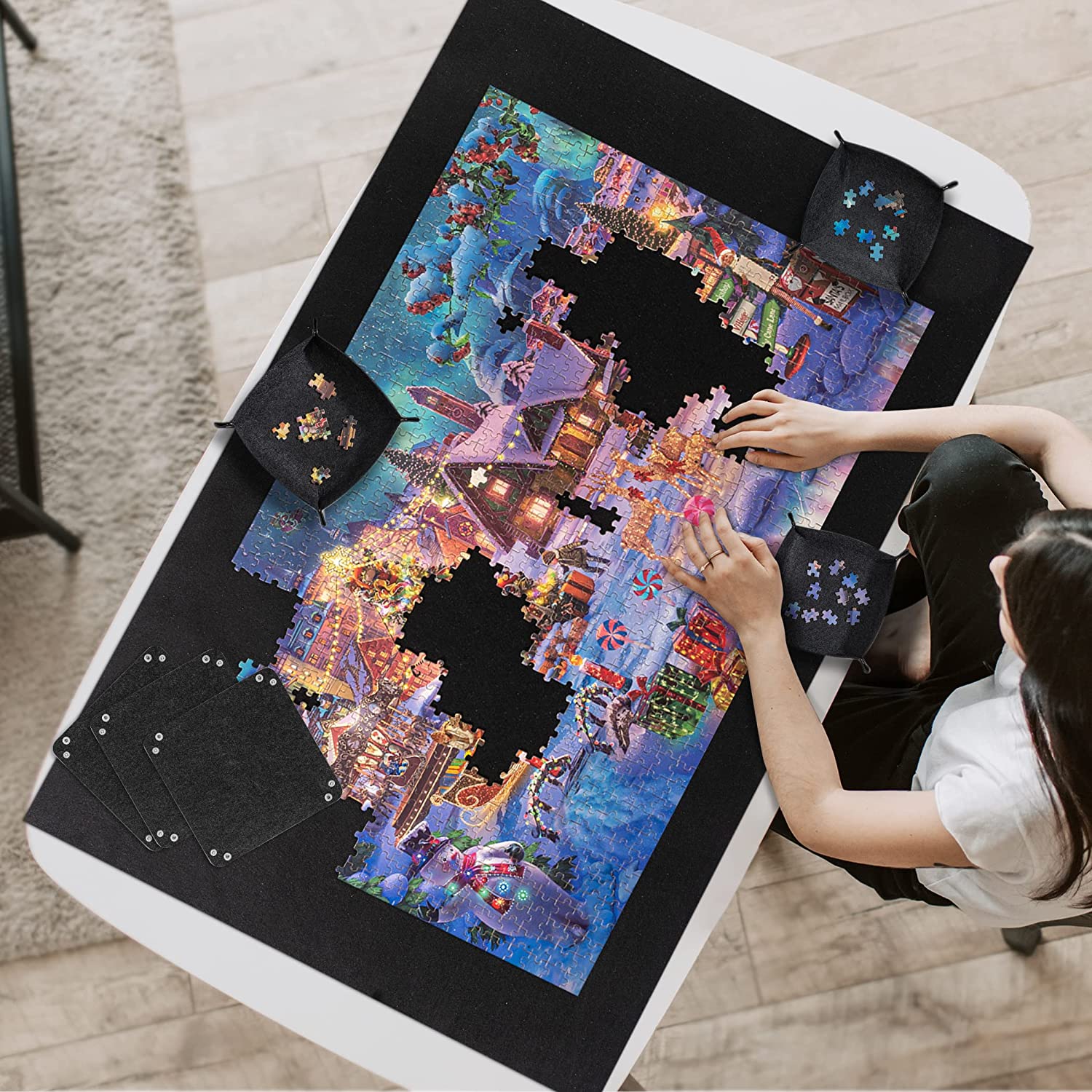
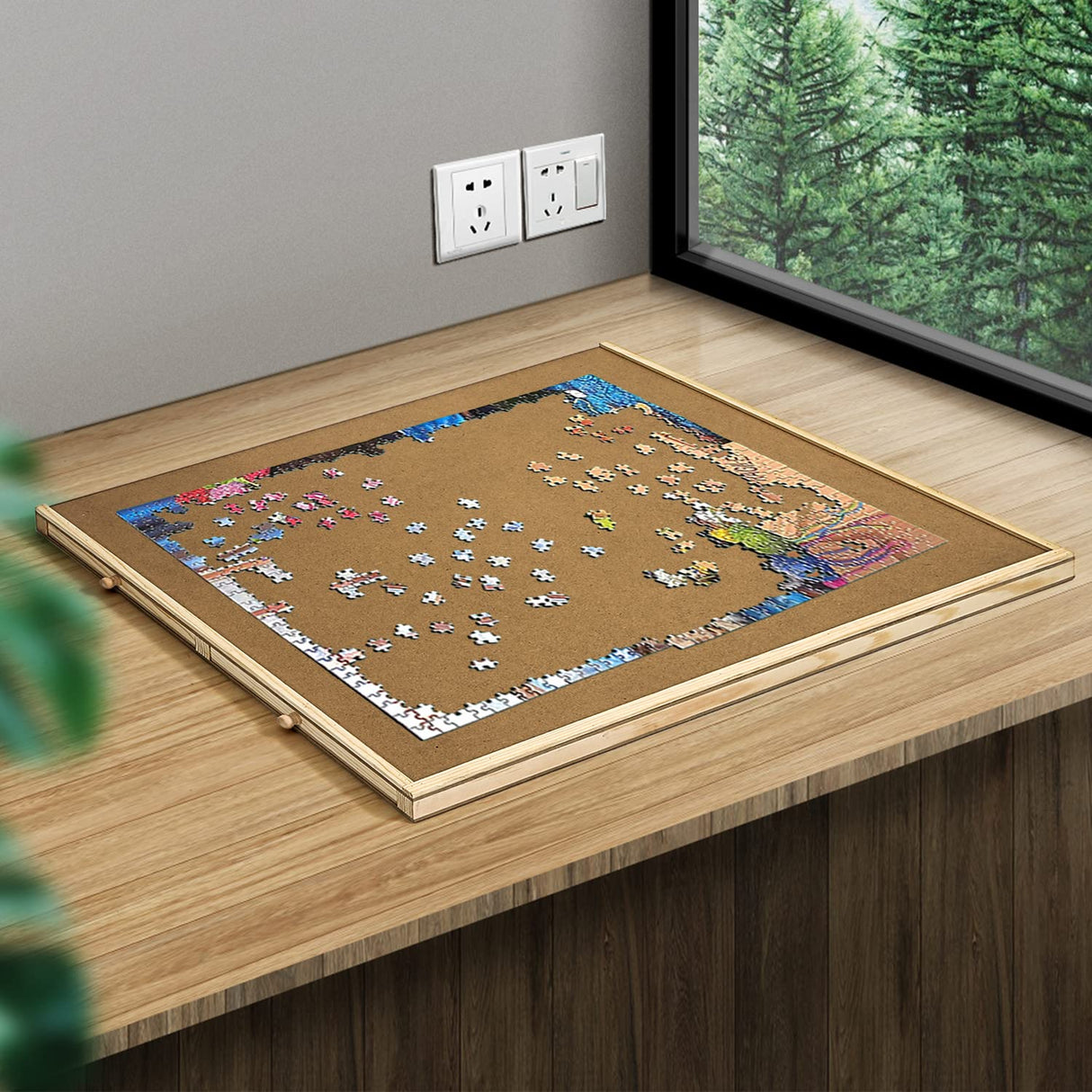
A good puzzle space makes a big difference. Choose a well-lit spot where you can leave your puzzle out. Use a puzzle board or mat to keep pieces safe and move your puzzle if needed. Sorting trays help you organize by color or shape, which saves time and keeps the area tidy. If you work on a 1000-piece puzzle, you need a table that fits the full puzzle size and leaves room for sorting.
Use storage containers or zip bags for loose pieces.
Keep your puzzle away from pets and direct sunlight.
Stackable trays and puzzle mats help if you have limited space.
Note: A dedicated puzzle area helps you focus and enjoy the process, no matter the puzzle size.
Managing Time
Large puzzles can take days or weeks. Break the project into smaller sections. Set a timer for 15-20 minutes and take breaks. This keeps puzzling fun and stops you from feeling overwhelmed. Try time blocking—set aside a certain time each day for your puzzle. Celebrate small wins, like finishing the border or a tricky section.
Start with a puzzle size that fits your schedule.
Balance puzzle time with other activities to avoid burnout.
Remember, choosing a jigsaw puzzle that matches your time and space helps you enjoy every piece, whether it’s a quick 300-piece or a challenging 1000-piece puzzle.
Jigsaw Puzzles for Adults
Group Play

You do not have to solve jigsaw puzzles alone. Group play can turn puzzling into a lively social activity. When you work with friends or family, you share ideas, laugh, and help each other find tricky pieces. Some groups even try games like the Barter Puzzle. In this game, you split into teams, and each team gets a puzzle with some pieces mixed up. You must talk, trade, and work together to finish your puzzle first. This kind of group play helps you build teamwork, improve your communication, and sharpen your problem-solving skills. You might notice that everyone brings something different to the table. Some people spot patterns, while others organize the pieces. Working as a team makes the challenge more fun and helps you connect with others.
Group puzzling is a great way for adults to bond, especially if you want an activity that brings everyone together without screens or distractions.
Displaying Completed Puzzles
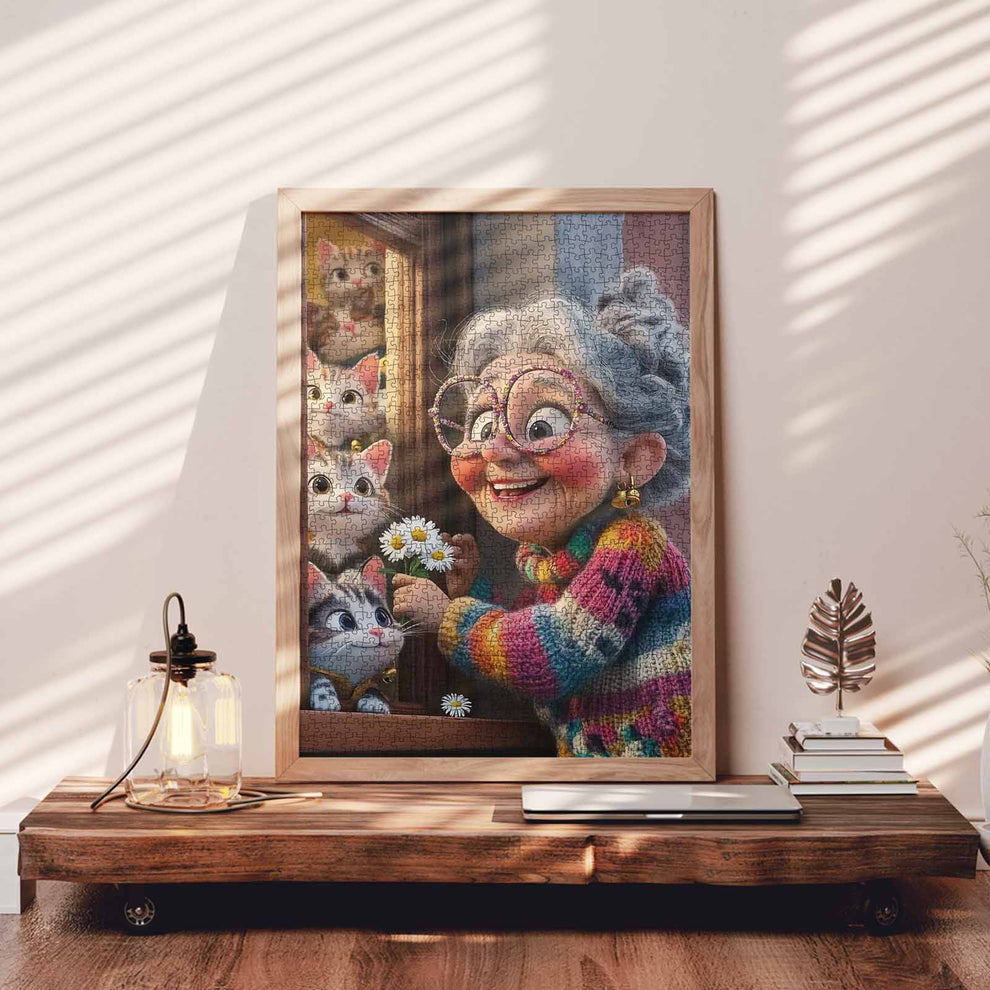
After you finish a big puzzle, you might want to show off your hard work. Many people frame their completed jigsaw puzzles and hang them as wall art. This adds a personal touch to your living room or hallway. Some display their puzzles on coffee tables or in family rooms, turning them into conversation starters. You can also use a puzzle display easel. This lets you rotate your favorite puzzles and change the look of your space for different seasons or moods. Displaying your finished puzzles is a fun way to celebrate your effort and add style to your home.
Frame your puzzle for wall art.
Place it on a coffee table for everyone to see.
Use a display easel to switch out puzzles whenever you like.
You worked hard to finish your puzzle. Now you can enjoy it every day!
Large jigsaw puzzles give you a fun way to challenge your mind and relax. You get to boost your memory, enjoy time with others, and feel proud when you finish. You may also face some downsides like needing lots of space, spending money, or feeling frustrated.
-
Love a good challenge? Enjoy quiet time or teamwork? This hobby could be perfect for you.
Take a moment to think about what you want from your free time. Only you can decide if big puzzles fit your life.

Try Tucocoo Jigsaw Puzzles
FAQ
How do you keep puzzle pieces from getting lost?
You can use sorting trays, zip bags, or a puzzle mat. Keep your puzzle area tidy. Store pieces in a container when you take a break. This helps you avoid losing any pieces.
What should you do if a piece goes missing?
First, check under the table, chairs, and nearby objects. Sometimes pieces hide in sleeves or on the floor. If you still cannot find it, contact the puzzle company. Many companies send replacement pieces.
Can you glue and frame a finished puzzle?
Yes! Use puzzle glue to stick the pieces together. Let it dry flat. Place the glued puzzle in a frame. Now you can hang your finished work as art.
How do you clean a puzzle?
Use a soft, dry cloth to wipe the pieces. Avoid water or cleaning sprays. If you spill something, gently dab the area with a dry towel. Keep food and drinks away from your puzzle.
Are large puzzles good for seniors?
Absolutely! Large puzzles help keep the mind active. They also improve hand-eye coordination. Many seniors enjoy the relaxing and social parts of puzzling. Just pick a puzzle with bigger pieces if you want an easier grip.