
Essential Techniques for Completing 1000 Piece Jigsaw Puzzles
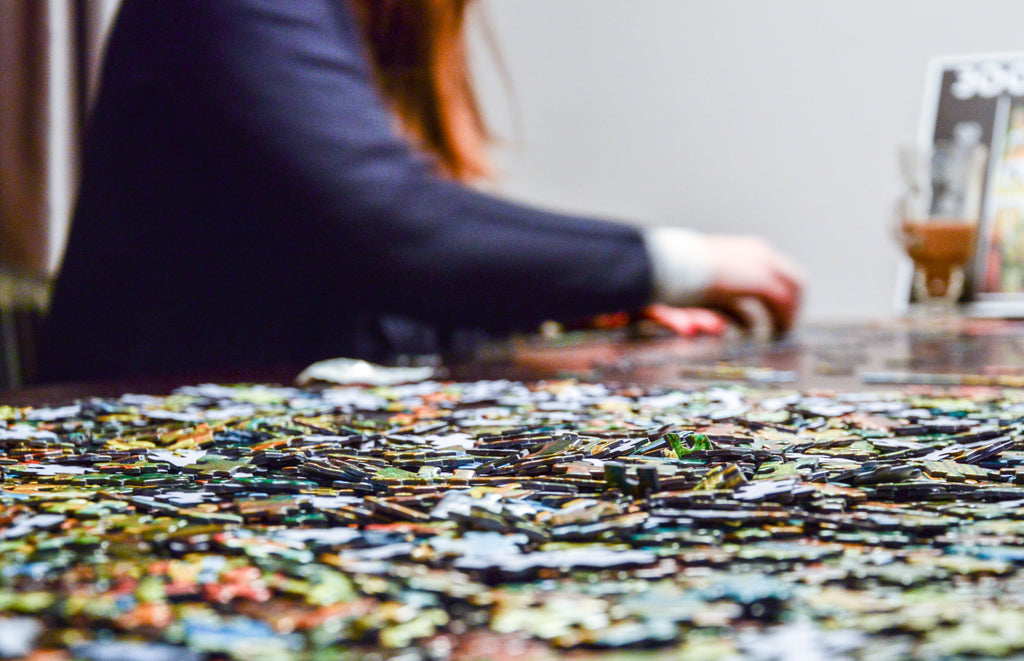
When you start a 1000 piece jigsaw puzzle, you need strong puzzle skills and practical techniques. Choose a quiet work area with good lighting and use a puzzle board if you want to move your puzzle. Sort pieces by edge, color, and pattern. Build the border first, then focus on small sections inside the frame. Take breaks to refresh your mind and keep your puzzling experience fun. This easy step-by-step guide helps you stay organized and enjoy every part of the jigsaw challenge.
Key Takeaways
Find a big table with good light. Make sure you have space to sort and build your puzzle. This helps you work comfortably.
Put all the pieces into groups before you start. Sort them by edges, colors, patterns, and shapes. This makes building the puzzle easier and quicker.
Build the border first. This gives you a clear frame. Next, work on small parts with special colors or patterns.
Look at the puzzle picture often. It helps you know where pieces go. It also keeps you excited to finish.
Take breaks often. This helps your mind rest. It stops you from getting upset. It also makes the puzzle more fun and rewarding.
Puzzle Selection

Tucocoo Jigsaw Puzzles
Choosing a 1000 Piece Jigsaw Puzzle
You want to pick a puzzle that matches your skill level and fits your space. A 1,000 piece puzzle can feel exciting and challenging. Before you buy, think about your experience and how much time you have. If you are new to puzzles, you might want to start with fewer pieces. If you have solved many puzzles before, you may enjoy a bigger challenge.
Tip: Always check the size of the finished puzzle. Make sure you have enough room to work on it without moving pieces around too much.
Here is a table to help you decide which puzzle works best for you:
Factor |
Beginners |
Experienced Puzzlers |
|---|---|---|
Age |
Fewer pieces, larger size |
More pieces, smaller size |
Skill Level |
Simple designs, less detail |
Intricate designs, more detail |
Available Space |
Small table or desk |
Large table or dedicated space |
Time Available |
Quick to finish, less time needed |
Takes days or weeks, more time needed |
Personal Preference |
Easy, fast puzzles |
Challenging, rewarding puzzles |
You can use this guide to find the best 1000 piece jigsaw puzzles for your needs.
Picking the Right Image
The picture on your puzzle matters a lot. Bright colors and clear shapes make it easier to spot where pieces fit. If you like a challenge, choose a 1,000 piece puzzle with lots of similar colors or patterns. If you want a relaxing experience, pick a scene with different sections, like a landscape or a city view.
Try to pick an image that you enjoy looking at. You will spend many hours with this puzzle, so choose something that makes you happy.
A good image helps you stay motivated. It also makes the puzzle more fun to complete. When you pick the right picture, you set yourself up for a great puzzling experience.
Workspace Setup
Space and Lighting
A good puzzle workspace helps you finish your puzzle faster and with less stress. Choose a large, flat surface like a dining table. The best size for a 1000 piece jigsaw puzzle is at least 60 x 90 cm. This space gives you room to spread out all the pieces and move them around easily. You will find that a bigger area helps you see patterns and colors better.
Workspace Size |
Completion Time |
Fatigue Risk |
|---|---|---|
60 x 90 cm |
8-12 hours |
Low |
50 x 80 cm |
12-18 hours |
High |
Floor |
20+ hours |
Severe |
Good lighting is also important. Place your puzzle workspace near a window or use a bright lamp. Strong light helps you tell the difference between similar colors and patterns. You will make fewer mistakes and enjoy the process more.
Tip: Try to avoid shadows on your puzzle workspace. Move your light source or table if you see dark spots.
Tools and Accessories
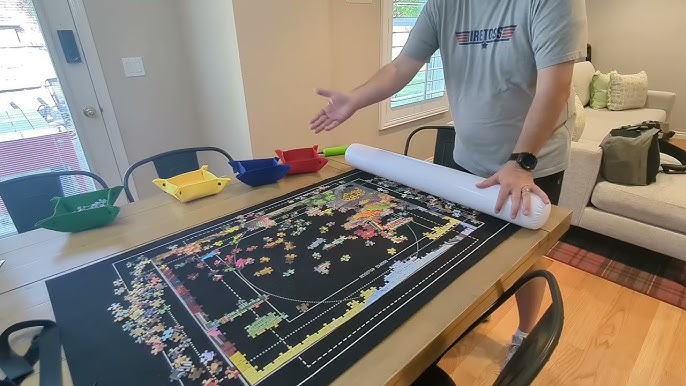
The right tools keep your puzzle workspace neat and organized. Puzzle boards give you a safe place to work and let you move your puzzle if you need the table for something else. Sorting trays help you group pieces by color, shape, or pattern. This makes it easier to find the piece you need. Containers protect your puzzle from dust and keep pieces from getting lost.
Puzzle boards keep your puzzle safe and easy to move.
Sorting trays help you organize pieces and speed up your search.
Containers store extra pieces and protect your puzzle from damage.
Tip: Use small bowls or boxes if you do not have special trays. Staying organized saves time and keeps your puzzle workspace tidy.
Getting Started
Planning Your Approach
Before you open the puzzle box, take a few minutes to plan your strategy. Many experienced puzzlers recommend setting up a clean, well-lit workspace. Make sure your table is free from clutter. Good lighting helps you see small details and colors clearly. You should also choose a comfortable chair to avoid getting tired.
Think about how you want to tackle the puzzle. Some people like to start with the edge pieces. Others focus on building small sections with unique colors or patterns. Both methods work well. You can also use a puzzle mat if you need to move your puzzle or save your progress for later.
To stay focused, try to minimize distractions. Let others know you need quiet time. Silence your phone and set aside specific times for puzzling. You can set small goals, like finishing the border or a certain section. When you reach a goal, reward yourself with a break or a snack. This keeps you motivated and makes the process more enjoyable.
Tip: Divide the puzzle into sections and set time goals for each part. This helps you pace yourself and see progress.
Flipping and Sorting Pieces
After you open the box, turn all the pieces picture-side up. This step helps you see the colors and patterns better. Next, sort pieces into groups. The most efficient way to do a 1000 piece puzzle is to sort pieces by edge, color, and pattern. Place all edge pieces in one pile. Group the rest by similar colors or patterns. This makes it easier to find the pieces you need later.
Sorting also helps you spot unique shapes or special features. Some puzzlers like to sort pieces by shape after sorting by color. You can use trays, bowls, or even small boxes to keep groups separate. This method saves time and keeps your workspace organized.
Sorting your pieces at the start makes the whole puzzle process smoother and more enjoyable.
Sorting Strategies

Sorting by Edge, Color, and Pattern
Sorting is a very important step when you start 1000 piece jigsaw puzzles. You can use trays, bowls, or containers to keep pieces neat. This helps you see your choices and makes the puzzle less hard. Many expert puzzlers say sorting pieces into groups is the best way to start.
If you sort edge pieces first, you can build the frame fast. The border shows you where inside pieces will go.
When you group by color and pattern, you can work on one part at a time. You spend less time looking for pieces and more time making progress.
These sorting tricks make it easier to find matches. You will see that you get faster and make fewer mistakes.
Many top puzzlers use these ideas to finish puzzles quickly and with less trouble.
If you organize pieces well, you can work on many parts at once. This helps you finish 1000 piece jigsaw puzzles faster.
Sorting by edge, color, and pattern makes things easier. It also helps you enjoy the puzzle without feeling lost in all the pieces.
Organizing by Shape
Shape is also important when you solve 1000 piece jigsaw puzzles. After you sort by color and pattern, you can put pieces into groups by shape. Some pieces have two knobs and two holes. Others have flat sides or special connectors. When you sort by shape, it is easier to see where pieces might fit.
A study with kids showed that sorting by shape helps people finish puzzles faster, especially with a guide. The study found that kids made fewer mistakes and finished puzzles quicker when they sorted by shape. This works because it uses clues about space, so you match pieces and guess less.
You can use this puzzle trick to help you. When you sort by color, pattern, and shape, you make a strong plan. This lets you focus on small parts and see progress each time. You will feel more sure as you find matches faster.
Sorting by shape also helps with hard parts of the puzzle. If you get stuck, look at the shapes you have left. Sometimes, the right shape is easy to spot even if the color does not match. This keeps you going and makes 1000 piece jigsaw puzzles more fun.
Tip: Use sorting trays or small containers to keep shapes apart. This saves time and helps you stick to your puzzle plan.
Building the Frame

Assembling the Border
You start every jigsaw by finding the edge pieces. These pieces have at least one straight side. When you group them together, you create the outline of your puzzle. This outline gives you a clear boundary and helps you see where the rest of the pieces will fit. Look for the four corner pieces first. Each corner has two straight sides that meet at a right angle. Place these at the corners of your workspace.
Many puzzlers like to solve the edge before working on the inside. This method works well for a 1000 piece jigsaw because it breaks the puzzle into smaller, easier parts. When you finish the border, you can focus on filling in the middle. The edge acts as a guide and keeps your puzzle organized.
Tip: If you have trouble finding all the edge pieces, check for pieces with only one straight side. Sometimes, a few edge pieces hide among the others.
Identifying Key Features
You can make building the frame easier by spotting key features in the puzzle image. These features help you sort and place pieces faster. Here are some ways to use key features:
Edge and corner pieces have straight edges. You can spot these quickly and use them to build the border.
Grouping pieces by bright colors or unique textures lets you work on one section at a time.
Patterns like gradients or repeating shapes help you match pieces and finish the frame faster.
Starting with edges and corners gives you a clear plan. This makes large jigsaw puzzles feel less overwhelming.
When you use these tricks, you turn a big pile of pieces into a clear path forward. If you want more ideas, you can look at a full collection of 1000 piece jigsaw puzzles for adults. Many of these puzzles have images with strong colors and patterns that make the frame easier to build.
Section Assembly
Working on Distinct Areas
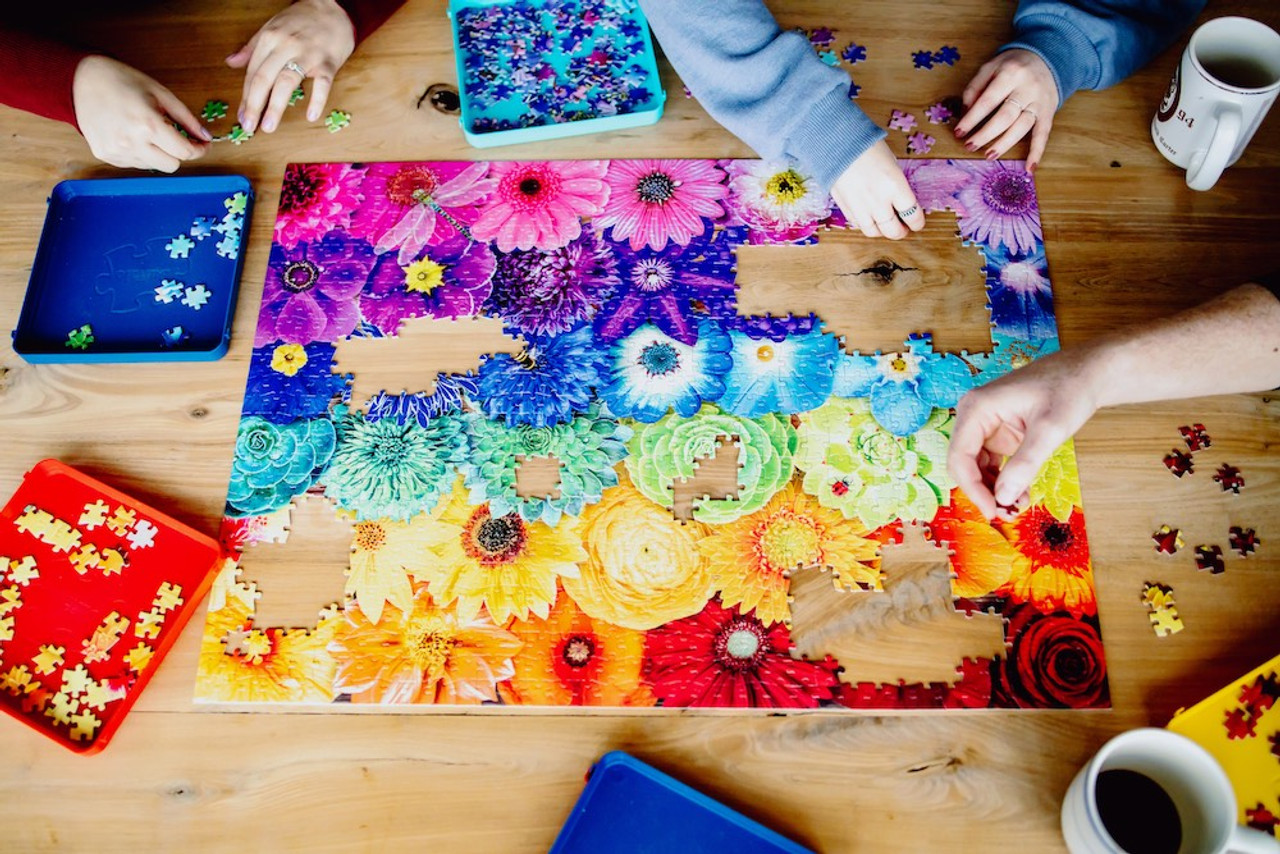
When you work on a 1000 piece jigsaw puzzle, breaking it into smaller sections helps you make steady progress. You can follow these steps to assemble distinct areas:
Prepare a large, well-lit workspace. This gives you enough room to spread out all your pieces and see details clearly.
Separate edge pieces from the middle pieces. Group the rest by color or pattern. This makes it easier to spot where each piece belongs.
Build the border first. The frame gives you a clear starting point and helps you organize the puzzle.
Focus on one section at a time. For example, you might work on the sky, a building, or a group of trees. Pick an area with unique colors or patterns.
Keep the puzzle image nearby. Use it as a guide to match pieces and check your progress.
If you feel stuck, take a short break. When you return, you may notice new details or patterns that help you move forward.
Tip: Working on one area at a time makes the puzzle less overwhelming and helps you see results faster.
Connecting Clusters
As you finish small sections, you will have several clusters of connected pieces. Move these clusters close to where they belong inside the puzzle frame. Do not connect them right away. This method keeps your workspace organized and prevents pieces from shifting. As you fill in more of the puzzle, you can start joining these clusters together. This step-by-step approach helps you stay in control and reduces confusion.
You can use this method with any puzzle, including those from a full collection of 1000 piece jigsaw puzzles for adults. By connecting clusters gradually, you keep the process smooth and enjoyable.
Jigsaw Puzzle Techniques

Using Reference Images
When you work on 1000 piece jigsaw puzzles, you need to use every tool that helps you solve the puzzle. One of the most helpful jigsaw puzzle techniques is using the reference image. Most puzzle boxes show the finished picture on the front. You can keep this box close to your workspace. If you want a bigger or clearer image, you can print a copy or use a tablet to display it.
You should look at the reference image often. This helps you spot where certain colors or patterns appear in the puzzle. For example, if you see a red flower in the corner of the picture, you can search for red pieces and place them in that area. You can also use the image to check the shapes of buildings, trees, or other objects. This makes it easier to group pieces and build sections.
Tip: Place the reference image at eye level. This lets you glance at it without moving your head too much. You save time and keep your focus on the puzzle.
Some puzzlers like to mark special features on a printed copy. You can circle unique patterns or write notes about tricky spots. This technique helps you remember where you found difficult pieces. You can also use sticky notes to cover finished sections on the image. This shows you what parts you still need to complete.
You will find that using a reference image makes 1000 piece jigsaw puzzles less confusing. You see the big picture and make better guesses about where each piece fits. This technique works well for both beginners and experienced puzzlers.
Piece Shape Recognition
Shape recognition is another key part of solving 1000 piece jigsaw puzzles. Every piece has a unique shape. Some have two knobs and two holes. Others have three knobs or only one. You need to look at the shape of each piece as well as the color and pattern.
You can sort pieces by shape after you finish sorting by color. Place pieces with similar shapes in small groups. When you work on a section, you can try each shape in the open space. If a piece does not fit, you move to the next one. Over time, you will get better at spotting which shapes go together.
Here is a simple table to help you remember common piece shapes:
Shape Type |
Description |
Where to Use |
|---|---|---|
Edge Piece |
One straight side |
Border of the puzzle |
Corner Piece |
Two straight sides |
Four corners |
Two Knobs, Two Holes |
Two out, two in |
Middle sections |
Three Knobs, One Hole |
Three out, one in |
Near edges or corners |
You can use shape recognition to solve tricky areas with similar colors. If you have many blue sky pieces, look at the shape instead of the color. This technique helps you avoid mistakes and finish the puzzle faster.
Note: Some brands use unique piece shapes. If you work with a full collection of 1000 piece jigsaw puzzles for adults, you may see new shapes. Practice helps you learn these shapes quickly.
You should combine shape recognition with other jigsaw puzzle techniques. When you use both color and shape, you solve puzzles more efficiently. You will notice your skills improve with every puzzle you complete.
Staying Motivated

Taking Breaks
You might feel stuck when working on a 1000 piece puzzle. Taking short breaks can help you solve the challenge more easily. Studies show that stepping away for about ten minutes refreshes your mind. These breaks let you return with new ideas and more energy. When you pause, you give your brain time to rest and reset. This makes it easier to spot patterns or colors you missed before.
Tip: Stand up, stretch, or walk around your room. Even a quick snack break can boost your focus.
Puzzle-solving is a creative challenge. Short breaks help you think in new ways and keep your mind flexible. You will notice that you make fewer mistakes and feel less tired. If you work for too long without stopping, you might lose focus or get frustrated. Remember, every puzzle is a challenge, but you can meet it with patience and smart habits.
Managing Frustration
Every big puzzle brings moments of frustration. You may not find the right piece or finish a section as fast as you want. When this happens, try these strategies:
Break the challenge into smaller parts. Focus on one area at a time.
Celebrate small wins. Each piece you place is progress.
Set mini-challenges, like finishing the border or a certain color group.
Work with friends or family. Solving a challenge together feels rewarding.
Keep distractions away. Turn off your phone and enjoy the meditative feeling of puzzling.
You will feel a sense of achievement each time you overcome a challenge. Fitting a tricky piece gives your brain a boost and keeps you motivated. Remember, the real reward comes from enjoying the challenge, not just finishing the puzzle. Stay patient, have fun, and let each challenge teach you something new.
Finishing the 1,000 Piece Puzzle
Filling Gaps
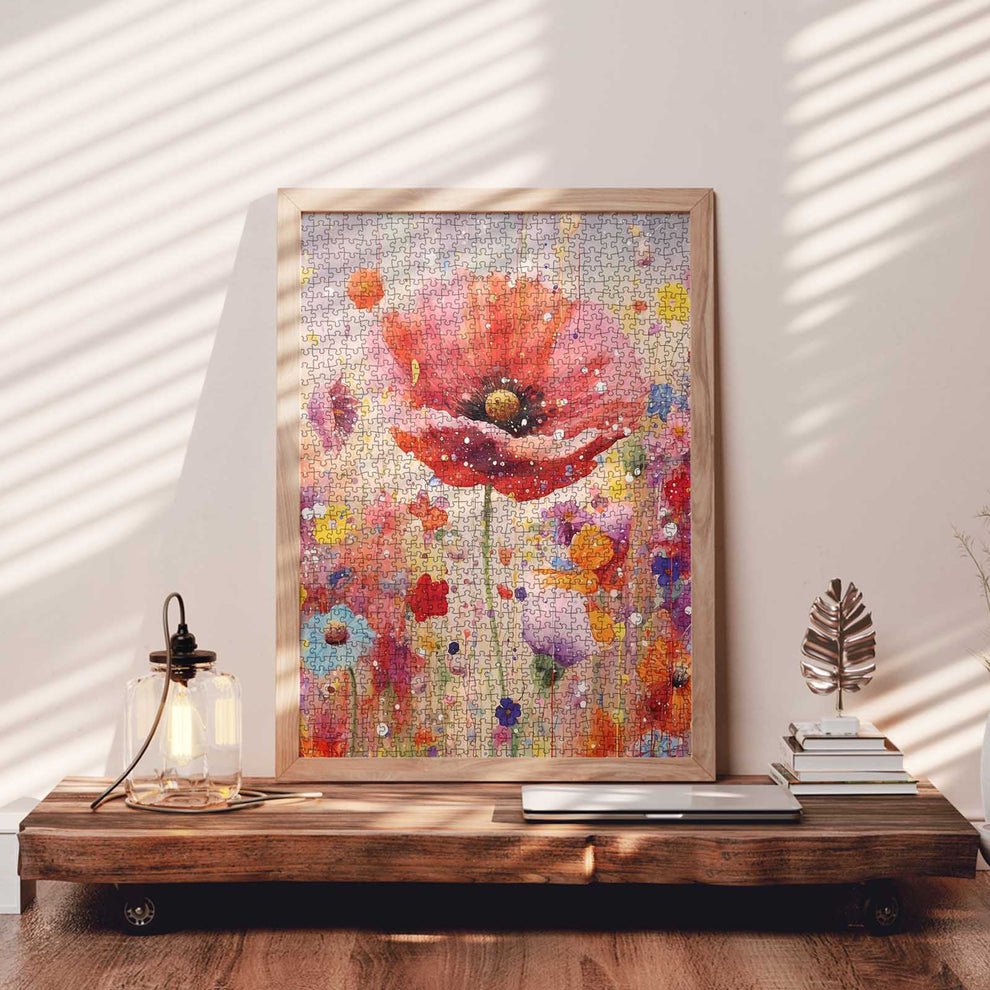
When you reach the final stage of your 1,000 piece puzzle, you may notice a few empty spaces. Filling these gaps takes patience and careful observation. Start by making sure all pieces are picture-side up. Check that you have sorted edge and corner pieces correctly. If you see any missing border pieces, look through your sorted piles again.
To fill the remaining gaps, follow these steps:
Focus on unique features in the puzzle image, such as faces, text, or landmarks. These details help you find the right pieces quickly.
Work from the outside in. Use the border as a guide to place interior pieces.
Match the shape of each piece. Look at the tabs and blanks to see which piece fits the space.
Refer to the puzzle box image often. This helps you spot color patterns and details you might miss.
If you get stuck, take a short break. Sometimes, a fresh perspective helps you see where a piece belongs.
Change your viewpoint. Stand up or move around the table to see the puzzle from a new angle.
As you near completion, placing the last pieces becomes easier because fewer options remain.
Tip: Stay patient and enjoy the process. Each piece you place brings you closer to finishing your 1,000 piece puzzle.
Preserving and Displaying
After you finish your 1,000 piece puzzle, you might want to keep it as a display. You can preserve your puzzle with a few simple methods:
Use sticky adhesive paper on the back or apply a clear-drying glue, like Mod Podge or Elmer's, to hold the pieces together. Spread the glue evenly with a straight-edge tool to avoid bumps.
Test the puzzle by gently lifting it from two corners. If it stays together, you can frame it.
Choose a frame slightly larger than your puzzle. Place cardboard or foam board behind the puzzle to prevent sagging.
If your puzzle does not fit a standard frame, add a mat around the edges for a classic look.
For a modern style, try float mounting. This method places the puzzle on top of the matting, showing off the edges and thickness.
You can also use professional framing services for a polished finish. These services offer options like float mounting and different frame styles.
Note: Displaying your completed puzzle lets you celebrate your hard work and enjoy the finished image every day.
You can finish a 1000 piece jigsaw puzzle if you get your space ready first. Sort the pieces by color and shape before you start. Build small parts of the puzzle one at a time. Experts say you should take breaks and join groups of pieces together. This helps you do better and not get tired. Working on puzzles helps you learn patience and solve problems. Puzzles also help you relax and remember things better. Show your progress to friends or family as you work. Celebrate when you put in the last piece. Every finished 1000 piece jigsaw puzzle gives you a great feeling of success.
FAQ
How long does a 1000 piece puzzle take to finish?
You can expect to spend between 8 and 20 hours on a 1000 piece puzzle. The time depends on your experience, the puzzle’s image, and how much you focus. Some people finish faster, while others take several days.
How difficult is a 1000 piece puzzle for beginners?
A 1000 piece puzzle can feel challenging if you are new to puzzles. You may find it easier if you choose a puzzle with clear colors and patterns. Try starting with a simpler design before moving to a full collection of 1000 piece jigsaw puzzles for adults.
What should you do if you lose a puzzle piece?
If you lose a piece, check under furniture and inside containers. Sometimes, puzzle companies offer replacement pieces. You can contact customer service with the puzzle’s name and piece number. Keeping your workspace tidy helps prevent lost pieces.
Where can you find a full collection of 1000 piece jigsaw puzzles for adults?
You can find a full collection of 1000 piece jigsaw puzzles for adults at toy stores, online shops, and specialty puzzle websites. Many brands offer a wide range of images, from landscapes to famous art, so you can pick your favorite.