
10 Famous Paintings with Books

Famous paintings with books have inspired many pieces of art. They often symbolize knowledge, imagination, or the calm happiness of relaxing. These famous paintings with books convey deeper ideas, connecting to learning or faith. Such artworks highlight the enduring relationship between art and reading.
Key Takeaways
Well-known paintings with books show knowledge and creativity, linking art to the love of reading.
Books in paintings often show cultural beliefs, proving how reading and learning mattered in history.
Paintings like The Ambassadors and The Scholar show that books help us grow and learn more about life.
1.The Ambassadors by Hans Holbein the Younger
Overview of the painting
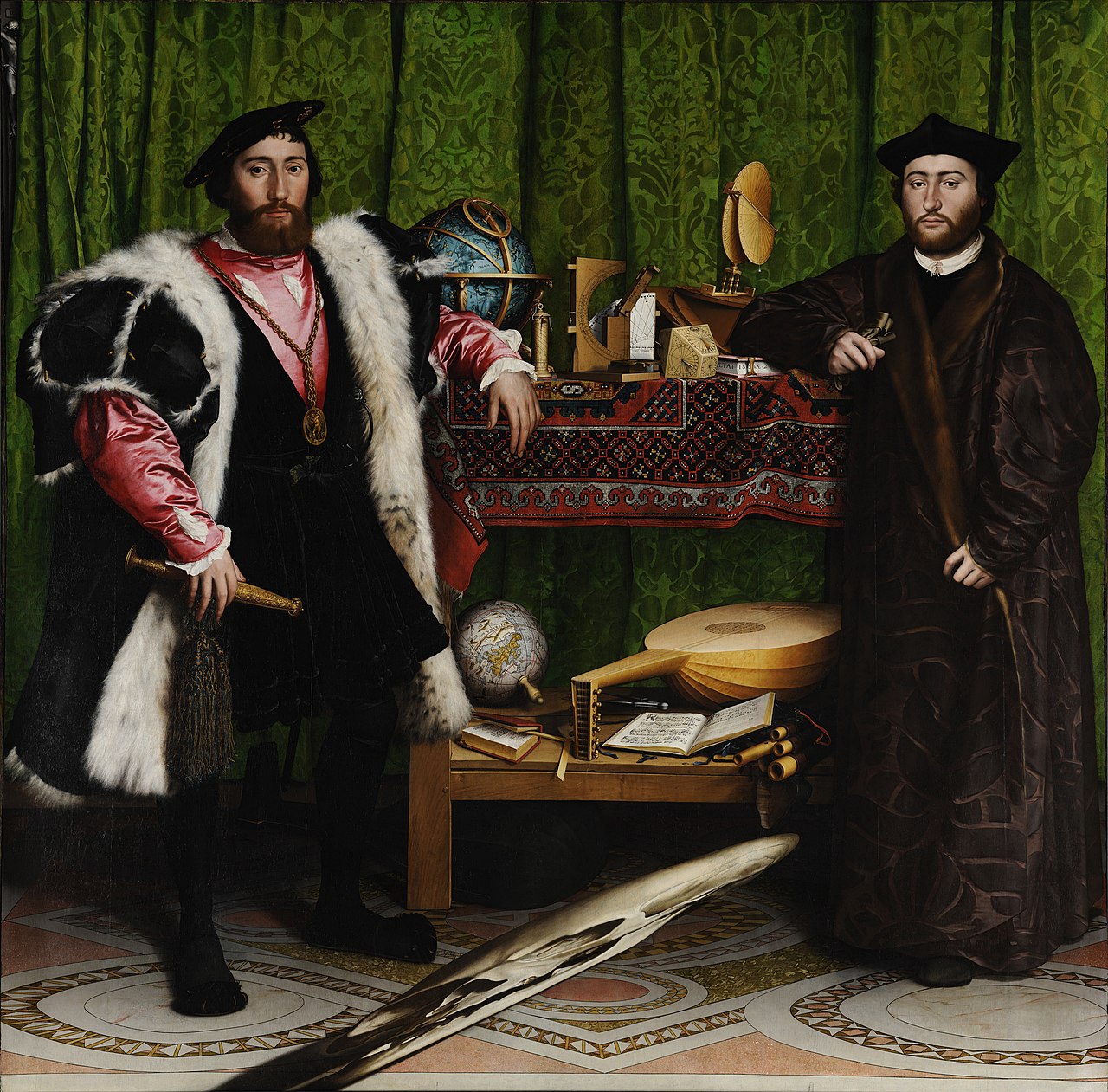
Hans Holbein the Younger painted The Ambassadors in 1533 during the Renaissance. This artwork shows two French diplomats standing near a table. The table holds items that represent knowledge, exploration, and faith. The painting is split into three parts: the heavens, life on Earth, and death. At the top, tools like an astrolabe point to the sky. The middle section has globes, books, and musical instruments, showing human achievements. At the bottom, a stretched-out skull reminds viewers of death. This technique is called anamorphosis.
Holbein made this painting during a time of religious and political struggles in Europe. The details in the painting reflect these conflicts. For example, a broken lute string shows problems in the church. An open book on the table hints at the Reformation. Experts admire the painting’s careful details and how it mixes themes of science, religion, and death.
"Symbols in the painting include scientific tools for new ideas and a globe for growing empires. Many see the painting as a vanitas, with the skull reminding us of mortality."
Significance of the book in the artwork
The book in The Ambassadors is important for the painting’s meaning. It sits open on the table and is a Lutheran hymnal. The hymns "Come Holy Ghost" and "The Ten Commandments" are visible. These hymns show themes of faith and hope for unity in the church. This connects the painting to the Reformation, when books spread religious ideas.
The book also stands for the Renaissance love of learning. Alongside globes and math tools, it shows the era’s focus on knowledge and discovery. Holbein uses the book to link spiritual and intellectual ideas. By placing the book with other objects, Holbein asks viewers to think about balancing worldly success and spiritual beliefs.
Element |
Description |
|---|---|
Book |
An open Lutheran hymnal, showing religious themes and the time’s struggles. |
Hymns |
Includes 'Come Holy Ghost' and 'The Ten Commandments,' highlighting faith and unity. |
Holbein’s use of the book shows how art can share big ideas. It reminds us how books can change minds and inspire people, a message that lasts through time.
2.Portrait of a Man Holding a Book by Agnolo Bronzino

Description of the painting
Agnolo Bronzino’s Portrait of a Man Holding a Book shows Renaissance art at its best. Painted in the 1530s, it features a young man standing between a table and chair. He holds a book, showing his interest in learning. He wears a black jacket over a white shirt, with a blue belt and gold tassels matching his hat. The room has square walls, detailed furniture, and doors, giving it a neat look.
The painting highlights the man’s calm and smart personality. The book he holds shows he can read and might be part of Bronzino’s group of educated friends. The artist’s skill is clear in the careful details of the clothes and room.
Aspect |
Description |
|---|---|
Title |
Portrait of a Young Man Holding a Book |
Artist |
Bronzino |
Medium |
Oil painting on wood |
Dimensions |
|
Date |
Painted in the 1530s |
Composition |
The young man stands between a table and a chair, holding a book. |
Attire |
Black jacket with a white shirt, blue belt, and gold tassels matching his hat. |
Setting |
The room has square walls, detailed doors, and furniture typical of the time. |
Significance of Book |
The book shows literacy and a possible link to Bronzino's educated friends. |
Cultural context and the role of the book
This painting reflects the Renaissance focus on learning and self-expression. The book in his hand shows he values reading and thinking. It might hint at his job or hobbies, like writing or studying. Some experts think the blank page in the book represents his "life story yet to be written," letting viewers imagine his future.
"The blank page in the book may symbolize his unwritten story, inviting us to wonder about his life."
His clothes and the room show he is likely a thoughtful and educated person. His pose, holding a quill and flipping through the book, suggests he just finished writing. The handwritten pages, with edits and notes, show creativity or work. This detail makes the painting unique, as most paintings then showed printed books.
"The painting shows a young man dressed in black, sitting at a table with a green cloth. He flips through a handwritten book with one hand and holds a quill in the other, as if he just finished writing."
Bronzino’s painting honors the Renaissance love of knowledge. The book connects the man’s personality to the time’s values, showing books as symbols of learning and imagination.
3.Saint Jerome in His Study by Albrecht Dürer

Saint Jerome and his work as a scholar
Albrecht Dürer’s Saint Jerome in His Study (1514) shows a scholar focused on learning and faith. Saint Jerome sits at a desk, surrounded by items showing his work translating the Bible into Latin, called the Vulgate. The room feels calm, with sunlight shining through the window, making it peaceful.
Dürer’s details show Jerome’s dedication to study. A lion lying quietly near him stands for loyalty and protection. Plants like ivy and a gourd in the background represent the struggles he faced while working on Bible translations. These objects reflect Renaissance ideas about learning and independence.
This artwork also shows Dürer’s skill in engraving. The wooden furniture, folds in Jerome’s robe, and fine lines of the books look very real, pulling viewers into the scene.
The meaning of the book in the painting
The book in this painting is very important. It shows Jerome’s role as a translator and his effort to share spiritual knowledge. Near the book are a crucifix and a skull, which symbolize faith, life’s end, and salvation. The crucifix reminds us of resurrection, while the skull and hourglass show life is short. Together, these symbols make viewers think about the soul’s journey.
Art experts often see this painting as more than just a still life. The objects, including the books, stand for Jerome’s lasting impact on learning and faith. They show how paintings with books can inspire deep thought and reflection.
Author |
Title |
Publication Details |
|---|---|---|
Friedmann Herbert |
A Bestiary for Saint Jerome: Animal Symbolism in European Religious Art |
Washington, DC: Smithsonian Institution Press, 1980 |
Katherine Craw Lumber |
Cambridge: Cambridge University Press, 2005, 108 |
|
Peter W. Parshall |
"Albrecht Dürer's St. Jerome in His Study: A Philological Reference" |
The Art Bulletin 53 (September 1971): 303-305, accessed March 2, 2013, http://www.jstor.org/stable/10.2307/3048864 |
4.Woman Reading by Pieter Janssens Elinga
A quiet moment of reading
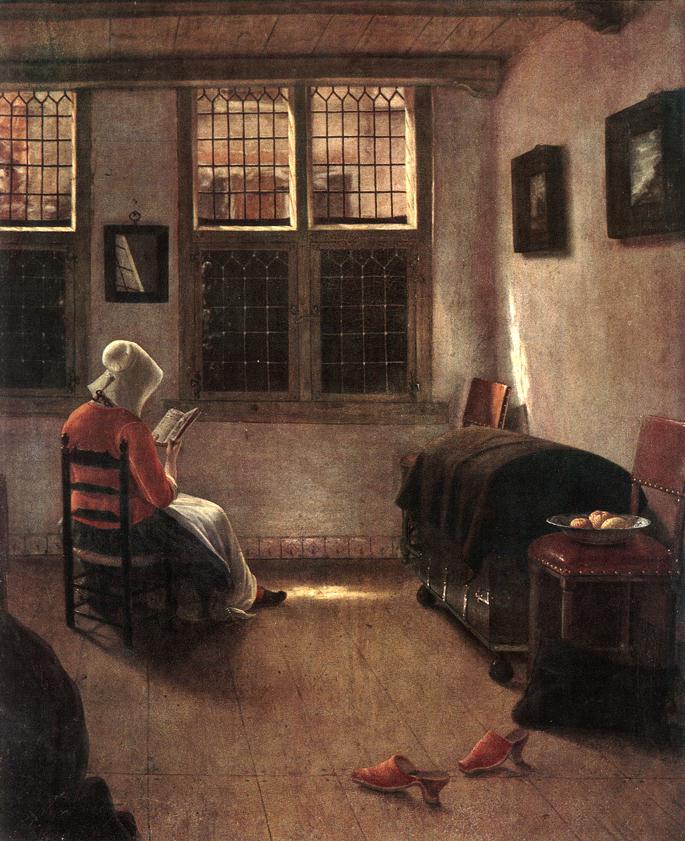
Pieter Janssens Elinga’s Woman Reading shows a calm, private scene. Painted during the Dutch Golden Age, it features a woman reading a book at home. The soft light and warm colors make the room feel peaceful. You can sense the stillness as she focuses on her book. This painting shows how Elinga used small details to express emotions.
Elinga often painted themes of home life and faith. In this artwork, reading feels more than just a hobby. It seems like a moment where the woman connects with her thoughts. Experts say Elinga’s works, like Interior with Painter, Reading Lady and Maid Sweeping (1668), show the thoughtful and spiritual side of reading. His paintings honor the quiet beauty of daily life and personal moments.
The book as a symbol of relaxation and thought
The book in this painting stands for relaxation and deep thinking. In the Dutch Golden Age, books were not only for learning but also for escaping into stories. The woman in the painting enjoys a rare, quiet moment alone. Her calm posture and focused face show she is lost in her reading.
This painting reminds us of the joy books bring. Books can teach, entertain, and comfort us. Elinga’s art captures this idea, showing how reading is both personal and shared by everyone.
5.The Bookworm by Carl Spitzweg

A fun look at a book lover
Carl Spitzweg’s The Bookworm shows the charm of loving books. Painted in the mid-1800s, it features an old man on a ladder in a library. He holds a book in one hand and balances another under his arm. His glasses sit on his nose as he leans forward, deeply focused on reading. Tall shelves packed with books surround him, making the scene feel both cozy and grand.
The painting has humor and warmth. The man’s bent posture and serious focus make him look amusingly devoted to his books. It makes you wonder about his life—does he spend hours in the library, diving into history, science, or poetry? Spitzweg’s careful details, like the man’s worn clothes and the fancy book covers, bring this playful scene to life.
Books as a source of happiness
Spitzweg’s The Bookworm shows how books bring joy to people. It reflects the 19th century’s love for reading, when libraries stood for learning and self-improvement. Years later, Norman Rockwell created his own version of The Bookworm, updating its ideas for 1920s America. Rockwell’s painting shows how reading stays a timeless pleasure, connecting people across time and cultures.
Jacob Lawrence’s Harlem Series also highlights the happiness books bring. His art shows libraries and reading as key parts of community life, much like Spitzweg’s celebration of books. These artworks remind us that books are loved everywhere, whether for learning or relaxing.
Spitzweg’s painting encourages you to think about your own love for books. It shows how reading can take you to new places, spark creativity, and bring simple joy.
6.A Young Girl Reading by Jean-Honoré Fragonard
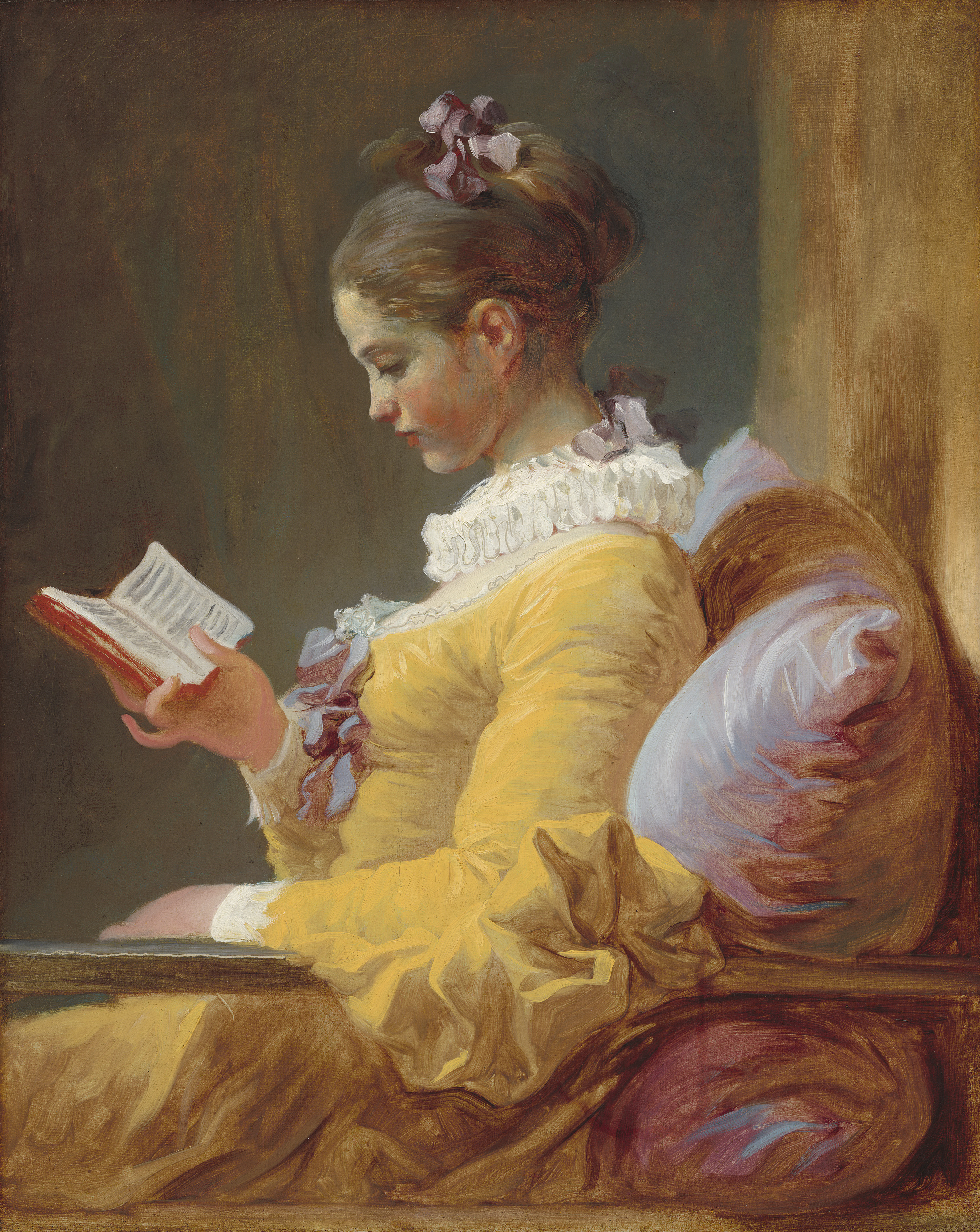
The beauty of reading captured in art
Jean-Honoré Fragonard’s A Young Girl Reading shows a peaceful moment. The painting features a young woman focused on her book. She sits sideways, wearing a golden dress with soft folds. Light gently shines on her, making her the center of attention. Her calm face and relaxed posture show she is fully absorbed in her reading.
Fragonard uses warm colors to create a dreamy feeling. The golden dress and simple background make her stand out. The book in her hands represents imagination and escape. You can almost feel the quiet and peace as she reads.
This painting celebrates the joy of reading. It reminds us how books can take us to new places. Fragonard’s art shows that reading is not just an activity—it’s a way to find comfort and inspiration.
"Reading is like traveling through thoughts and emotions."
Books and their importance in 18th-century France
In 18th-century France, books were very meaningful. They stood for knowledge, creativity, and social standing. More people learned to read, and books became easier to get. Reading was both a way to learn and a way to relax.
Fragonard’s painting reflects these changes in society. The girl’s book shows she is educated and enjoys reading for fun. Her fancy dress and elegant surroundings show how art and books were valued by wealthy people.
Aspect |
Details |
|---|---|
Literacy Growth |
More people could read, making books more common. |
Social Status |
Having books showed wealth and love for learning. |
Leisure and Learning |
Reading became a mix of fun and gaining knowledge. |
Fragonard’s painting shows how books shaped culture and ideas. It reminds us that reading connects us to creativity, knowledge, and the world around us.
7.The Librarian by Giuseppe Arcimboldo

A creative use of books in art
Giuseppe Arcimboldo’s The Librarian is a unique Renaissance painting. Instead of showing a person, it uses books to form a figure. The books make up the body, head, and even hair. This gives the figure a strange, lifeless look with sharp edges. The painting criticizes people who collect books for status, not knowledge.
Arcimboldo’s art reflects the Renaissance love for puzzles and odd ideas. Fun details include a book as a hat and rings as eyes. These features show how carefully book collectors valued their possessions. The artist cleverly uses objects to explore identity and how belongings shape us.
Historians see The Librarian as a comment on Renaissance library culture. It also inspired surrealist artists later, proving Arcimboldo’s ideas were ahead of his time.
Libraries as places of learning and imagination
The Librarian honors libraries as places full of knowledge and creativity. By shaping a figure from books, Arcimboldo shows their importance in keeping ideas alive. The painting reminds us that libraries help curiosity and learning grow.
It also makes you think about your own view of books. Do you use them to learn or just to show off? Arcimboldo’s message still matters today, urging us to value libraries as spaces for discovery and inspiration.
8.Lydia Cassatt Reading the Morning Paper by Mary Cassatt
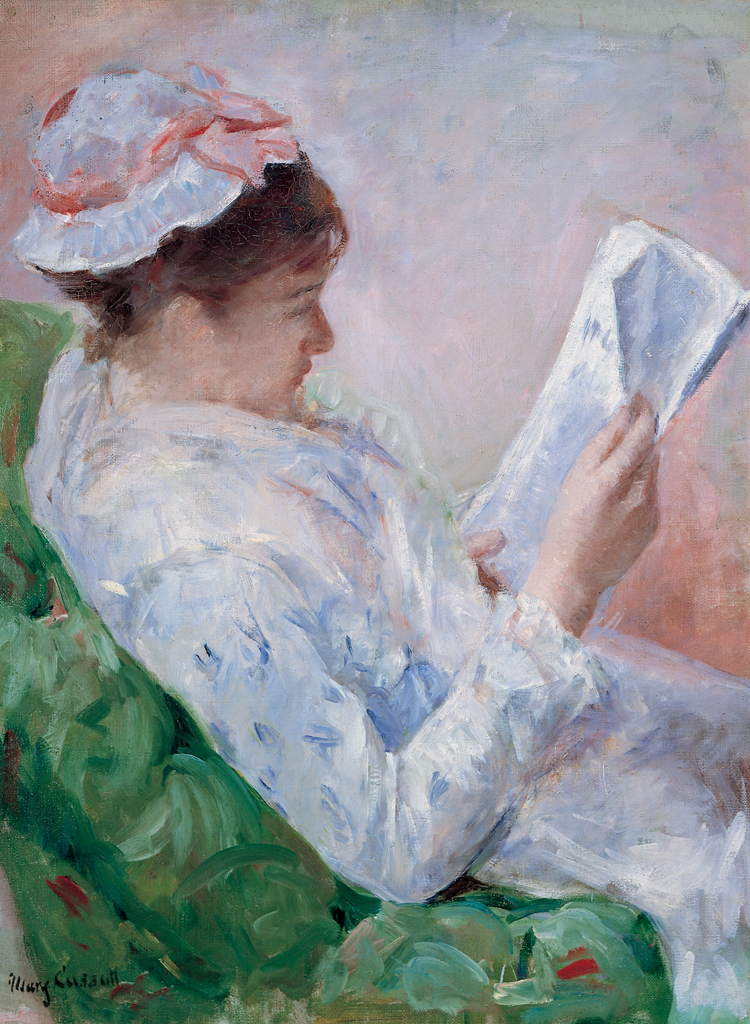
Women and the importance of literacy
Mary Cassatt’s Lydia Cassatt Reading the Morning Paper shows how women’s literacy grew in the late 1800s. The painting features a woman, likely her sister Lydia, deeply focused on reading a newspaper. This simple scene reflects changing times when women started taking part in intellectual activities.
Cassatt often painted women’s lives at home. Her works, like Reading 'Le Figaro' (1883), show women’s intellectual growth alongside men, breaking old stereotypes. She also explored themes of freedom and changing gender roles, as seen in Woman and Child Driving (1879). Through her art, Cassatt celebrated women gaining education and joining thoughtful conversations.
Cassatt’s art shows the limits women faced in the 19th century, focusing on home life.
Her paintings connect women’s intellectual growth to men’s, challenging old ideas.
She highlighted women’s changing roles in society with unique portrayals.
By showing women reading books or newspapers, Cassatt emphasized their curiosity and how literacy shaped their identities.
The peaceful act of reading
Cassatt’s painting shows a quiet, thoughtful moment. Lydia sits calmly, fully focused on the newspaper. The soft light and gentle colors create a peaceful feeling, pulling you into the calm scene. This private moment of reading reflects Cassatt’s talent for showing the beauty in everyday life.
Art experts admire Cassatt’s ability to show closeness and privacy. Her paintings, including this one, reveal her deep understanding of home life and relationships. As a female artist in 19th-century France, she used her work to explore these themes in a real and relatable way.
This painting reminds us of the joy and focus reading can bring. It celebrates those quiet times when we connect with our thoughts, making it a timeless image of learning and reflection.
9.The Reading Girl by Henriette Browne
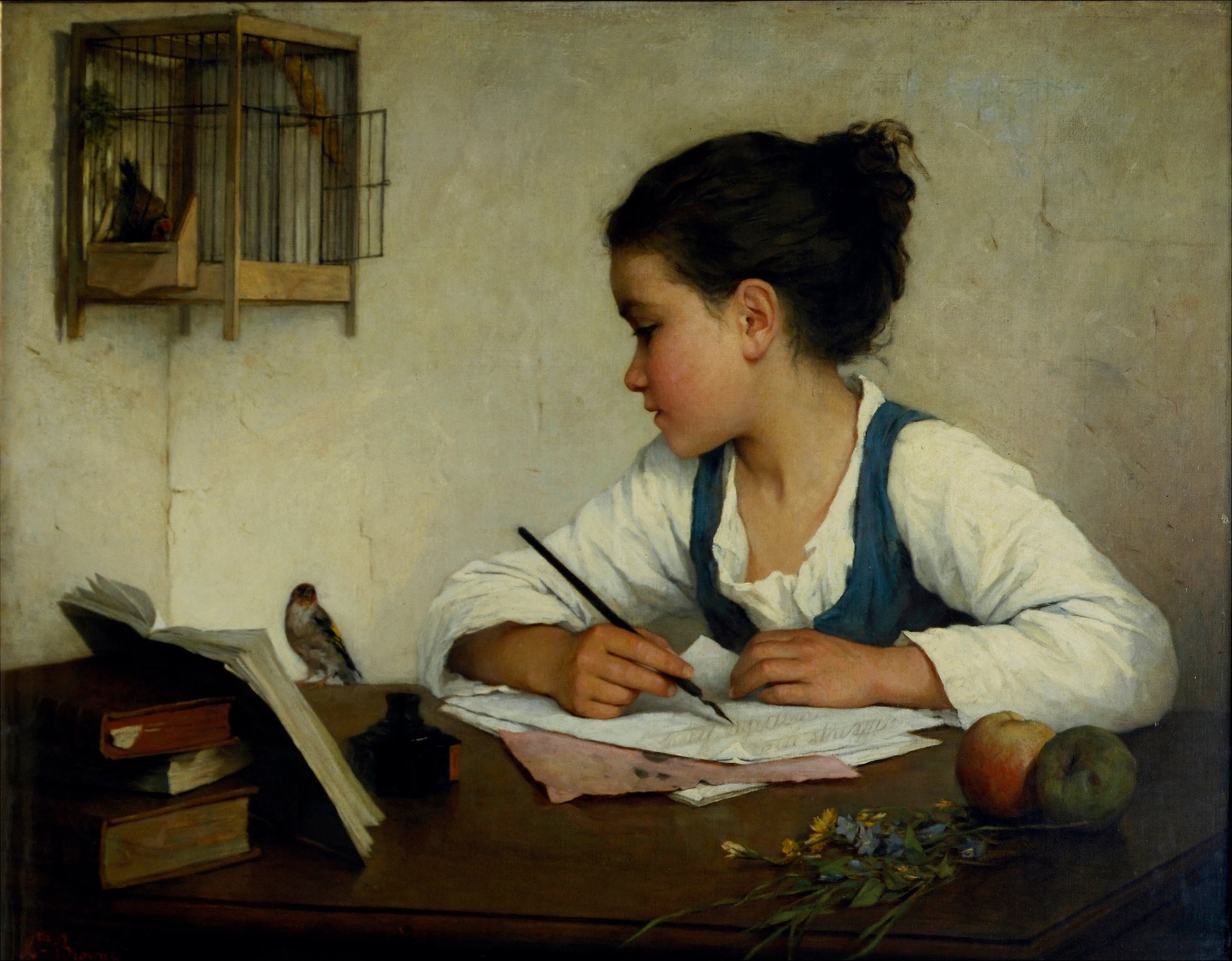
A young girl lost in thought
Henriette Browne’s The Reading Girl shows a peaceful moment. A young girl sits holding a book, looking deeply focused. Her relaxed pose and calm gaze suggest she is enjoying the story. Soft light shines on her face and the book, making her concentration stand out. The simple scene feels familiar, showing how reading draws people into their own world.
The painting highlights the girl’s innocence and curiosity. Her thoughtful expression shows she is not just reading but also thinking about the story. This makes you reflect on your own quiet moments with books. Browne’s careful details, like the folds in her dress and the book’s texture, make the scene feel real and lifelike.
Books as symbols of growth and imagination
This artwork shows how books connect to learning and creativity. Artists have long used books to represent knowledge and self-discovery. In The Reading Girl, the book links the girl’s thoughts to the world around her. It shows how stories can teach and inspire us.
Browne’s painting feels relatable because it captures a shared experience. Reading is something people do for fun or to learn, and holding a book feels familiar to many. This artwork celebrates the joy of reading, making it a timeless reminder of how books bring people together.
10.The Scholar by Thomas Eakins
Showing the life of a thinker
Thomas Eakins’ The Scholar shows a man focused on learning. He sits at a desk, leaning forward, fully absorbed in his work. The room is dimly lit, making the scene feel quiet and calm. This lighting draws your eyes to the man’s serious expression and effort.
Eakins adds small details that make the painting feel real. You can see the folds in his clothes and the wood grain on the desk. The objects around him are neatly placed, showing his organized mind. These details pull you into his world, making you think about the value of hard work and study.
"The Scholar" teaches us that learning takes time and effort.
Books as keys to learning
Books are very important in The Scholar. They stand for learning and the power of education. The man’s connection to the books shows how they help him grow and discover new ideas. In Eakins’ time, books were the main way to learn and explore knowledge.
This painting makes you think about how books shape your view of life. They are not just things to read—they spark curiosity and creativity. Eakins’ art honors the lasting bond between books and learning, showing how they inspire growth and understanding.
Books are more than simple objects; they stand for learning, creativity, and growth. These artworks show how artists use books to represent their world and culture. They highlight the link between art and reading, sparking curiosity and ideas. This lasting connection still inspires people and brings fresh thoughts today.
Tucocoo Books Paint by Numbers